What Is Cancel Culture and Why Are Both Extremes Wrong?
TL;DR
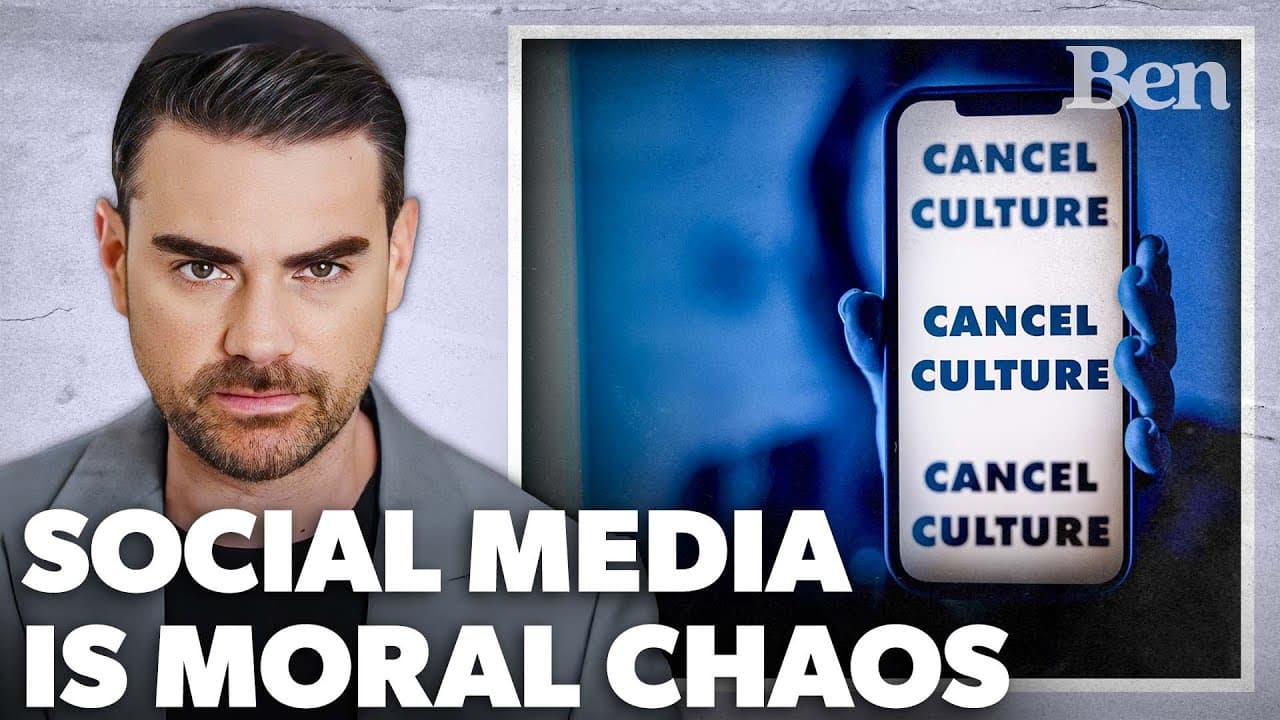
Cancel culture is social ostracization, not legal punishment, and it ranges from mild criticism to getting someone fired or permanently unhireable. The healthiest approach rejects both automatic destruction for any taboo and total moral relativism, instead applying varied, sometimes forgivable social consequences based on how bad the behavior actually is.
Transcript
We're descending into a world of either total cancellation for everyone with whom we disagree or total support for bad behavior in order to fight total cancellation. Let's talk about cancel culture for a second. There are three perspectives on cancel culture. Okay, so I want to define cancel culture here because I think people are equating many dif... Read More
Key Insights
- Cancel culture is social ostracization or sanction for behavior or opinion, not legal punishment. It is not a legal ban, jailing, or banning of people, but simply people choosing not to associate with, hire, or support someone.
- Cancellation exists on a spectrum ranging from mild criticism, to not wanting to hang out with someone, to firing them, to deciding no one should ever be able to hire them, so the severity of consequence varies enormously.
- There are three perspectives on cancel culture: cancel everyone harshly for any taboo, never cancel anyone for any reason, and a moderate view where some behaviors deserve varied and sometimes forgivable social sanction while others do not.
- The first perspective, treating every taboo violation with the social death penalty, is censorious, unforgiving, and uncharitable, and it prevents useful conversations. It led to people losing jobs for correct opinions or saying a Mandarin word resembling a slur.
- The second perspective, that no criticism or social sanction should ever occur, is just moral relativism, in which the ugliest opinions are given equal credibility with decent or controversial but useful opinions.
- The correct view is that people sometimes but not always deserve social consequences, those consequences can vary in severity, and forgiveness may be possible rather than every sanction being irrevocable.
- Social media makes everything worse because it functions as a mob always waiting to form, like immune-system white blood cells waiting to attack, forcing everyone to instantly judge people as hero or villain.
- The two extremes are mutually reinforcing: moral relativism prompts opponents to demand more social consequences, which triggers more reactionary relativism, degrading the shared Overton window of acceptable debate over time.
Install to Summarize YouTube Videos and Get Transcripts
Explore YouTube Video Summarizer or Get YouTube Transcript Extractor
Questions & Answers
Q: What is the definition of cancel culture according to Ben Shapiro?
Cancel culture is social ostracization or sanction for behavior or opinion, not legal sanction. It does not mean legally banning people, jailing them, or imposing a legal ban on their behavior. Instead it refers to people not wanting to associate with someone, and it spans a whole range of activity from mere criticism to firing to deciding no one should hire that person.
Q: What are the three perspectives on cancel culture?
The first perspective holds that any violation of any taboo should be met with the harshest possible cancellation. The second holds that no one should ever be canceled or even criticized for any reason. The third, described as the more moderate, complex, and true view, holds that some behaviors or opinions genuinely deserve social sanction while others do not, and that the level of forgiveness and sanction should vary.
Q: Why is the harshest cancel-everyone perspective considered flawed?
The view that all taboo violations deserve the social death penalty is described as censorious, unforgiving, and uncharitable, and it prevents useful conversations from happening. For roughly 20 years people were socially ostracized, lost jobs, and had careers destroyed for correct opinions like men are not women, or for saying a Mandarin word that sounds like a slur. The lines were bright and crossing them meant destruction.
Q: What is wrong with the perspective that no one should ever be canceled?
If there is never any social sanction, criticism, or ostracization for bad behavior or terrible opinions, that amounts to moral relativism. In moral relativism the ugliest opinions and expressions are given equal credibility with decent or even controversial but useful opinions. Some criticism and social consequence is a normal part of a moral life, so removing all of it treats disgusting behavior as equal to acceptable behavior.
Q: How has social media changed cancel culture?
Social media has made pretty much everything worse because there is now always a mob waiting to form around an issue, compared like white blood cells in the immune system waiting to attack. Before social media, most issues stayed personal, so a neighborhood would simply quietly avoid someone acting badly. Now people are forced to decide on the spot whether a person is hero or villain and what level of shame or support they deserve.
Q: What is the Overton window and why does it matter here?
The Overton window is the acceptable range of informal argumentation and debate, not legal bans. Shapiro argues that in this country people no longer even agree on the vague outlines of the Overton window. Because those boundaries of acceptable debate have been lost, society is descending into a world of either total cancellation for everyone you disagree with or total support for bad behavior in order to fight that cancellation.
Q: Why does Ben Shapiro disagree with Matt Walsh's pragmatic argument to uncancel everyone?
Matt Walsh argued that to stop cancellation of undeserving people, you must fight fire with fire and even support the worst offenders to remove the mob's incentive. Shapiro finds it a fascinating argument but thinks it will fail pragmatically. Mutually assured destruction only works when parties are responsive and responsible, like corporations answerable to shareholders and markets. Social media mobs, by definition, are neither responsive nor responsible, so funding a canceled person will not stop them.
Q: Why are the two extreme perspectives described as mutually reinforcing?
The moral relativism of insisting there should be no social consequences or criticism for anything leads people who dislike what is being said to call for more social consequences. That demand for consequences then produces more reactionary moral relativism, which in turn triggers more calls for social consequences. This back-and-forth cycle continues indefinitely, steadily degrading the social fabric and the shared sense of acceptable debate.
Summary & Key Takeaways
-
Cancel culture must be defined carefully as social ostracization rather than legal sanction. It is not jailing or banning people but a spectrum of activity from criticism to firing to making someone unhireable, and conflating these different things creates confusion in the debate.
-
Three perspectives exist: cancel every taboo violation harshly, never cancel anyone at all, or the moderate true view that some disgusting behaviors deserve varied social sanction while forgiveness remains possible in certain circumstances and other behavior should face no consequences.
-
Social media turned personal issues into public mobs always waiting to form. Because society lost agreement on the Overton window, it now swings between total cancellation of anyone you disagree with and total support of bad behavior, two mutually reinforcing extremes.
Read in Other Languages (beta)
Share This Summary 📚
Summarize YouTube Videos and Get Video Transcripts with 1-Click
Try YouTube Summary with ChatGPT & Claude or YouTube Transcript Generator
Explore More Summaries from Ben Shapiro 📚

Summarize YouTube Videos and Get Video Transcripts with 1-Click
Try YouTube Summary with ChatGPT & Claude or YouTube Transcript Generator