How Apple AirPods Work
TL;DR
Exploration of AirPods' intricate engineering and miniaturization.
Transcript
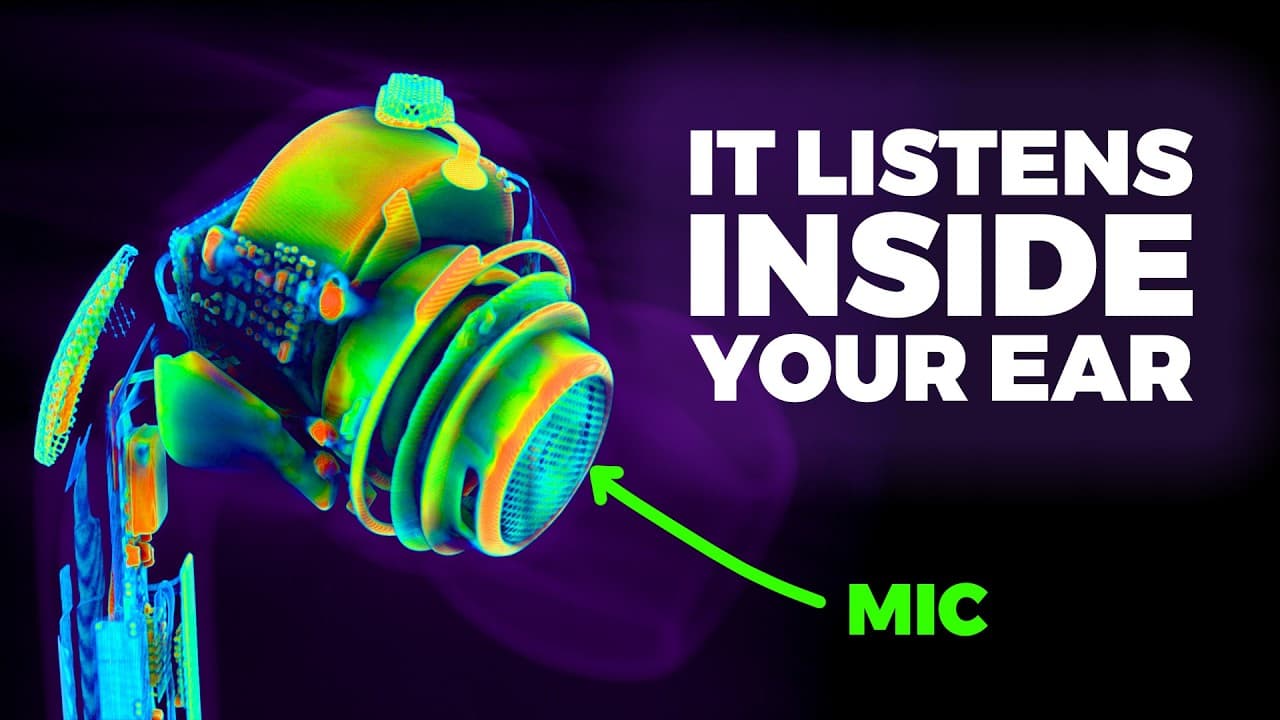
This is what the inside of an AirPod ( Pro 2) looks like. A tightly packed wonder of modern electronic engineering, every piece fitting neatly together like a 3D puzzle. The battery, the speaker, the Bluetooth antenna, all carefully packed into a space not much bigger than your fingertip. A technology that would have seemed completely far-fetch... Read More
Key Insights
- The AirPods Pro 2 is a feat of modern engineering, with components like the battery, speaker, and Bluetooth antenna packed into a tiny space.
- The AirPods' lithium-ion battery, despite its small size, provides up to six hours of use, thanks to Apple's precise manufacturing techniques.
- Bluetooth technology in AirPods uses frequency hopping to avoid interference, a method developed by Ericsson and managed by a non-profit organization.
- The AirPods' antenna is ingeniously embedded in the stem using a laser-engraved plastic cylinder, enhancing signal reception by positioning it away from the head.
- MEMS microphones used in AirPods are highly efficient, utilizing silicon wafer manufacturing to achieve a compact size and better signal-to-noise ratio.
- AirPods employ both feedforward and feedback noise-canceling techniques using multiple microphones to enhance audio quality and reduce external noise.
- The AirPods' accelerometer detects jawbone vibrations to activate Siri, allowing for low-power operation while remaining responsive to user commands.
- Acoustic meshes in AirPods enhance sound quality by controlling airflow and pressure, while hydrophobic coatings protect against moisture and debris.
Install to Summarize YouTube Videos and Get Transcripts
Explore YouTube Video Summarizer or Get YouTube Transcript Extractor
Questions & Answers
Q: How do AirPods achieve such compact design?
AirPods achieve their compact design through meticulous engineering, where every component is precisely crafted to fit within a small space. This includes using advanced manufacturing techniques for the battery, speaker, and Bluetooth antenna. The use of a CT scan reveals how each part is layered and packed, showcasing a triumph of miniaturization in consumer electronics.
Q: What makes the AirPods' battery unique?
The AirPods' battery is unique due to its small size and efficient energy storage. Despite being only 182 milliwatt-hours, it can power the AirPods for up to six hours. This efficiency is achieved through precise manufacturing, which ensures tight packing of the battery materials, reducing gaps and enhancing energy density, unlike cheaper knockoffs.
Q: How does Bluetooth technology work in AirPods?
Bluetooth technology in AirPods uses frequency hopping to avoid interference. This method involves rapidly switching between different channels, ensuring a stable connection even in crowded frequency ranges. Developed by Ericsson, Bluetooth operates in the 2.4 GHz range, which is accessible and effective for wireless communication across various devices.
Q: What role does the antenna play in AirPods?
The antenna in AirPods is crucial for receiving Bluetooth signals. It is ingeniously embedded in the stem, wrapped around a plastic cylinder with a laser-engraved metal strip. This design positions the antenna away from the head, improving signal reception by reducing interference from the human body, which can block Bluetooth signals.
Q: How do AirPods use MEMS microphones?
AirPods use MEMS microphones for efficient sound capture. These microphones are built using silicon wafer manufacturing techniques, creating a compact and precise structure. MEMS microphones offer better signal-to-noise ratios compared to traditional electret microphones, allowing AirPods to deliver clear audio while maintaining a small form factor.
Q: What is the noise-canceling technology in AirPods?
AirPods employ both feedforward and feedback noise-canceling technologies. External microphones measure ambient noise and generate an inverted sound wave to cancel it out. Additionally, an internal microphone near the ear canal measures actual sound heard, allowing the system to adjust and maintain noise cancellation in real-time, enhancing audio clarity.
Q: How do AirPods activate Siri without constant microphone use?
AirPods use an accelerometer to detect jawbone vibrations when the user speaks. This low-power sensor activates the microphones only when necessary, such as for Siri requests, conserving battery life. This clever use of an accelerometer allows AirPods to remain responsive to user commands without draining the battery by keeping microphones active continuously.
Q: What is the purpose of acoustic meshes in AirPods?
Acoustic meshes in AirPods play a crucial role in enhancing sound quality by controlling airflow and pressure. They help prevent unwanted resonances and ensure consistent audio output. The meshes are precisely sized and placed to allow the right frequencies to pass through while protecting against water and dust with a hydrophobic coating, maintaining sound integrity.
Summary & Key Takeaways
-
AirPods Pro 2 showcases advanced miniaturization with tightly packed components, offering impressive functionality in a small form factor. The battery, speaker, and antenna are expertly integrated.
-
Bluetooth in AirPods employs frequency hopping to minimize interference, ensuring reliable wireless communication. The antenna design enhances signal reception by positioning it away from obstructions.
-
AirPods utilize MEMS microphones and multiple noise-canceling techniques to deliver superior audio quality. Acoustic meshes and hydrophobic coatings protect against environmental factors while maintaining sound integrity.
Read in Other Languages (beta)
Share This Summary 📚
Summarize YouTube Videos and Get Video Transcripts with 1-Click
Try YouTube Summary with ChatGPT & Claude or YouTube Transcript Generator
Explore More Summaries from Real Engineering 📚






Summarize YouTube Videos and Get Video Transcripts with 1-Click
Try YouTube Summary with ChatGPT & Claude or YouTube Transcript Generator