How to Build a Mission-Driven Company for Decades
TL;DR
Building an ambitious company requires patient, multi-decade thinking, a mission important enough to withstand repeated rejection, and teams capable of collaborating when solutions are unclear. RJ Scaringe built credibility through engineering education, pursued innovation unconstrained by established automotive practices, and accepted that creating a car company demands billions of dollars, thousands of contributors, hundreds of suppliers, differentiated technology, manufacturing capacity, and products customers want.
Transcript
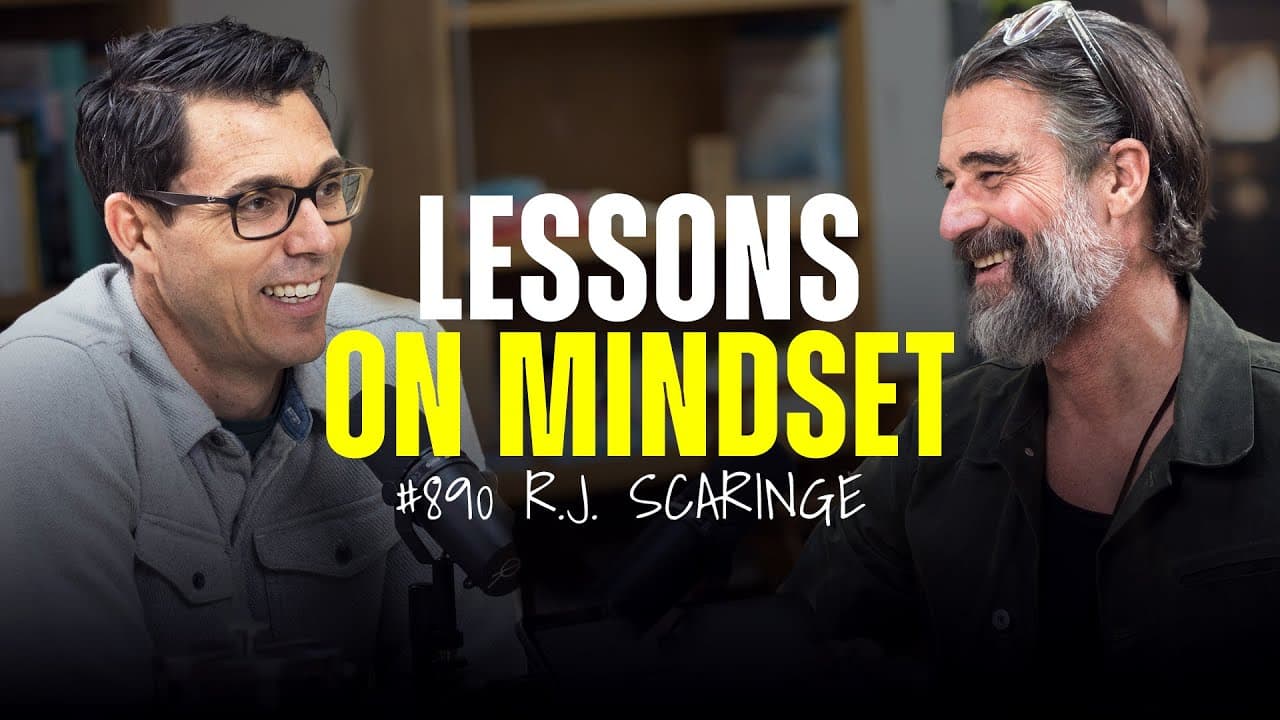
the whole fabric of our society is going to look very different in 30 or 40 years there's a desire to to create a world in which the generations to come are inheriting something that's as magical as it was for us I think it's safe to say there are easier ways to make money than by starting a car company but today's guest R.J scaringe isn't really i... Read More
Key Insights
- Rivian’s mission is to decarbonize transportation while preserving the freedom, enjoyment, and inspiration associated with personal mobility. Scaringe’s commitment emerged after recognizing that the cars he loved also contributed to climate effects, local air-quality problems, and geopolitical conflict.
- Scaringe’s automotive ambition began during childhood through restoring classic cars, collecting components, and imagining projects. By roughly age 13, he wanted to create a new car company that could inspire future generations with vehicles that were attractive, enjoyable to drive, and capable of traveling long distances.
- A car is a visible manifestation of coordinated teamwork because its chassis, body, appearance, driving behavior, powertrain, and detailed features must operate as one product. Scaringe argues that a well-executed vehicle reflects teams collaborating effectively, while a poorly executed vehicle often reveals organizational weakness.
- Starting a car company requires an unusually large combination of resources before meaningful revenue is possible. Scaringe identifies billions of dollars, thousands of engineers and designers, hundreds of suppliers, differentiated and robust technology, manufacturing capacity, brand positioning, and a product concept customers actually want.
- The central startup challenge is an interdependent credibility problem. Investors want evidence of technology, products, suppliers, partners, and a capable team, but building those assets requires funding. Rivian therefore had to accumulate credibility gradually before it could obtain meetings with established venture capital firms.
- Scaringe’s education was part of his preparation for entrepreneurship. He completed engineering studies and pursued a master’s degree and PhD at MIT’s automotive laboratory because technical credibility could help him attract capital and talented people while attempting to start a company at a young age.
- Innovation is strongest when it is unconstrained by inherited corporate dogma. Scaringe wanted Rivian to unite people around technologies, ideas, and product concepts that did not already exist, a principle captured by the message that the company was being built precisely because it did not yet exist.
- Collaboration becomes most important when circumstances are difficult and no obvious solution exists. Scaringe observes that working together is easy when conditions are favorable, while genuine leadership and teamwork are tested by challenging situations, uncertainty, disagreement, and seemingly insurmountable obstacles.
Install to Summarize YouTube Videos and Get Transcripts
Explore YouTube Video Summarizer or Get YouTube Transcript Extractor
Questions & Answers
Q: How do you build a mission-driven company for the long term?
A mission-driven company begins with a problem important enough to justify years of uncertainty and repeated setbacks. Scaringe connected his lifelong interest in cars with the need to address climate effects, local air quality, and geopolitical conflict. He then pursued patient, multi-decade work, built technical credibility, attracted collaborators, and treated difficult periods as tests of teamwork rather than reasons to abandon the mission.
Q: Why is starting a car company so difficult?
Starting a car company requires many expensive and interdependent capabilities before the first product can reach customers. Scaringe lists billions of dollars in capital, thousands of engineers and designers, hundreds of suppliers, robust and differentiated technology, manufacturing capacity, brand positioning, and a compelling product concept. Even if all those resources existed on the first day, producing the initial vehicle would still take several years.
Q: How did RJ Scaringe develop his ambition to start a car company?
Scaringe became a car enthusiast around age 10, restored classic vehicles, collected parts, and kept items such as an engine, windshields, and hoods in his bedroom. By roughly age 13, he wanted to do more than repair cars. He envisioned creating new forms of personal mobility that future children could find as inspiring, attractive, enjoyable, and useful as the vehicles that inspired him.
Q: Why did RJ Scaringe pursue a PhD before founding Rivian?
Scaringe believed that starting a car company while young would require him to raise substantial capital and bring many people together despite lacking personal capital and prior employment at another automaker. He pursued a PhD at MIT’s automotive laboratory to strengthen his technical credibility. That education helped address the challenge of persuading investors and collaborators to take an unusually ambitious proposal seriously.
Q: What makes automotive manufacturing a teamwork challenge?
A vehicle combines a chassis, body, powertrain, visual design, driving characteristics, and many detailed decisions into one product. Thousands of people may work for several years to make those systems function together. Scaringe views the finished car as evidence of organizational coordination: strong execution suggests that teams collaborated effectively, while weak execution can reveal that the underlying teams did not work together well.
Q: How can a startup gain credibility before it has a product?
A startup facing Rivian’s conditions must build credibility incrementally because investors may reject a proposal that lacks technology, a product design, suppliers, partners, a manufacturing plant, and a substantial team. Scaringe prepared through advanced automotive engineering education and gradually developed the company’s foundations. The goal was to earn enough credibility to secure investor meetings, capital, talent, partnerships, and the next stage of development.
Q: What role does innovation play in building a new car company?
Innovation allows a new company to create products and technologies without being restricted by established practices or inherited organizational structures. Scaringe wanted a team capable of making something that did not exist, rather than reproducing how an older automaker had always operated. Rivian’s early message, written on a warehouse wall, emphasized that the company was being built because the needed organization and solutions did not yet exist.
Q: How should leaders respond when teams face difficult problems?
Leaders should recognize that collaboration is most demanding when circumstances are uncertain and no easy solution is available. Scaringe notes that people handle challenging situations differently, so there is no single correct personal response. The essential organizational task is maintaining the ability to work together through pressure, obstacles, and disagreement, rather than treating collaboration as a value that applies only when conditions are comfortable.
Summary & Key Takeaways
-
RJ Scaringe’s ambition grew from a childhood fascination with cars and hands-on restoration projects. He eventually recognized that the machines he loved contributed to climate effects, poor urban air quality, and geopolitical conflict. That tension inspired a mission to preserve enjoyable personal mobility while developing new forms of sustainable transportation.
-
Starting a car company presented an unusually difficult sequence of dependencies. Rivian initially lacked capital, proprietary technology, suppliers, a manufacturing plant, a developed product, and a large engineering organization. Each missing element made the others harder to obtain, forcing Scaringe to establish credibility gradually before serious investors would consider the proposal.
-
Scaringe frames automotive creation as a manifestation of teamwork because the chassis, body, powertrain, design, driving experience, and numerous product details must function together. His leadership philosophy emphasizes unconventional innovation, long-term commitment, and collaboration during difficult periods, especially when teams face uncertainty and no easy solution is available.
Read in Other Languages (beta)
Share This Summary 📚
Summarize YouTube Videos and Get Video Transcripts with 1-Click
Try YouTube Summary with ChatGPT & Claude or YouTube Transcript Generator
Explore More Summaries from Rich Roll 📚




Summarize YouTube Videos and Get Video Transcripts with 1-Click
Try YouTube Summary with ChatGPT & Claude or YouTube Transcript Generator