Why Kraken Is Unfazed by Bitcoin Price Drops
TL;DR
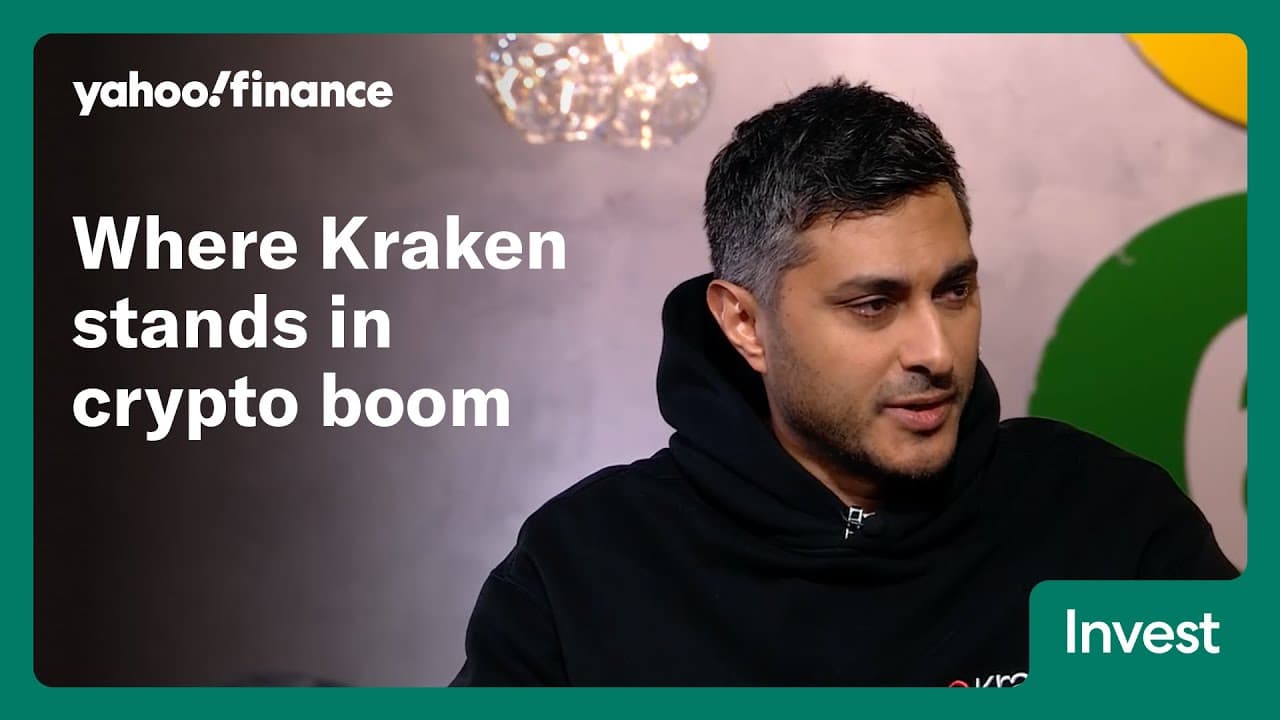
Kraken is not overly concerned by Bitcoin falling below $100,000 because short-term price cycles do not change its broader investment thesis or diversified platform strategy. The exchange is expanding beyond crypto into stocks, ETFs, yield products, institutional services, and tokenized equities, aiming to give customers worldwide equal access to financial assets through interoperable, internet-based markets.
Transcript
Crypto exchange Kraken will be marking its 15th anniversary in 2026, making it the veritable granddaddy in this still young industry. The market has gotten a lot more crowded in that time and more established. With more on where the industry is going from here, we're joined by Arjun Si. He is Kraken co-CEO. Thanks for being here, Arjun. Thanks for ... Read More
Key Insights
- Bitcoin volatility is treated as part of a recurring market cycle, not as evidence that Kraken's long-term strategy has failed. Sethi notes that rising asset prices attract interest and speculation, while falling prices generally produce more negative news across crypto, stocks, shares, and ETFs.
- Kraken's diversification is broader than Bitcoin trading. The platform offers more than 400 crypto-related assets, US stocks and ETFs, and plans to add some international stocks, reducing its dependence on traffic generated by the price movement of any single cryptocurrency.
- The investment thesis is more important than short-term price direction. Sethi encourages investors to examine why they would own Bitcoin, Ethereum, other assets, dollars, or shares rather than allowing temporary market movements to determine the entire case for ownership.
- Crypto assets are increasingly viewed as accessible alternatives in markets where people cannot easily participate in local equity systems. According to Sethi, users often seek assets they consider safe, including US assets, Bitcoin, Ethereum, alternative cryptocurrencies, stablecoins linked to US Treasuries, and tokenized equities.
- Kraken's identity is grounded in the principle that customers' money and property belong to them. The company supports asset portability, voluntary participation in yield programs, and the ability to choose trusted services while combining an exchange with a broader brokerage-style product platform.
- Financial inclusion is framed as practical access to capital markets and opportunities for forward mobility. Kraken seeks to deliver products traditionally associated with high-net-worth customers to a worldwide audience, using crypto as underlying infrastructure for transferring, trading, saving, and earning yield.
- Kraken serves customers according to their financial journey rather than treating retail and institutional users as opposing groups. Its exchange liquidity supports consumer interfaces, professional trading, institutional custody, security, yield products, token issuers, and companies holding digital assets on their balance sheets.
- Tokenized equities are designed to distribute familiar assets through global crypto infrastructure. Kraken's XStocks offering operates outside the United States on multiple chains, mainly Solana and Ethereum, giving eligible users access to equities and potential yield regardless of their location or chosen platform.
Install to Summarize YouTube Videos and Get Transcripts
Explore YouTube Video Summarizer or Get YouTube Transcript Extractor
Questions & Answers
Q: Why is Kraken not alarmed by Bitcoin falling below $100,000?
Kraken is not alarmed because co-CEO Arjun Sethi sees price volatility as a recurring characteristic of crypto and other asset classes. Higher prices tend to attract speculation and new buyers, while declines produce more negative news. He argues that the more important consideration is the underlying reason for owning Bitcoin, Ethereum, dollars, shares, or other assets, rather than one short-term price movement.
Q: How does Bitcoin's price affect activity on Kraken?
Bitcoin's price can influence attention and participation on Kraken because rising prices generate speculation and encourage people to buy, while falling prices create negative coverage and weaker sentiment. However, Kraken is not presented as dependent on Bitcoin alone. Its platform includes more than 400 crypto-related assets, US stocks, ETFs, and planned international stock offerings, giving customers several markets in which to participate.
Q: What assets and financial products does Kraken offer?
Kraken offers more than 400 crypto-related assets, including access to Bitcoin, Ethereum, and alternative cryptocurrencies. It also provides US stocks and ETFs, with some international stocks expected to join the platform. Its broader services include trading, sending and receiving assets, yield products, institutional custody, security, support for digital asset treasuries, and tokenized equities through XStocks outside the United States.
Q: How does Kraken describe its competitive identity?
Kraken describes itself as a worldwide, crypto-native platform built around ownership, freedom, interoperability, and equal access. Its core principle is that customers' property and money belong to them, so assets should be movable and usable according to customer choice. Kraken combines an exchange that supports liquidity with brokerage-style products that let users trade, store, save, and seek yield across several asset categories.
Q: How does Kraken approach financial inclusion?
Kraken approaches financial inclusion by trying to bring more people into capital markets and make sophisticated products available beyond high-net-worth customers. Sethi argues that traditional institutions often reserve better products for people or organizations with large pools of capital. Kraken instead aims to use global internet-based infrastructure and crypto rails to provide trading, saving, yield, and asset access to customers worldwide.
Q: How does Kraken serve consumers, professional traders, and institutions?
Kraken uses its exchange and global liquidity engine as the foundation for distinct customer experiences. Professional and active traders strengthen liquidity, while consumers receive interfaces for sending, receiving, saving, and accessing yield. Institutions receive products focused on custody, safety, security, and yield. Kraken also supports companies holding digital assets on their balance sheets and protocol companies listing their tokens.
Q: What is Kraken's XStocks tokenized equity product?
XStocks is Kraken's tokenized equity platform, available outside the United States and across multiple blockchains. Sethi identifies Solana and Ethereum as its two main launch chains. The product is intended to give eligible users worldwide access to equities such as the S&P 500, McDonald's, and Nvidia through global crypto infrastructure, with potential opportunities to earn yield on those assets.
Q: Why are tokenized stocks useful outside the United States?
Tokenized stocks can help people who lack convenient access to local equity markets obtain exposure to assets they view as safe or capable of growth. Sethi gives the example of a shopkeeper in Latin America gaining access to the S&P 500. He argues that global liquidity, distribution, and interoperable platforms can make these assets available regardless of a user's location or preferred platform.
Summary & Key Takeaways
-
Kraken co-CEO Arjun Sethi views Bitcoin's volatility as a normal feature shared by other asset classes. Rising prices attract speculation, while declines generate negative attention. Rather than focusing on short-term traffic changes, Kraken emphasizes the reasons investors choose Bitcoin, Ethereum, other crypto assets, stocks, or dollars in the first place.
-
Kraken positions itself as a worldwide financial platform built around individual ownership, asset portability, and equal access. Its exchange provides the liquidity foundation for products serving active traders, consumers, and institutions. These offerings include crypto assets, US stocks and ETFs, yield opportunities, custody, security, and support for digital asset treasuries.
-
Kraken's XStocks product offers tokenized equities outside the United States across multiple blockchains, primarily Solana and Ethereum. Sethi argues that tokenization can give people worldwide access to assets such as the S&P 500, McDonald's, and Nvidia, helping users seek growth, inflation protection, yield, and greater participation in capital markets.
Read in Other Languages (beta)
Share This Summary 📚
Summarize YouTube Videos and Get Video Transcripts with 1-Click
Try YouTube Summary with ChatGPT & Claude or YouTube Transcript Generator
Explore More Summaries from Yahoo Finance 📚
Summarize YouTube Videos and Get Video Transcripts with 1-Click
Try YouTube Summary with ChatGPT & Claude or YouTube Transcript Generator