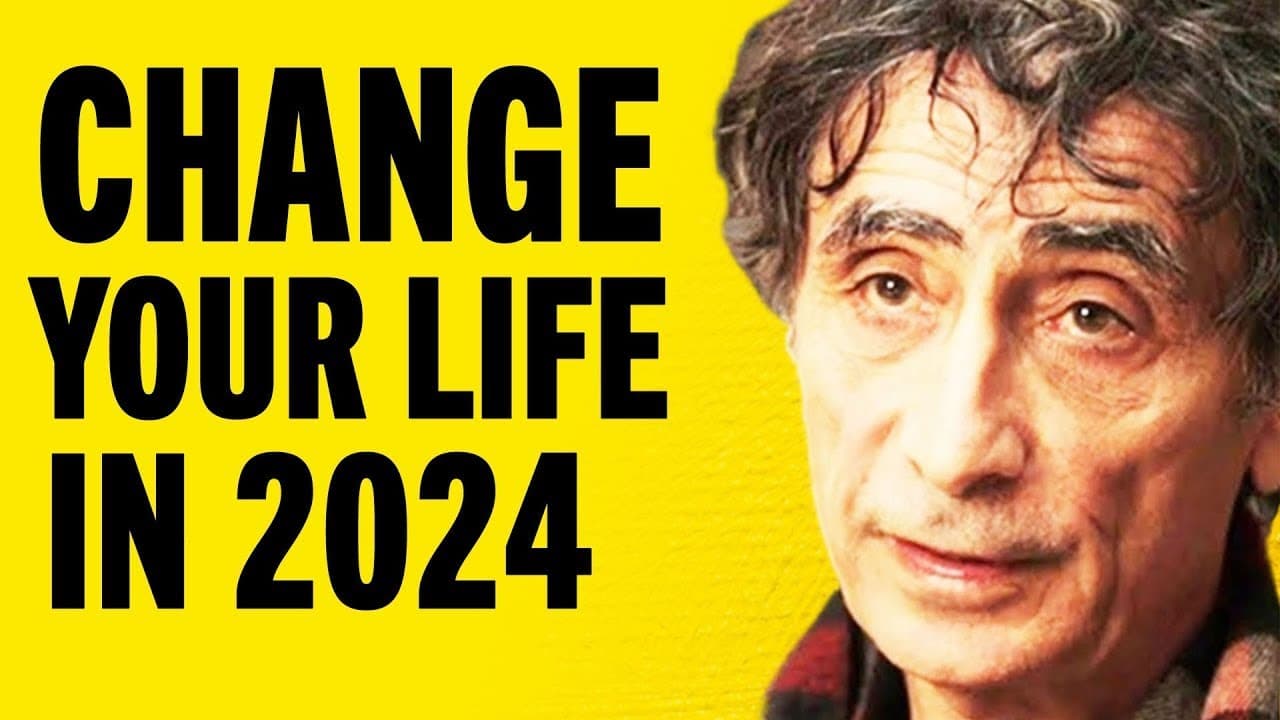
How Does Your Past Affect Present Fear? Gabor Maté on Coronavirus | Feel Better Live More Podcast
TL;DR
Childhood trauma can intensify present fear by causing a current threat to activate emotional responses formed earlier in life. Gabor Maté describes trauma as a wound that can remain painfully sensitive or form rigid emotional scar tissue, making reactions feel programmed rather than consciously chosen. Recognizing familiar emotions, reducing constant exposure to alarming information, and responding compassionately can restore flexibility. Read on for practical insights into fear, isolation, health, and parenting.
Transcript
cigar ball welcome back to the podcast well nice to be back if at a distance if at a distance yeah last time we spoke we were face to face maybe a meter away in a studio in London and now we are what thousands of miles away looking at each other over a screen through this amazing thing called technology I recorded an extra and sort of special podca... Read More
Key Insights
- Trauma is a psychological wound that may remain raw and painful or develop rigid emotional scar tissue. The first condition produces intense sensitivity when touched, while the second reduces feeling, flexibility, and the capacity to respond openly to new circumstances.
- Fear is a natural response to a genuine threat, but people do not experience the same level of fear. Extreme panic during a present crisis may partly reflect childhood fear that has become embedded in a person's nervous system, immune system, and broader physiology.
- Past experience can shape present reactions by making an old emotional response feel appropriate to a new event. When trauma is activated, behavior becomes more programmed and less consciously chosen, limiting the person's ability to respond flexibly to what is actually happening.
- Constant engagement with virus information can spread fear alongside useful knowledge. Technology allows necessary information to reach many people immediately, but repeated exposure to panic through media and the internet can also give fear a contagious, viral quality of its own.
- Isolation can reveal emotions that were already present rather than creating them from nothing. Work, travel, social events, drinking, sports, and ordinary workplace contact may function as distractions that separate people from internal distress until those routines suddenly become unavailable.
- A child's emotional environment includes the stress expressed by parents at home. When adults work, parent, and manage uncertainty in the same space, their anxiety can affect children, making awareness of emotional reactions an important part of reducing the crisis's longer-term impact.
- Health is connected to early experiences, lifelong experiences, family systems, culture, physiology, genes, and emotional functioning. Maté rejects the idea that mental or physical illness should be viewed only as a biological event occurring inside a completely separate individual.
- Compassion begins with understanding why people behave as they do. Recognizing that panic, judgment, addiction, and other reactions may arise from earlier wounds and learned coping patterns creates room for curiosity instead of treating every difficult response as a freely chosen personal failure.
- Related book: The 4 Pillar Plan
- Related book: Scattered Minds
- Export your Kindle highlights to Glasp: How to Download Highlights and Notes from Kindle
Install to Summarize YouTube Videos and Get Transcripts
Explore YouTube Video Summarizer or Get YouTube Transcript Extractor
Questions & Answers
Q: How does childhood trauma shape present fear?
Childhood trauma can embed fear in a person's nervous system, immune system, and broader physiology. When a later crisis activates that fear, the reaction may reflect both the current danger and unresolved past experience. This can make panic feel automatic and reduce the person's ability to respond flexibly.
Q: What does Gabor Maté mean by trauma?
Maté describes trauma as a wound that may remain raw and painfully sensitive or become covered by thick emotional scar tissue. The scar offers protection but also reduces feeling, flexibility, and growth. Trauma can therefore produce either intense sensitivity or rigid responses when later events touch the original wound.
Q: Why can the coronavirus crisis bring old emotions to the surface?
Isolation can remove distractions such as work, travel, drinking, sports, social gatherings, and ordinary workplace contact. Without those routines, people may become more aware of fear or anxiety they already carried. The crisis is new, but the emotions it reveals may feel familiar from earlier life.
Q: How can someone tell whether fear comes from the present or the past?
A person can notice whether the emotion feels entirely new or resembles fear experienced before the current crisis. Sitting with that question can reveal earlier wounds and established coping patterns. This awareness creates room for a more conscious response instead of an automatically programmed one.
Q: Why can constant coronavirus coverage increase anxiety?
Technology can distribute necessary information immediately, but it can also spread panic and fear. Constant engagement with information about the virus can give anxiety a viral quality of its own. The discussion distinguishes staying informed from remaining continuously immersed in alarming coverage.
Q: How can parents reduce the anxiety children experience during a crisis?
Parents can first become aware of their own emotional reactions and whether those reactions are intensified by earlier fears. Children share the emotional environment created by adults who are working, parenting, and managing uncertainty at home. Responding with attention and compassion can reduce the panic expressed around them.
Q: How are trauma responses different from conscious choices?
Trauma narrows the range of responses available when a person encounters a threat. Instead of evaluating the present situation freely, the person may repeat a pattern shaped by an earlier wound. Maté describes this as a programmed reaction rather than a consciously selected response.
Q: How does Gabor Maté connect life experience with mental and physical health?
Maté connects health with early and later experiences, family systems across generations, culture, physiology, genes, and emotional functioning. He argues that mental and physical problems cannot be understood only as biological events inside a separate individual. His approach emphasizes the unity of mind and body and the connection between the individual and the environment.
Summary & Key Takeaways
-
Gabor Maté defines trauma as a wound that can remain painfully sensitive or become covered by rigid emotional scar tissue. Later threats may activate fear embedded through childhood experiences, so a person's reaction reflects both the current danger and the past. Trauma therefore reduces flexibility and makes responses feel programmed rather than consciously selected.
-
The coronavirus crisis may not have created every difficult emotion that surfaced during isolation. Work, travel, social gatherings, drinking, sports, and everyday routines may previously have distracted people from distress they already carried. With those distractions removed, people can notice whether their fear and anxiety feel new or emotionally familiar from earlier experiences.
-
The discussion connects individual health with family systems, culture, relationships, and experiences across life. Maté argues that mental and physical problems cannot always be understood as isolated biological events. The crisis can become an opportunity to examine personal emotions, practice compassion, reduce anxiety around children, and reconsider which activities and values genuinely matter.
Read in Other Languages (beta)
Share This Summary 📚
Summarize YouTube Videos and Get Video Transcripts with 1-Click
Try YouTube Summary with ChatGPT & Claude or YouTube Transcript Generator
Explore More Summaries from Dr Rangan Chatterjee 📚
Summarize YouTube Videos and Get Video Transcripts with 1-Click
Try YouTube Summary with ChatGPT & Claude or YouTube Transcript Generator