How to Find and Test Profitable Business Ideas
TL;DR
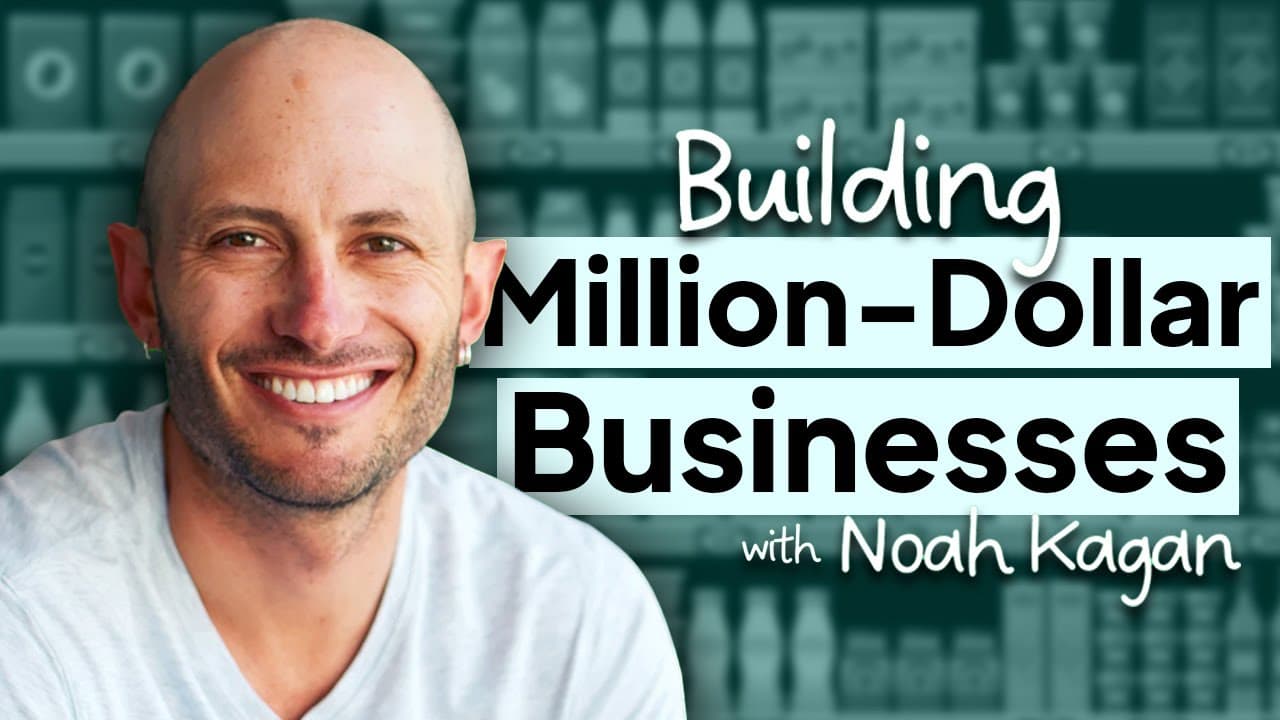
Start with a problem that people already spend time or money solving, preferably one you experience yourself, then validate demand before making a large investment. Talk regularly with customers, employees, and partners, and sell a small test or presale first. Promising opportunities include simpler alternatives to bloated software, tools that make teams more productive, no-code platforms, chatbots, and software integrations.
Transcript
I heard Chris Williamson talk about this where there's a success bias where just because you do something good you think you know everything good the beginnings are always the same right find something people really want and you deliver it to them you know you hear you go on Twitter and everyone's got this Playbook they've shared and then you reali... Read More
Key Insights
- Strong business ideas are rooted in problems that people genuinely want solved. The most useful starting points are problems that already cost customers time or money, particularly those the founder experiences personally and understands well enough to price and sell effectively.
- Small tests are a safeguard against expensive strategic mistakes. After AppSumo increased its catalog from 600 products to 13,000, Kagan concluded that moving first to 650 could have revealed team concerns before the company committed substantial resources in the wrong direction.
- Customer discovery is an ongoing operating practice, not merely an initial research phase. Regular conversations with customers, employees, and partners help leaders challenge ideas they assume are correct and determine whether evidence supports further investment.
- Presales can validate demand before a product is finished. Kagan sold $3,000 of lifetime access to a planned DocuSign alternative within 48 hours, without using his social media or email list, before its scheduled AppSumo launch 30 days later.
- Simpler replacements for bloated software can create viable opportunities. Kagan identifies Google Analytics and DocuSign as examples of products he finds difficult, expensive, or unnecessarily complicated, suggesting that customers may value focused alternatives with clearer pricing.
- Familiar customers make product decisions easier. Kagan prefers selling to solopreneurs and small-business owners because he belongs to that market, understands what prices feel reasonable, and can evaluate whether a tool solves a recurring problem for people like him.
- Distribution access should shape the business idea from the beginning. Founders should ask whom they can reach and sell to easily, because building a product and then relying on Twitter, unsolicited direct messages, or a creator partnership may take a long time or fail.
- AI tools can increase productivity while creating difficult staffing questions. Businesses may use software to produce copy, videos, show notes, or other operational outputs, but automation can also imply eliminating roles, making adoption both an economic opportunity and an organizational decision.
Install to Summarize YouTube Videos and Get Transcripts
Explore YouTube Video Summarizer or Get YouTube Transcript Extractor
Questions & Answers
Q: How do you find a profitable business idea?
Begin with a problem that people already spend meaningful time or money trying to solve, ideally one you experience yourself. Talk with the intended customers, your team, and relevant partners to understand what they actually need. Then test the proposed solution through a small launch or presale before investing heavily. The technology should assist with the customer’s problem, rather than determine the idea by itself.
Q: How should founders test a business idea before investing?
Founders should run the smallest practical test that can reveal real demand or operational problems. Kagan illustrates this with AppSumo’s expansion from 600 products to 13,000, arguing that a move to 650 could have exposed the team’s concerns much earlier. Customer conversations, employee feedback, partner input, and paid presales all provide stronger evidence than assuming a seemingly successful playbook will work at a larger scale.
Q: Why should a business idea start with the customer?
Customers care about resolving their problems, not about whether a founder used fashionable technology or created an impressive technical solution. Starting with the customer reveals which problems consume time or money, what outcome people value, and what price might be acceptable. It also prevents engineers and other product builders from selecting a solution first and searching afterward for people who might want it.
Q: What software business opportunities does Noah Kagan identify?
Kagan identifies several categories: tools that replace or support team functions, simpler alternatives to outdated or bloated software, no-code platforms, more capable chatbots, and integration services that help separate software products communicate. He cites podcast production automation, analytics, electronic signatures, scheduling, and Zapier competitors as examples. His central requirement is that each product address a demonstrated customer problem rather than merely use new technology.
Q: How can presales validate a software product?
A presale asks customers to pay before the complete product is launched, producing stronger evidence than compliments or expressions of interest. Kagan reports selling $3,000 of lifetime access to a DocuSign alternative in 48 hours without using his social media or email list. The planned product would then launch on AppSumo 30 days later, allowing the initial sales to test whether the problem and offer attracted buyers.
Q: Why is existing audience access important for a startup?
Existing access makes it easier to reach potential buyers, understand their language, test pricing, and collect feedback. Kagan advises founders to consider whom they can sell to before building. He warns that launching first and then hoping customers appear through Twitter, unsolicited direct messages, or a creator partnership is unreliable and may take considerable time. Product selection and distribution strategy should therefore be developed together.
Q: What does TidyCal demonstrate about simple software businesses?
TidyCal demonstrates that a focused, lower-priced alternative can produce substantial profit while also introducing customers to a broader business ecosystem. Kagan says it launched at $29 for lifetime access and was generating $3,000 in profit per day about two years later. He estimates it could retain roughly $2,500 per day even without continued development, although the company currently maintains a supporting team.
Q: How can AI tools affect teams and business operations?
AI tools can automate operational work such as creating podcast show notes, writing copy, or preparing partner videos, which may save time and make employees more productive. However, Kagan notes an uncomfortable consequence: efficiency can reduce the need for some roles and potentially lead to job losses. He frames AI as another major technological shift that businesses can either resist or use to create greater value.
Summary & Key Takeaways
-
Successful businesses begin by identifying something people genuinely want and delivering it. Noah Kagan recommends looking for problems that already consume time or money, especially problems you personally understand. Starting with customers instead of fashionable technology helps founders choose useful products, suitable prices, and accessible markets rather than building solutions without proven demand.
-
Testing should precede major investment because confident assumptions can send a company in the wrong direction. AppSumo expanded from 600 products to 13,000 before recognizing the mistake. A smaller increase to 650 could have exposed the problem earlier. Customer conversations, team feedback, partner input, and presales provide practical evidence before doubling down.
-
Software opportunities include affordable replacements for complicated or expensive products, tools that automate team tasks, no-code platforms, improved chatbots, and services connecting separate applications. Distribution must be considered alongside product development. Founders should sell to audiences they can already reach instead of assuming social media, unsolicited messages, or creators will automatically produce customers.
Read in Other Languages (beta)
Share This Summary 📚
Summarize YouTube Videos and Get Video Transcripts with 1-Click
Try YouTube Summary with ChatGPT & Claude or YouTube Transcript Generator
Explore More Summaries from Greg Isenberg 📚



Summarize YouTube Videos and Get Video Transcripts with 1-Click
Try YouTube Summary with ChatGPT & Claude or YouTube Transcript Generator