How to Run TT Blackhole on Arch Linux Today
TL;DR
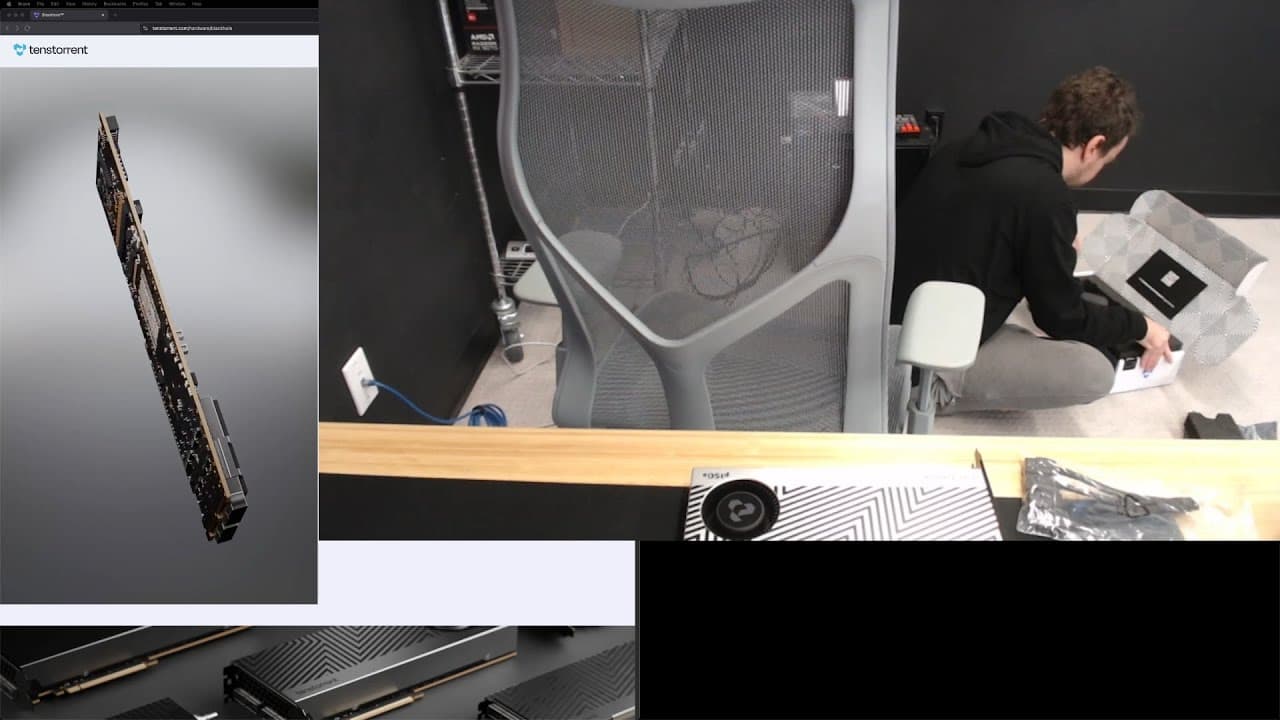
TT Blackhole can be run on Arch Linux with the right setup and drivers. The stream demonstrates hardware unboxing, discusses compatibility with Tinygrad and related tools, and highlights practical steps for configuring the system. The main takeaway is that Arch Linux supports TT Blackhole when you follow the demonstrated workflow and ensure correct software alignment.
Transcript
sahkjdajslkid: HeyGuys TandeBoy: sup whiterunknight: hi George sleepydude1: KonCha iq_map: hi xzenshadowz: What is the general goal of the stream -- to make TTBlackhole run on the Arch, or will there be some tinygrad on TT stuff? bestrank1gamer: sup eightuponatime: rtzP evening Alejandro_Ren: HenloThere HenloThere cactusvacuum: yo j3ckerd: i prefer... Read More
Key Insights
- TT Blackhole was demonstrated on an Arch Linux environment during the stream, illustrating practical setup steps and potential hurdles.
- The discussion covers compatibility with Tinygrad and related software, indicating a workflow that leverages existing AI tooling for Blackhole on Arch Linux.
- Hardware context is a focus, including unboxing and assessing components that influence performance and driver support.
- The host emphasizes software configuration and driver alignment as critical for enabling TT Blackhole on Arch Linux.
- Unboxing serves to set expectations about build quality, available I/O, and potential future expandability for Blackhole on this platform.
- The stream weaves in real-time Q&A style interactions to address common user questions about installation, compatibility, and use cases.
- There is a recurring emphasis on the need for correct kernel, driver, and library versions to ensure stable operation.
- The overall takeaway is a practical, stepwise approach to getting TT Blackhole running on Arch Linux with attention to hardware and software alignment.
Install to Summarize YouTube Videos and Get Transcripts
Explore YouTube Video Summarizer or Get YouTube Transcript Extractor
Questions & Answers
Q: A real search query question about the video (e.g. 'How to...', 'What is...', 'Why does...', 'When should...'). Question 1
What are the essential steps to run TT Blackhole on Arch Linux as shown in the stream, and what common pitfalls should a user expect? The answer covers selecting compatible kernel and drivers, configuring software like Tinygrad, and validating hardware readiness. It emphasizes following the demonstrated workflow while adjusting for system specifics, such as hardware variants or driver versions, to achieve a stable setup.
Q: Question 2
What hardware aspects are highlighted during the unboxing that impact TT Blackhole performance on Arch Linux? The response notes the build quality, potential compatibility considerations, and the importance of selecting components with strong Linux driver support, as well as ensuring adequate power and thermal management to sustain long compute sessions.
Q: Question 3
How does the stream describe the role of Tinygrad in the TT Blackhole workflow on Arch Linux? The explanation outlines Tinygrad as part of the software ecosystem that interfaces with Blackhole, suggesting how it can be used for testing, development, and validating basic AI workloads on the platform, while noting potential integration steps.
Q: Question 4
What setup considerations are recommended for software configuration when running TT Blackhole on Arch Linux? The answer emphasizes aligning kernel version, driver packages, and needed libraries, configuring environment paths, and ensuring that the system can access the hardware securely, with steps mirroring the stream’s demonstrated approach.
Q: Question 5
Why is hardware compatibility a recurring theme in the video about TT Blackhole on Arch Linux? The rationale is that correct drivers, kernel support, and firmware levels are crucial for stable operation and performance, and misalignment can lead to driver failures or degraded compute efficiency during AI workloads.
Q: Question 6
What does the stream imply about future expandability or related tooling for TT Blackhole on Arch Linux? The discussion hints at potential updates to tooling and software ecosystems, including continued use of Tinygrad inspired components and possible enhancements to improve ease of use and broader hardware support.
Q: Question 7
How is user interaction handled in the stream when discussing TT Blackhole on Arch Linux? The format includes live questions from viewers, rapid technical feedback, and iterative troubleshooting, creating a collaborative debugging environment that helps viewers understand practical installation and configuration steps.
Q: Question 8
What is the overarching goal of mastering TT Blackhole on Arch Linux according to the video? The aim is to enable a usable, efficient AI compute platform on a consumer-grade Linux setup by aligning software tools, hardware, and system configuration to work cohesively with Blackhole.
Summary & Key Takeaways
-
The video demonstrates setting up TT Blackhole on Arch Linux and showcases the unboxing experience, emphasizing practical steps for compatibility and driver handling.
-
The host discusses Tinygrad and related software in the context of Blackhole, highlighting integration points and the expectations for performance and usability on a consumer-grade Linux setup.
-
The overall message is that archlinux can support TT Blackhole with careful configuration, appropriate tooling, and attention to hardware and software compatibility.
Read in Other Languages (beta)
Share This Summary 📚
Summarize YouTube Videos and Get Video Transcripts with 1-Click
Try YouTube Summary with ChatGPT & Claude or YouTube Transcript Generator
Explore More Summaries from george hotz archive 📚


Summarize YouTube Videos and Get Video Transcripts with 1-Click
Try YouTube Summary with ChatGPT & Claude or YouTube Transcript Generator