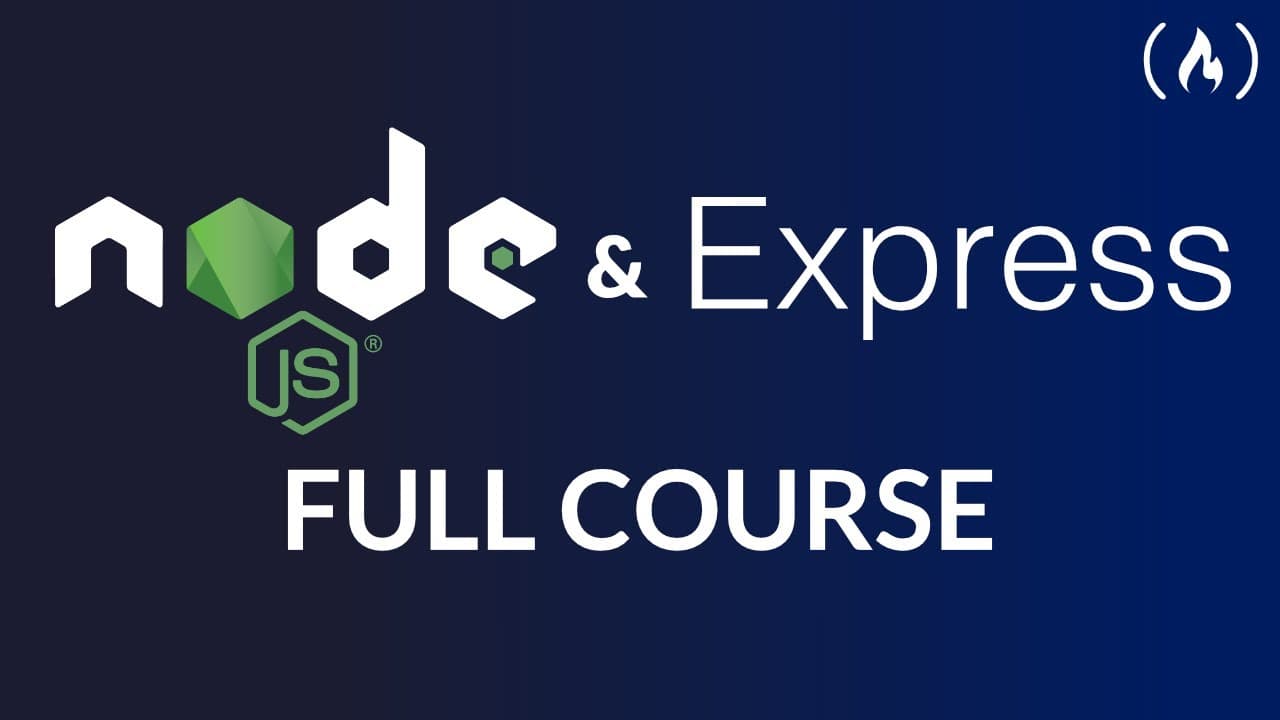
How Do You Build Web Apps with Node.js and Express.js? Full Course
TL;DR
Build backend and full-stack web apps by learning Node.js fundamentals, using Express.js for server-side development, and applying both through hands-on projects. John Smilga’s eight-hour course progresses from setup and core concepts to a complex REST API, a full MERN application, MongoDB, Mongoose, and deployment steps. Read on for the course structure, requirements, and key differences between browser JavaScript and Node.js.
Transcript
this eight hour course will teach you the fundamentals of node.js and express so you can start creating backend and full stack web apps using javascript this course was created by john smilga john has created a bunch of courses including many of the more popular courses on the freecodecamp youtube channel john's teaching is very hands-on so you wil... Read More
Key Insights
- Node.js allows running JavaScript outside the browser, enabling server-side development.
- Express.js is a framework that simplifies building server-side applications with Node.js.
- REST APIs can be built using Express.js to handle HTTP requests and responses.
- The MERN stack combines MongoDB, Express.js, React, and Node.js for full-stack development.
- Modules in Node.js help organize code by encapsulating functionality and sharing only what's necessary.
- Node Package Manager (NPM) is essential for managing project dependencies and modules.
- Asynchronous programming in Node.js improves performance by non-blocking operations.
- Middleware in Express.js allows executing code, modifying requests and responses, and ending request-response cycles.
Install to Summarize YouTube Videos and Get Transcripts
Explore YouTube Video Summarizer or Get YouTube Transcript Extractor
Questions & Answers
Q: How do you build web apps with Node.js and Express.js?
Start with Node.js and Express.js fundamentals, then apply them by building server-side projects with JavaScript. The course progresses to a complex REST API with Express.js, a full MERN application, and deployment steps.
Q: What is Node.js?
Node.js is an environment for running JavaScript outside the browser. It was created in 2009 and is built on Chrome’s V8 JavaScript engine.
Q: What does this Node.js and Express.js full course cover?
The eight-hour course covers Node.js fundamentals, Express.js, MongoDB, and Mongoose. It also includes multiple projects, a complex REST API, a full MERN application, and deployment steps.
Q: Who created the Node.js and Express.js course?
The course was created by John Smilga from Coding Addict. His teaching is hands-on, so learners build multiple projects while studying the concepts.
Q: What knowledge is required before taking the course?
Learners should be familiar with basic HTML elements, simple CSS rules, and JavaScript. The transcript especially identifies ES6, callbacks, promises, and async/await as important for understanding how the material works behind the scenes.
Q: How is the Node.js and Express.js course structured?
The first section introduces Node.js and the instructor’s development setup. Section two installs Node.js and compares browser JavaScript with Node.js, section three covers Node.js fundamentals, and section four introduces Express.js before later sections focus on building applications.
Q: How is Node.js different from browser JavaScript?
Node.js does not provide browser APIs such as the DOM, geolocation, fetch, or the window object. Instead, it supports server-side logic, file-system access, operating-system information, and responses to network requests.
Q: Why use Node.js for full-stack application development?
Node.js makes it possible to build both the frontend and backend with JavaScript. The course’s goal is to use it to create modern, fast, and scalable server-side web applications while reinforcing the material through projects.
Summary & Key Takeaways
-
Node.js is a runtime environment for executing JavaScript on the server side, offering a platform for building scalable web applications. Express.js, a Node.js framework, simplifies handling HTTP requests and building REST APIs.
-
The course guides you through Node.js fundamentals, Express.js framework, and building a complex REST API. You will also create a MERN stack application, integrating MongoDB, Express.js, React, and Node.js.
-
Modules in Node.js help organize code, while NPM manages dependencies. Asynchronous programming enhances performance by preventing blocking operations. Middleware in Express.js allows manipulation of request and response objects.
Read in Other Languages (beta)
Share This Summary 📚
Summarize YouTube Videos and Get Video Transcripts with 1-Click
Try YouTube Summary with ChatGPT & Claude or YouTube Transcript Generator
Explore More Summaries from freeCodeCamp.org 📚
Summarize YouTube Videos and Get Video Transcripts with 1-Click
Try YouTube Summary with ChatGPT & Claude or YouTube Transcript Generator