Multitasking: When to Do It, When (and How) to Avoid It
TL;DR
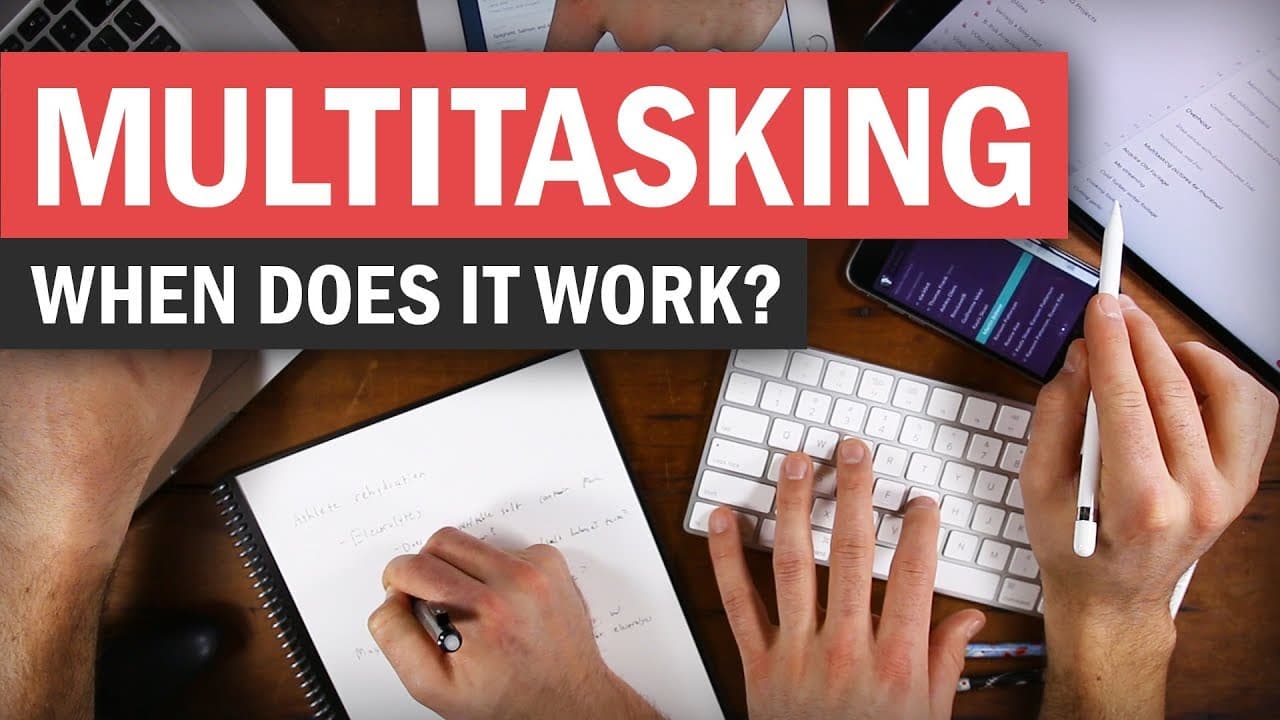
Multitasking is usually ineffective because switching attention creates a cognitive switching penalty, disrupts flow, and increases mistakes. It can still make sense when neither task requires intense concentration and at least one has become muscle memory, as with familiar cooking routines. Limiting options with a dedicated writing setup, Cold Turkey Writer, Freedom, or FocalFilter can protect focus. Read on for practical ways to apply these restrictions.
Transcript
You've probably heard that multi-tasking isn't good for your productivity but do you know why that is? Today we're going to explore the reasons and by the end of this video you're gonna have a good understanding of exactly why multi-tasking is a tempting yet ultimately ineffective strategy in most situations. I'll also be recommending some tools an... Read More
Key Insights
- 🥺 Multi-tasking leads to cognitive switching penalties and prevents the brain from entering a flow state, making it ineffective and leading to more mistakes.
- 🔂 Restricting options and focusing on a single task can improve productivity and avoid the temptation to multi-task.
- ✖️ Multi-tasking can be useful in situations where tasks do not require intense concentration or when background processing is beneficial.
- 💻 Utilizing tools such as website blockers or less capable computers can help avoid distractions and improve focus.
- 🧡 Skills can be improved through online learning platforms like Skillshare, which offers a wide range of courses for various skills.
- ✍️ Restricting options and focusing on important tasks can be achieved with simple setups like using an iPad or notebook dedicated to writing.
- 🥺 Multi-tasking can lead to a decrease in skill level and performance in tasks that require concentration.
Install to Summarize YouTube Videos and Get Transcripts
Explore YouTube Video Summarizer or Get YouTube Transcript Extractor
Questions & Answers
Q: Why is multitasking usually ineffective?
The brain does not switch quickly between tasks that require active attention or high concentration. Each switch creates a cognitive switching penalty, costing transition time and additional time while the brain tries to regain flow.
Q: Does multitasking actually exist?
Yes, multitasking exists, but multifocus does not. The brain switches attention back and forth between tasks rather than focusing deeply on several demanding tasks at once.
Q: How does multitasking affect mistakes and performance?
Multiple studies discussed in the transcript found that multitaskers make more mistakes. The speaker also experienced a sharp drop in skill while playing Enter the Gungeon and simultaneously answering questions and entertaining a Twitch audience, despite having played for over 100 hours.
Q: Why does task switching prevent a flow state?
After attention moves to another task, the brain needs time to lock on again. Frequent switching keeps the brain in the “shallow end” of focus instead of allowing sustained concentration and flow.
Q: How can you reduce the temptation to multitask?
Restrict your available options so the chosen setup supports one important task and makes distractions inconvenient. The speaker leaves his MacBook at home, takes an iPad Pro to a coffee shop, and completes at least one full Pomodoro of writing each morning.
Q: What focused writing setup does the speaker use?
Evernote occupies three-quarters of the iPad screen for writing, while Tide fills the other quarter and serves as a Pomodoro timer. The setup works because the iPad is good for writing but inconvenient for email, video editing, and other competing activities.
Q: Which tools can block distractions while writing?
Cold Turkey Writer locks down the computer so the user can do nothing but write until reaching a word-count goal. Freedom and FocalFilter can block distracting websites.
Q: When can multitasking be useful?
It can be useful when neither task requires intense concentration and one or more tasks have been mastered to the point of muscle memory. Cooking familiar recipes while using well-practiced techniques is the example given in the transcript.
Summary & Key Takeaways
-
Multi-tasking is tempting but ultimately ineffective, as switching between tasks incurs cognitive switching penalties and prevents the brain from entering a flow state.
-
Studies have shown that multi-taskers make more mistakes and are less productive.
-
Restricting options, such as using tools that block distracting websites or using less capable computers, can help avoid the temptation to multi-task and improve focus.
Read in Other Languages (beta)
Share This Summary 📚
Summarize YouTube Videos and Get Video Transcripts with 1-Click
Try YouTube Summary with ChatGPT & Claude or YouTube Transcript Generator
Explore More Summaries from Thomas Frank 📚





Summarize YouTube Videos and Get Video Transcripts with 1-Click
Try YouTube Summary with ChatGPT & Claude or YouTube Transcript Generator