How to Start Reselling With No Money Upfront
TL;DR
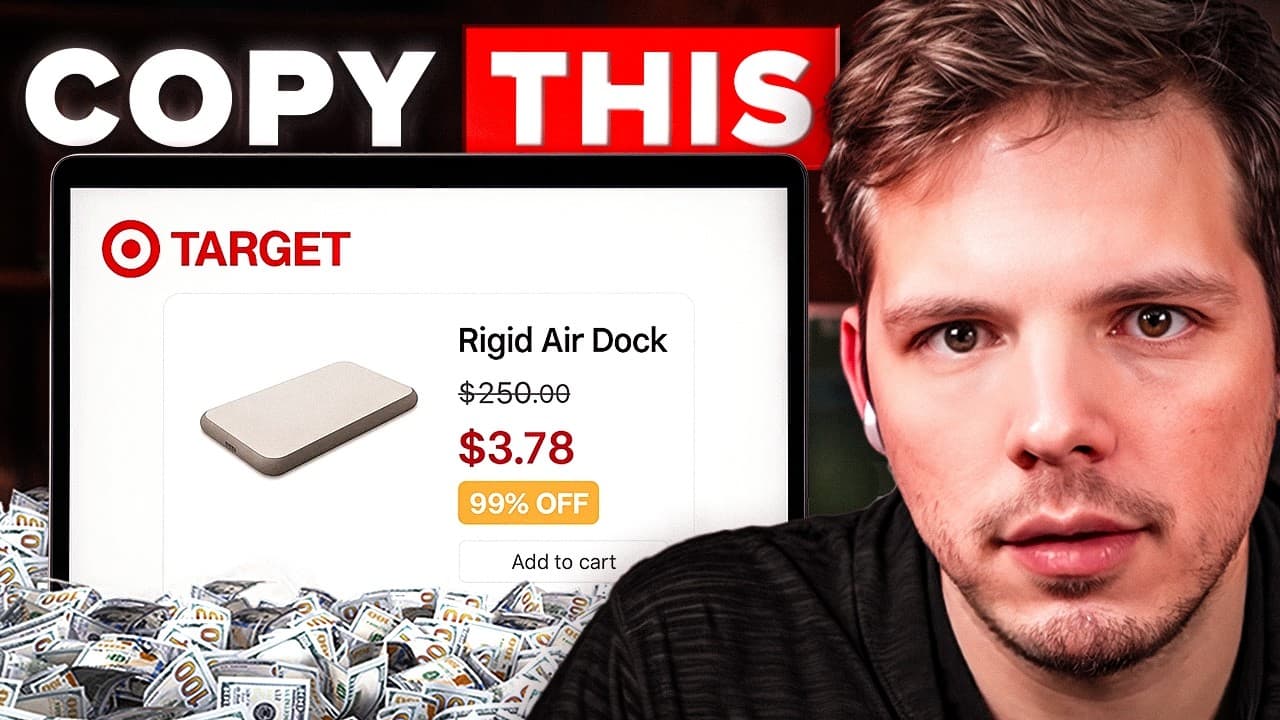
Reselling can start with zero cash: one member picks up free couches from Facebook Marketplace, cleans them in his garage, reshoots the photos, and resells them from his driveway with no investment beyond his time. For paid inventory, liquidation pallets can drop cost per item to around $3.78 on goods that retail for $250. Focus on getting your money back first, not on profit.
Transcript
Some of this stuff for just reselling. You don't have to spend any money. Seasonal arbitrage can make you rich. I click over to Target and there it is. They sell it for $250. Your cost per item is $3.78. Wow. You can do these deals every single day with this method. This is how you make $100,000, right? No doubt about it. Something that almost no o... Read More
Key Insights
- Reselling can require zero upfront money. A member picks up free couches from Facebook Marketplace, cleans them in his garage, takes better photos, and sells them from his driveway, converting only his own time into income with no cash investment at all.
- Listing items before you own them is a research tactic almost no one uses. Five Tesla accessories were listed before anything was purchased, and the responses revealed that the level two wall charger was by far the hottest item in local demand.
- The right starting question is how to get your money back, not how much profit to make. Early flips are where you learn Facebook Marketplace, eBay, shipping, logistics, and where you will inevitably make mistakes, so capital recovery comes first.
- Liquidation pallets can collapse per-unit cost. A five pallet Target lot of new unsold merchandise, explicitly not returns, sat at $525 against a stated MSRP of roughly $11,000, putting cost per item at $3.78 while individual pieces retail for $250 and $450.
- Boring, overlooked products beat glamorous ones. iPhones carry no money and sneakers are tough to make work, so the advice is to hunt the categories other resellers ignore, such as outdoor gear, appliances, and furniture with real local demand.
- A manifest is what makes a pallet lot buyable. It lets you read every single item before bidding, confirm brand new condition, and identify roughly 30 high ticket pieces that can be sold quickly to recover the entire investment.
- Local buyers routinely pay near retail for convenience. Your house being closer than the store, avoiding 8% sales tax, skipping $100 shipping, or not waiting three or four days all push resale prices up, though this should not be baked into research.
- Location and season decide what to stock. A truckload of 300 pieces of flat pack furniture bought for under $4,000 sits between two colleges in July, right as parents prepare for move in, and college towns churn couches through frats, sororities, and rentals constantly.
Install to Summarize YouTube Videos and Get Transcripts
Explore YouTube Video Summarizer or Get YouTube Transcript Extractor
Questions & Answers
Q: How do I start reselling with no money?
Collect free items and resell them after light rehab. The video describes a member named Mike, a weatherman up north, who picks up free couches from Facebook Marketplace, brings them home, cleans them up in his garage, takes better photos, then puts them back out in his driveway and sells them. He invests nothing but his own time. A free couch spotted on a Utah curb with duct tape reading free was pitched as a first flip worth about $200 easily. The model works because your only inputs are time and willingness to push the boundaries.
Q: What should I look for in a liquidation pallet auction?
Check condition, manifest, and high ticket density. The Target lot examined was five pallets of new condition unsold merchandise with no signs of use, explicitly not returns, which matters because returns carry unknown risk. It came with a manifest so every single item could be reviewed line by line before bidding. It also had roughly 30 high ticket items, meaning a portion could be sold quickly to recover the full investment. The auction sat at $525 with three hours to close, with a predicted final price under a thousand dollars.
Q: Why should beginners focus on getting their money back instead of profit?
Because the first flips are tuition. The advice given is that when you are just starting, the question in your head should be how do I get my money back, not how much profit am I going to make. You are going to learn all these lessons: how Facebook Marketplace works, maybe how eBay works, how shipping and logistics work, and you are going to make mistakes along the way. Structuring the first buy so a few fast sales cover the entire outlay means the mistakes cost learning time rather than capital.
Q: What products should I avoid reselling?
Skip the categories everyone gravitates toward. The explicit guidance is that people say they want to sell iPhones, and the response is no you don't, there's no money in it. Sneakers get the same treatment: that's tough to make work. Instead the recommendation is to go find the boring stuff that other people ignore. In the examples shown, that means outdoor products, swimming pools, floating docks, pickleball sets, appliances, and furniture, categories with steady local demand and far less competition from resellers chasing status items.
Q: How can I test demand before buying inventory?
List the item before you own it. The video calls this something almost no one thinks to do. Five Tesla items were listed before anything was actually purchased, which surfaced that the level two wall charger was the hottest item by far. It retails at about $450 online, plus $100 shipping and 8% sales tax, so buyers face roughly $600 delivered. Reselling locally at $450 to $500 drew enough interest that 20 units could have sold if they had been in stock. The listings cost nothing and revealed the real market.
Q: Why do local buyers pay close to retail price?
Convenience and immediacy carry real value. Buyers may pay near retail because your house is closer to their house than the store, because they do not want to pay 8% sales tax, because they do not want to pay shipping, or because they do not want to wait three or four days for delivery. Someone may effectively pay the same total as retail with tax and shipping included, yet still drive to pick it up just to have it today. The caveat given is not to bake this premium into your research assumptions.
Q: What was in the Target liquidation lot and what did it cost per item?
Five pallets of new unsold sporting goods and outdoor merchandise with a stated MSRP of about $11,000. The manifest included a 10x6 rigid air dock that Target sells for $250, an Intex 14x42 clear view swimming pool that Target sells for $450, 66 pickleball sets, and 40 rollic play tunnels for kids. The auction sat at $525 with three hours remaining. At a spend of about a thousand dollars, cost per item came out to $3.78, and the buyer only needed to sell a handful of docks at around $100 each on Facebook Marketplace to recover the investment.
Q: How does scarcity affect resale pricing?
Limited supply lets you price above retail. The handbag example makes the point: a seller priced a designer bag near retail and was told there was a two year wait to get that bag, meaning the price was far too low. With the brand Spray Ground, which does limited runs, the approach was to buy as much as possible, wait until the run sold out, then list and sell at $200 above retail price. Trader Joe bags get resold by people who line up at the store on release. Knowing the market price of what you sell, like a restaurant listing market price, is the skill.
Summary & Key Takeaways
-
Reselling can begin with no capital at all. A member named Mike, a weatherman up north, collects free couches from Facebook Marketplace, cleans them up in his garage, takes better photos, and sells them out of his driveway. Income comes purely from his own time and willingness to push boundaries. A curbside couch taped with a free sign was spotted while filming in Utah and pitched as an easy first flip worth about $200.
-
Liquidation auctions offer another entry point. A Target lot of five pallets of new, unsold merchandise, not returns, was sitting at $525 with three hours left, against a stated MSRP of about $11,000. The manifest included a 10x6 rigid air dock that Target sells for $250, a 14x42 Intex clear view swimming pool retailing at $450, 66 pickleball sets, and 40 play tunnels. At a $1,000 spend, cost per item works out to $3.78.
-
Demand research and product selection matter more than glamour. Listing items before buying reveals real demand: a Tesla level two wall charger costs $450 plus $100 shipping plus 8% sales tax online, and resold locally for $450 to $500 with enough demand to move 20 units. Scarcity drives premiums too, as with Spray Ground bags from limited runs that resold for $200 over retail after selling out.
Read in Other Languages (beta)
Share This Summary 📚
Summarize YouTube Videos and Get Video Transcripts with 1-Click
Try YouTube Summary with ChatGPT & Claude or YouTube Transcript Generator
Explore More Summaries from Chris Koerner on The Koerner Office Podcast 📚





Summarize YouTube Videos and Get Video Transcripts with 1-Click
Try YouTube Summary with ChatGPT & Claude or YouTube Transcript Generator