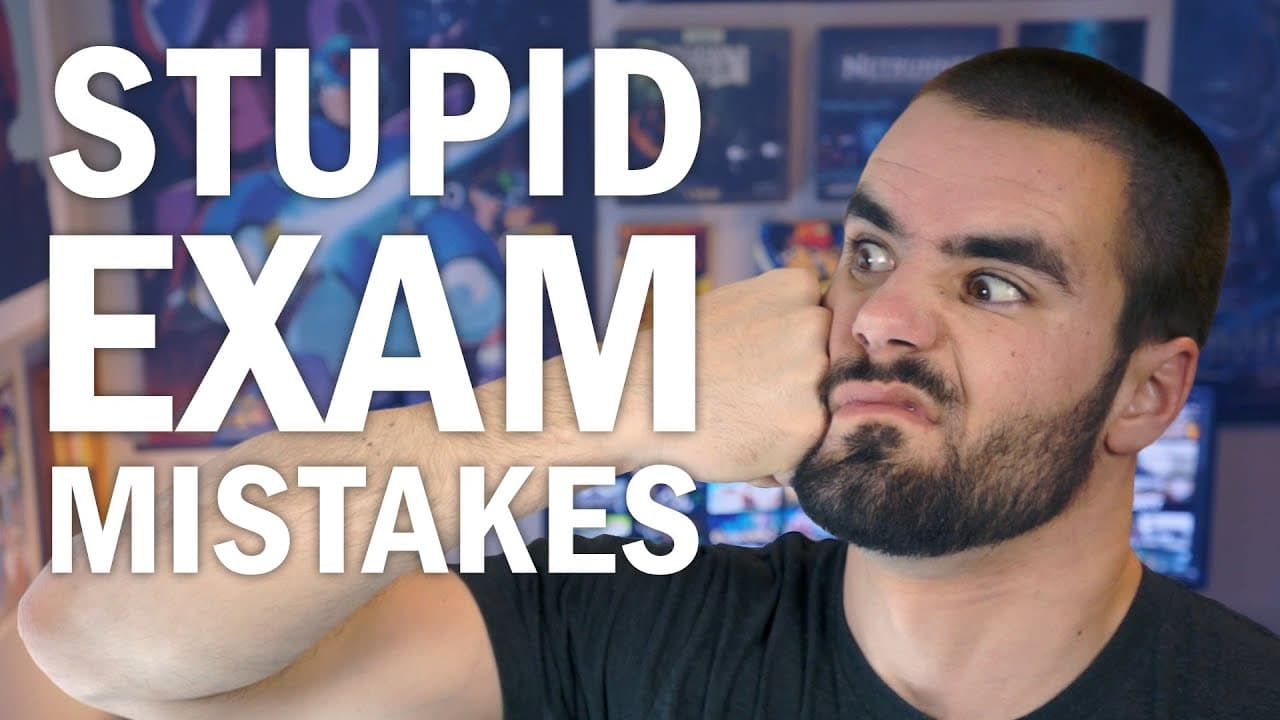
10 Ways to Avoid Making Stupid Mistakes on Exams - College Info Geek
TL;DR
Avoid careless exam mistakes by managing your time, checking your work, reading every question fully, and using simple safeguards for answer sheets, scratch work, essays, and math problems. For a 50-minute test, aim to finish in 45 minutes so you have five minutes to review. The 10 practical tips explain how to catch errors before they affect your grade, so read on for techniques you can apply during your next exam.
Transcript
We are rapidly approaching final exams right now, so hopefully you are aspiring to greatness because greatness is what precedes the growing of a great beard, so if you feel a little bit of prickly stubble coming in, well, you know your aspirations are in the right place. Anyway, today we are gonna talk about how to not make d... Read More
Key Insights
- 🏁 Time management and finishing early can have a positive impact on exam performance.
- ⏫ Double-checking answers can prevent simple mistakes from affecting grades.
- 💋 Utilizing strategies such as touching and saying the correct answer before marking it and drawing boxes around problems on scratch paper can improve accuracy.
- 🫠 Reading questions carefully and being aware of trick wording can help avoid misunderstandings.
- 🦻 Creating outlines for essays aids in staying on topic and improving organization.
- 🏆 Managing test anxiety is essential for optimal performance.
- ✅ Checking spelling and grammar in essay-style exams is crucial.
- ✅ Doing a sanity check and comparing answers to ballpark numbers can help identify potential errors.
Install to Summarize YouTube Videos and Get Transcripts
Explore YouTube Video Summarizer or Get YouTube Transcript Extractor
Questions & Answers
Q: How can you avoid making stupid mistakes on exams?
Aim to finish early, double-check your answers, read every question fully, and watch for wording such as “Which of these is not?” Use an essay outline, check spelling and grammar, sanity-check math results, and pay special attention to the mistakes you personally make repeatedly.
Q: How should you manage your time during an exam?
Be aware of the test’s time limit and set an earlier target for finishing. If you have 50 minutes, aim to finish in 45 so the remaining five minutes can be used to review your answers.
Q: Why should you double-check your exam answers?
Reviewing your answers gives you a chance to catch errors before submitting the test. The transcript says that five extra minutes spent checking your work can mean the difference between an A and a B.
Q: How can you avoid marking the wrong answer on a Scantron sheet?
Before filling a bubble, lightly touch your pencil or finger to the letter of the chosen answer. Say that letter in your head, then transfer it to the Scantron sheet to reduce the chance of bubbling the wrong response.
Q: How should you organize scratch work during an exam?
Draw a box around the work for each problem on your scratch paper. This separates the calculations and helps prevent you from accidentally using data from a different problem when filling in an answer.
Q: How can you avoid misreading trick questions on a test?
Slow down, read each question fully, and look carefully for wording that changes what is being asked, such as “Which of these is not?” If you tend to read too quickly, move your finger along the text as a pacing device and let your eyes follow it.
Q: Why should you outline an exam essay before writing it?
Create an outline even when the essay initially seems easy. It improves organization and helps you stay on topic instead of letting stream-of-consciousness writing drift into territory the professor did not ask about.
Q: How can you catch mistakes in math problems during an exam?
Estimate a general ballpark answer before solving the problem, then compare your calculated result with that estimate. A result that is far from the ballpark is not necessarily wrong, but it is a reason to double-check your work and consider mistakes you commonly make, such as errors with order of operations.
Summary & Key Takeaways
-
Time pressure can be beneficial in exams, so be aware of the time allotted and aim to finish early.
-
Double-checking your answers can make a significant difference in your final grade.
-
Utilize strategies like lightly touching the correct answer on bubble sheets and drawing boxes around problems on scratch paper to minimize errors.
Read in Other Languages (beta)
Share This Summary 📚
Summarize YouTube Videos and Get Video Transcripts with 1-Click
Try YouTube Summary with ChatGPT & Claude or YouTube Transcript Generator
Explore More Summaries from Thomas Frank 📚



Summarize YouTube Videos and Get Video Transcripts with 1-Click
Try YouTube Summary with ChatGPT & Claude or YouTube Transcript Generator