Rubrik's Bipul Sinha and Steve Stone | Understanding and Preventing Modern Cyber Attacks
TL;DR
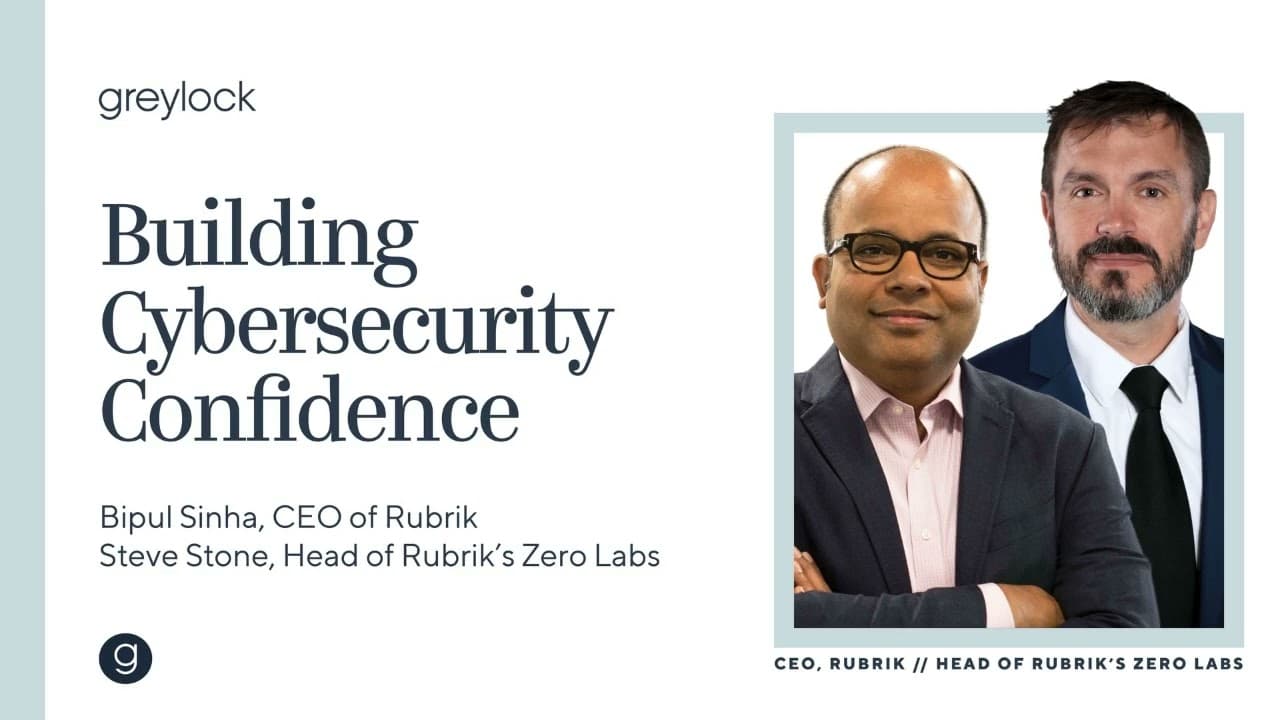
Modern cyber attacks require organizations to prioritize resilience and data security because prevention and detection tools are not foolproof. Rubrik CEO Bipul Sinha notes that businesses collectively spend $50–$60 billion on cybersecurity tools and may install 30–40 solutions, yet breaches continue. Steve Stone explains how Rubrik Zero Labs studies the broader risk landscape and its effects on people and teams. Read on for practical context on ransomware, recovery, and collaboration.
Transcript
foreign matter the podcast from Greylock I'm John Schwartz senior reporter at MarketWatch and your guest host today on today's program we'll be discussing the ongoing challenge that businesses government agencies and public institutions face when it comes to keeping up with cyber security threats as our Technologies become more sophisticated so too... Read More
Key Insights
- 🔒 Prevention and detection technologies alone are not enough to mitigate cyber security threats.
- ❓ Ransomware remains a dominant and evolving threat, impacting organizations and individuals emotionally, psychologically, and operationally.
- ❓ Known vulnerabilities continue to be exploited, highlighting the ongoing challenge of patching and securing systems.
- 🤑 Organizations, especially smaller ones, face greater challenges in addressing cyber threats due to limited resources and expertise.
- 🌸 Cyber security incidents have substantial impacts beyond financial losses, including client loss, leadership changes, and increased stress on personnel.
- 💁 Increased collaboration and information sharing among organizations can help strengthen the cyber security community.
- 🪡 The need for resilience and data security is crucial in addressing cyber breaches and ensuring operational continuity.
Install to Summarize YouTube Videos and Get Transcripts
Explore YouTube Video Summarizer or Get YouTube Transcript Extractor
Questions & Answers
Q: How can organizations understand and prevent modern cyber attacks?
Organizations should recognize that prevention and detection technologies are not foolproof and build their cyber strategies around resilience. Bipul Sinha says the goal is to keep the business operating even when a cyber breach occurs, with data security serving as a core part of that approach.
Q: Why are prevention and detection tools insufficient against cyber attacks?
Cyber breaches continue despite businesses collectively spending $50–$60 billion on cybersecurity tools and platforms. Sinha also says organizations may install 30–40 different solutions, showing that purchasing more tools does not guarantee protection.
Q: How has data protection evolved into data security?
Sinha founded Rubrik with three friends almost nine years before the interview, aiming to transform data protection into a full data security company. His reasoning is that securing an organization’s data helps secure the business itself.
Q: What does cyber resilience mean for a business?
Cyber resilience means keeping the business running even while breaches are happening. The discussion argues that organizations must plan for continued operations because prevention and detection cannot be assumed to stop every attack.
Q: What is Rubrik Zero Labs?
Rubrik Zero Labs is the company’s newly created research department, led by Steve Stone. It takes a macro view of the threat and risk landscape while examining the effects on people and teams.
Q: What is ransomware, and how has it evolved?
Ransomware traditionally encrypts files and machines to deny access to data while attackers demand payment for its release. It has evolved to include threats to leak or expose stolen data, increasing the operational and reputational pressure on organizations.
Q: Why might an organization consider paying a ransomware demand?
Some organizations, especially smaller ones, may lack the resources or technology needed to recover their data. Attackers can also target critical moments such as acquisition announcements, increasing pressure to restore operations and protect exposed information.
Q: How can information sharing improve cybersecurity?
Organizations are beginning to discuss breaches and cyber threats more openly so they can help one another. Sharing experiences can support improvements across the cybersecurity community and strengthen collective resilience.
Summary
In this podcast episode, the CEO of cybersecurity company Rubrik, Bipul Sinha, and the Head of Research at Rubrik Zero Labs, Steve Stone, discuss the challenges businesses face in keeping up with cybersecurity threats. They emphasize the importance of data security in the future of cybersecurity and the need for organizations to focus on resilience and incident response. They also highlight the impact of cyber attacks on individuals and the need for collective action and collaboration in addressing cybersecurity challenges.
Questions & Answers
Q: In the past decade, how has the nature of data protection and recovery for large organizations evolved?
In the past decade, the nature of data protection and recovery for large organizations has continually evolved. Cyber breaches have continued to happen despite significant investments in cybersecurity tools and platforms. The prevention and detection technologies that organizations have relied on are not foolproof. As a result, businesses are rethinking their cyber strategy and focusing on resilience and how to keep their operations running even during cyber attacks.
Q: What is the mission of Rubrik as a cybersecurity company?
Rubrik's mission is to secure the world's data. They believe that data security is the future of cybersecurity because when data is secure, businesses are secure. They highlight the need for organizations to shift their focus from just data protection to full-on data security.
Q: What are the key areas that cybersecurity leaders need to address in order to improve cyber resilience?
Cybersecurity leaders need to focus on preparedness, cyber readiness, incident response, and crisis management. It is important to combine these aspects to improve overall cyber resilience. Additionally, leaders should prioritize securing their data as it is the most critical asset and the key to bouncing back from cyber attacks.
Q: Can you share some insights about the impact of cyber attacks on individuals?
According to the report, 96% of respondents reported emotional or psychological impact due to cyber attacks. This not only affects the individuals' confidence in their own abilities but also creates stress and concerns about job security. The human toll of cyber attacks is often overlooked and it is important to address the emotional and psychological impact on individuals.
Q: What are some key findings from Rubrik Zero Labs' state of data security report?
One key finding is that two-thirds of cyber attacks reported to senior leaders in organizations were from known vulnerabilities rather than zero-day exploits. This highlights the ongoing challenge of addressing known vulnerabilities. Another finding is that 98% of organizations experienced a negative impact from cyber attacks, with 41% losing clients and a third experiencing leadership changes. Surprisingly, only 5% of impacted organizations reported a stock price drop, indicating that the client and leadership impact were more significant.
Q: Why are organizations still considering paying ransomware demands despite the efforts made in cybersecurity?
One possible reason is that some organizations do not have the ability to recover their data without paying the ransom. They may not have invested in mechanisms to recover and work with their own data. Additionally, ransomware attacks are constantly evolving and threat actors are finding new ways to monetize their work. This creates challenges for organizations, especially smaller ones with limited resources, and may lead them to consider paying the ransom as a way to regain access to their data.
Q: What strategies and recommendations can cybersecurity leaders take away from the state of data security report?
Cybersecurity leaders should focus on preparedness, cyber readiness, incident response, and crisis management. They should also prioritize securing their data and leverage machine learning and artificial intelligence to drive security intelligence. Collaboration and partnership between organizations and between the government and private sector are key in addressing cybersecurity challenges collectively.
Q: What can we expect from Rubrik Zero Labs in terms of cybersecurity research?
Rubrik Zero Labs will apply the findings from the report internally and make any necessary changes. They will also focus on providing impactful and timely material to their clients and the larger community. They aim to contribute to collective understanding and establish a baseline for data security, both from a threat and defensive standpoint.
Q: What is next for Rubrik as a company?
Rubrik aims to address the two-sided dilemma of cyber preparedness and incident response by driving cyber resilience and business resilience. They see a huge potential in applying machine learning and artificial intelligence directly to data to enhance security intelligence. Rubrik continues to focus on securing the world's data and helping organizations protect themselves from cyber threats.
Takeaways
The podcast episode highlights the ongoing challenge of cybersecurity threats for organizations and the need to prioritize data security. Cyber attacks not only impact businesses but also have a significant emotional and psychological toll on individuals. The findings from the state of data security report emphasize the importance of resilience, incident response, and crisis management. Organizations need to focus on protecting their data and be prepared to respond effectively to cyber attacks. Collaboration and collective action are key in tackling cybersecurity challenges.
Summary & Key Takeaways
-
Rubrik is a cyber security company focused on transforming data protection into data security to address cyber breaches that continue to happen despite significant investments in cyber security tools.
-
Ransomware is a major concern, with cyber attackers not only encrypting data but also threatening to leak it and exposing organizations.
-
The impact of cyber attacks goes beyond financial losses, with emotional and psychological effects on individuals involved in combating these attacks.
-
Organizations are starting to openly discuss breaches and cyber threats to help each other and drive improvements in the cyber security community.
Read in Other Languages (beta)
Share This Summary 📚
Summarize YouTube Videos and Get Video Transcripts with 1-Click
Try YouTube Summary with ChatGPT & Claude or YouTube Transcript Generator
Explore More Summaries from Greymatter Podcast (Audio) 📚






Summarize YouTube Videos and Get Video Transcripts with 1-Click
Try YouTube Summary with ChatGPT & Claude or YouTube Transcript Generator