How Artificial Intelligence Will Revolutionize Medicine
TL;DR
AI can reduce clinician burnout by turning data into timely, precise insights that support decision making and productivity. By focusing on human centered tools for doctors and nurses, AI augments care, accelerates discovery, and strengthens public health outcomes without replacing human clinicians.
Transcript
doctors nurses are overwhelmed overworked over charting the American nurses burnout rate is outrageous 33 of our nurses leave the job after two years we've heard about doctors being replaced Health Care is in my opinion the most important industry that can take advantage of AI so let's return to the kind of AI and Healthcare and um and it's one of ... Read More
Key Insights
- AI in healthcare is data rich but insight poor, and the opportunity lies in delivering timely, precise insights to clinicians.
- Decision support and productivity tools are essential uses of AI to reduce burnout and free clinicians to focus on patient care.
- AI can augment human care by enhancing humans’ ability to care for patients, not by replacing clinicians.
- Drug discovery is entering a data driven era where ML can help glean large volumes of data for new therapies.
- Radiology is highlighted as a classic example where machine learning supports interpretation and workflow.
- Public health data needs modernization and better data sharing to enable AI driven insights at scale.
- The human element remains central in healthcare; AI should augment, not replace, human to human care.
- Entrepreneurs and startups are encouraged to focus on delivering critical insights rather than more data.
Install to Summarize YouTube Videos and Get Transcripts
Explore YouTube Video Summarizer or Get YouTube Transcript Extractor
Questions & Answers
Q: How can AI reduce nurse burnout in healthcare settings?
AI can reduce nurse burnout by supporting productivity and decision making, allowing nurses to spend more time with patients and less time charting or performing repetitive tasks. This involves tools that extract important insights from patient data and present them in a timely, easy to act on manner, enabling nurses to focus on care and compassion rather than administrative burdens.
Q: What is the paradox in healthcare data mentioned in the talk?
The paradox is that healthcare is data rich but insight poor. There is a vast amount of imaging, lab results and patient data, yet clinicians do not have the tools to clean and extract meaningful, timely insights. The opportunity is to convert raw data into actionable guidance that supports clinical decisions without increasing workload.
Q: What areas of AI in healthcare were highlighted as opportunities besides clinician support?
Besides clinician support, the talk highlights drug discovery as a large opportunity, using molecular and genetic data to accelerate finding new therapies; radiology as a classic example of ML aiding interpretation; and public health data modernization to improve information sharing and response. These areas can scale impact while preserving human care.
Q: What is the speaker’s stance on replacing clinicians with AI?
The speaker emphasizes that AI should augment the humanity of healthcare rather than replace clinicians. The core is human to human care, emotion, and intelligence, and AI is a tool to reduce burden and enhance care while preserving the essential human elements of medical practice.
Q: How does AI improve decision support in healthcare according to the talk?
AI improves decision support by delivering critical insights that are timely and precise. Rather than overwhelming clinicians with data, AI can synthesize information from patient data sources to guide diagnoses, treatment choices, and care planning, thereby improving outcomes and supporting clinicians in making better informed decisions.
Q: Why is radiology mentioned as a classic example of AI in healthcare?
Radiology is mentioned as a classic example because machine learning can support image interpretation and workflow. By assisting radiologists with pattern recognition and prioritization, AI can speed up reading times, improve consistency, and free clinicians to spend more time with patients while maintaining accuracy and reliability in imaging analysis.
Q: What role does public health data play in AI opportunities according to the talk?
Public health data plays a crucial role as there is a need to modernize how data is organized and shared to break down barriers. Improved data infrastructure enables AI to drive population level insights, surveillance and timely interventions, ultimately supporting healthier communities while enabling clinicians to provide better patient level care.
Q: What is the overall vision for AI in healthcare described in the talk?
The overall vision is to use AI to augment the humanity of healthcare, making care more efficient, accurate and compassionate. By turning data into actionable insights, supporting clinicians, accelerating drug discovery, and modernizing public health, AI can broaden access to high quality care without replacing the essential human elements of the profession.
Summary
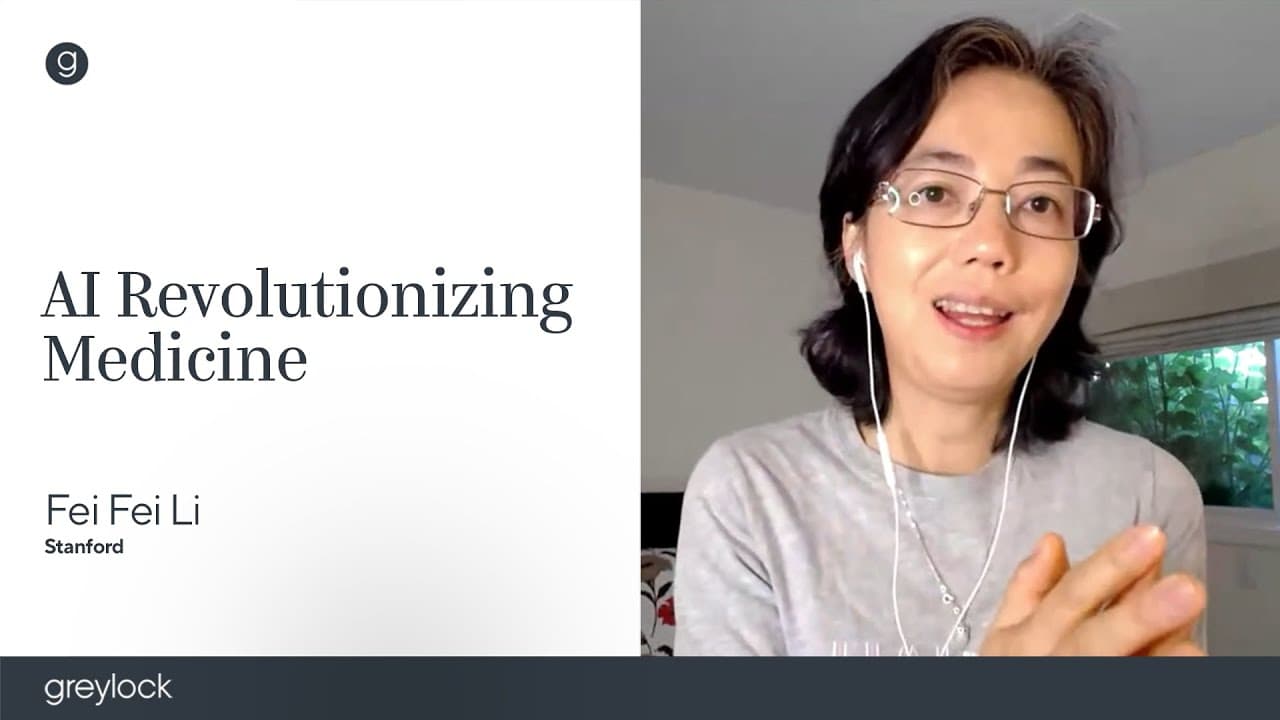
In this video, the speaker discusses the immense potential of artificial intelligence (AI) in the healthcare industry. They emphasize the importance of AI in healthcare, which is a data-rich but insight-poor field. The focus should be on providing critical insights to doctors and nurses rather than overwhelming them with excessive data. The speaker also highlights the need for decision support and productivity tools to alleviate the burden on healthcare professionals. Additionally, they discuss the role of AI in drug discovery, radiology, and public health. However, the speaker emphasizes that AI should be used to augment and enhance the humanity of healthcare, rather than replace doctors and nurses.
Questions & Answers
Q: Why is healthcare considered the most important industry that can benefit from AI?
Healthcare is not only about physical well-being but also mental well-being and human dignity. The benevolence and goals of the industry make it crucial for AI advancements to improve patient care and outcomes.
Q: Despite being data-rich, why is the healthcare industry considered insight-poor?
The healthcare industry generates a vast amount of data through imaging labs and various tests. However, clinicians often struggle to extract important insights due to overwhelming workloads and time-consuming charting tasks.
Q: How can AI provide critical insights in healthcare?
One area of opportunity is to develop tools that deliver timely, precise, and accurate insights to doctors and nurses. This would help them make informed decisions about patient care without overwhelming them with excessive data.
Q: What are the challenges faced by nurses and doctors in the healthcare industry?
Nurses and doctors are overworked and burdened with various tasks, such as charting and administrative responsibilities. The burnout rate among nurses is alarming, with 33% leaving their jobs within two years. The healthcare industry needs technological solutions to reduce this burden and support the productivity and well-being of clinicians.
Q: How can AI contribute to drug discovery?
Advancements in molecular, cellular, and genetic technologies have resulted in an abundance of data in drug discovery. Machine learning can help analyze this data and assist in the discovery of important drugs, presenting a significant opportunity for AI in healthcare.
Q: How can machine learning support radiology?
Radiology is a classic example of how machine learning can provide decision support. By analyzing radiology images, AI can assist radiologists in diagnosing and detecting abnormalities, improving accuracy and efficiency in healthcare.
Q: How has the global pandemic highlighted the importance of AI in public health?
The pandemic has revealed the need to modernize public health data organization and information sharing. Breaking barriers and utilizing AI can help in analyzing and interpreting public health data, leading to more effective strategies and responses to future health crises.
Q: Is AI intended to replace doctors and nurses in healthcare?
No, AI is not meant to replace healthcare professionals. The speaker emphasizes that the human-to-human care, intelligence, and emotions provided by doctors and nurses are irreplaceable. AI technology should focus on augmenting and enhancing their work to improve patient care.
Q: What excites the speaker about the impact of AI in healthcare?
The speaker is excited about the limitless opportunities that AI presents in the healthcare industry. They believe that AI can augment the humanity of healthcare by supporting doctors and nurses, improving productivity, and ultimately benefiting patients.
Q: How does the speaker view the future of AI in healthcare?
The speaker sees great potential for AI in healthcare, especially in delivering critical insights, providing decision support, enhancing productivity, and advancing drug discovery. They consider AI and its surrounding technologies as tools to augment and improve the healthcare industry's essential human-centered care.
Takeaways
AI has the potential to revolutionize the healthcare industry by providing critical insights, decision support, and productivity tools. While the healthcare field is data-rich, it often lacks the ability to extract meaningful insights. By utilizing AI effectively, entrepreneurs and startups have the opportunity to focus on delivering valuable insights and reducing the burden on doctors and nurses. Additionally, AI can support drug discovery, radiology, and public health efforts. However, it is crucial to remember that AI should not replace healthcare professionals but rather enhance their capabilities and augment the humanity of healthcare.
Summary & Key Takeaways
-
AI in healthcare is data rich but insight poor, creating a large opportunity to extract actionable, timely guidance for clinicians.
-
Productivity and decision support are key areas where AI can reduce time spent on charting and administrative tasks while preserving humane care.
-
Drug discovery, radiology, and public health stand to benefit from AI powered data synthesis and modernized data practices, improving patient outcomes while preserving human care.
Read in Other Languages (beta)
Share This Summary 📚
Summarize YouTube Videos and Get Video Transcripts with 1-Click
Try YouTube Summary with ChatGPT & Claude or YouTube Transcript Generator
Explore More Summaries from Greylock 📚






Summarize YouTube Videos and Get Video Transcripts with 1-Click
Try YouTube Summary with ChatGPT & Claude or YouTube Transcript Generator