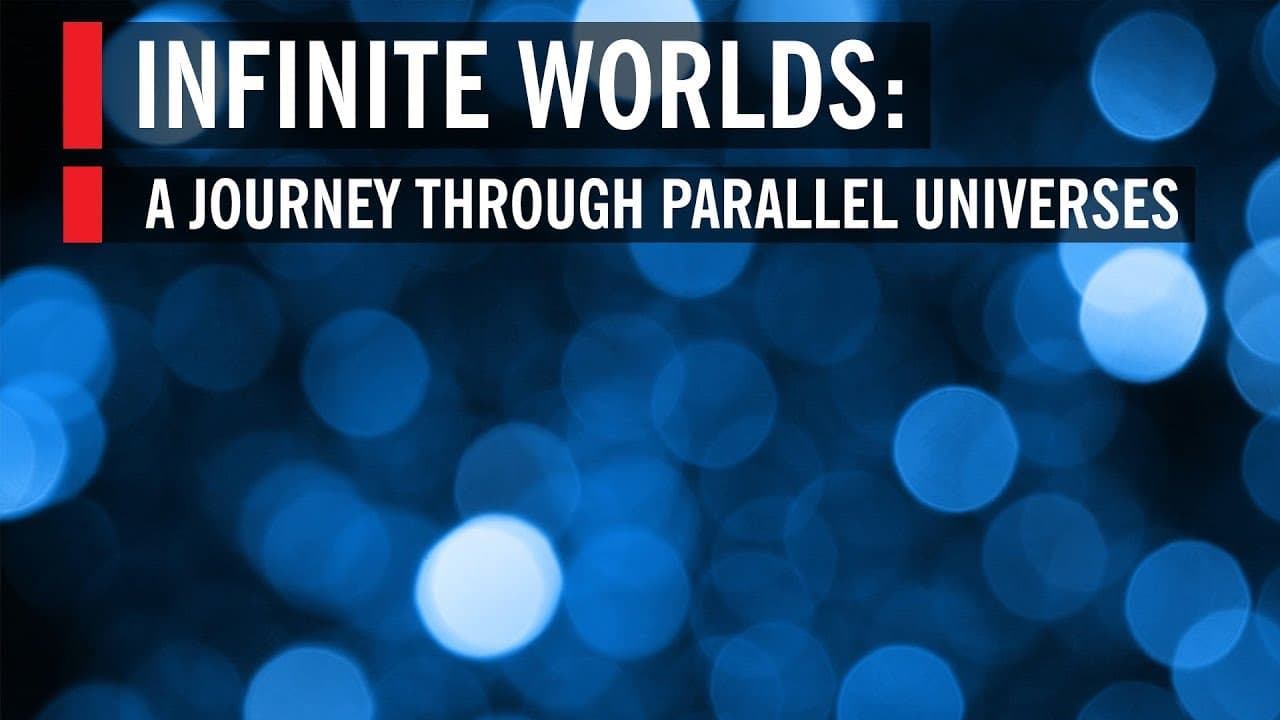
Infinite Worlds: A Journey through Parallel Universes
TL;DR
Parallel universes are presented as a possibility arising from modern ideas about gravity, cosmic expansion, and inflationary cosmology. Brian Greene describes our universe as one bubble in a vast cosmic bubble bath, with other bubbles representing other universes that may have their own physical properties. Read on to see how Newton’s gravity, Einstein’s 1915 general theory of relativity, and the Big Bang framework lead toward this multiverse concept.
Transcript
time so good evening i'm robert krollwich no i'm brian green and i'm going to give a bit of an overture to some of the ideas in this infinite worlds program that we're going to be hearing about tonight and one way of framing the discussion the conversation is to recognize that over the past few centuries our understanding of the universe has really... Read More
Key Insights
- 🥺 Our understanding of the universe has expanded, leading to a realization that our species is not at the center of the universe.
- 🖐️ Gravity, as explained by Einstein, plays a pivotal role in understanding the mechanics of the universe.
- 😅 The Big Bang theory suggests that the universe originated from a small, hot, and dense state and has been expanding ever since.
- ❓ Inflationary cosmology offers an explanation for the flatness, clumpiness, and uniformity observed in our universe.
- ❓ The concept of the multiverse suggests that our universe is just one of many, each with its own physical properties.
Install to Summarize YouTube Videos and Get Transcripts
Explore YouTube Video Summarizer or Get YouTube Transcript Extractor
Questions & Answers
Q: Why might there be parallel universes?
The discussion suggests that our universe may be only one among many universes. Its central image is a cosmic bubble bath in which each bubble represents a different universe, potentially with its own physical properties.
Q: What does the cosmic bubble bath analogy mean?
The entire multiverse is compared to a large cosmic bubble bath. Our universe is one bubble within it, while the other bubbles represent different universes.
Q: How has humanity’s perceived place in the universe changed?
Humanity once regarded Earth as the center of the universe, then learned that Earth travels around the Sun. The Sun was subsequently understood as one star among perhaps hundreds of billions in our galaxy, and our galaxy as only one of many galaxies; the multiverse would be another such demotion.
Q: What determines gravitational force in Newton’s theory?
Newton’s equation says the gravitational attraction between two objects depends on two things: how massive the objects are and how far apart they are in space. The equation remains useful hundreds of years later.
Q: How is Newton’s law of gravity still used?
Newton’s equation is still taught to high school students and used for practical calculations. The talk specifically mentions using it when trying to land a rocket ship on the Moon or rendezvous with another astrophysical body.
Q: What was missing from Newton’s explanation of gravity?
Newton described the strength of the attraction between two objects but did not explain how they exert that force. Einstein focused on identifying the mechanism through which gravity operates.
Q: How did Einstein explain gravity in general relativity?
After working on the problem for 10 years, Einstein arrived at the general theory of relativity in 1915. He proposed that objects curve the fabric of space and time, and this curvature affects the motion of other objects.
Q: How does the rubber-sheet analogy explain curved space?
A marble rolls in a straight line across a taut rubber sheet, but a heavy object curves the sheet and makes the marble follow a curved trajectory. Likewise, Einstein’s explanation says an object curves space, changing how other objects move.
Summary & Key Takeaways
-
Our understanding of the universe has evolved over centuries, leading to a diminished view of humanity's significance in the cosmos.
-
Gravity, as explained by Albert Einstein, plays a crucial role in understanding the universe.
-
The Big Bang theory suggests that the universe started out as a small, hot, and dense nugget which expanded and cooled, giving rise to the galaxies and stars we see today.
Read in Other Languages (beta)
Share This Summary 📚
Summarize YouTube Videos and Get Video Transcripts with 1-Click
Try YouTube Summary with ChatGPT & Claude or YouTube Transcript Generator
Explore More Summaries from World Science Festival 📚
Summarize YouTube Videos and Get Video Transcripts with 1-Click
Try YouTube Summary with ChatGPT & Claude or YouTube Transcript Generator