Fireside Chat with Vitalik Buterin (Ethereum Foundation)
TL;DR
Vitalik Buterin emphasizes the need to enhance privacy and security in Ethereum, arguing that criticisms of proof-of-stake centralization are unfounded since proof-of-work systems also exhibit centralization. He discusses advances in smart contract security, the importance of decentralized governance, and the potential of privacy technologies like zero-knowledge proofs for applications in gaming and asset tokenization.
Transcript
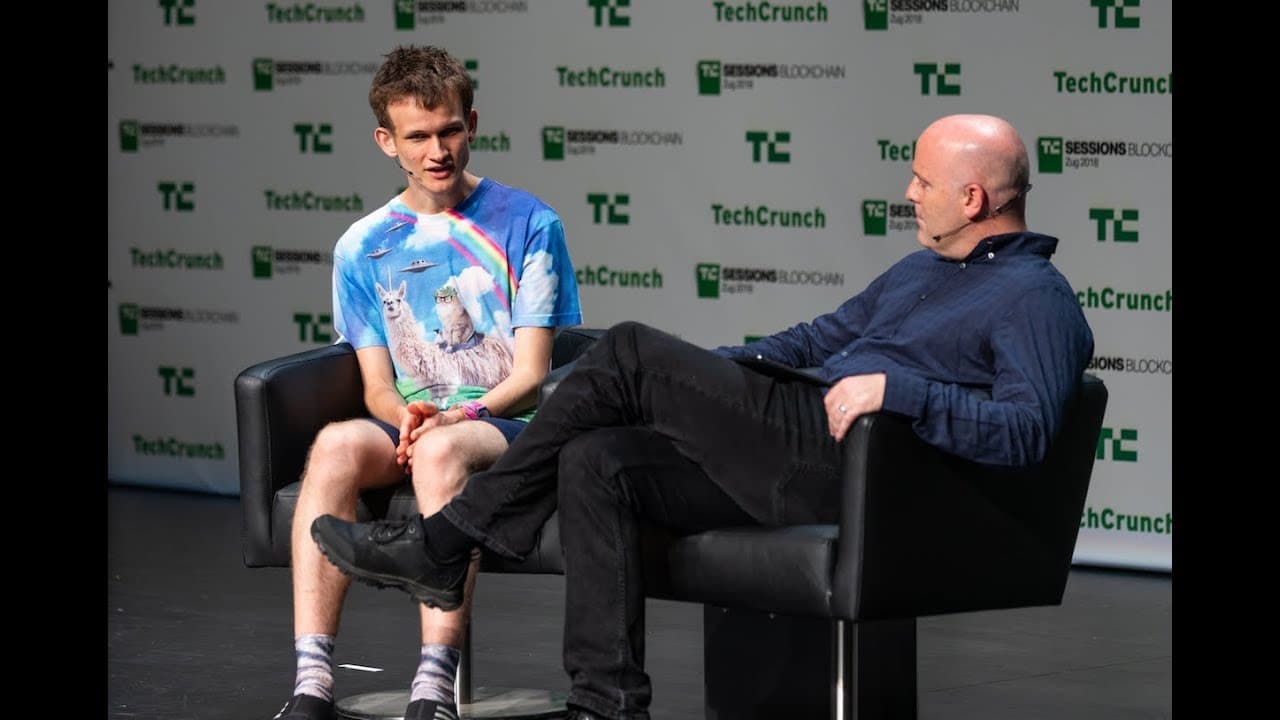
yeah well John you got a really good and glowing introduction there I know it's the whole Rockstar welcome I do you appreciate I don't want to dwell over much near t-shirt but I was gonna come out here and say how sad I was that you weren't wearing the llama corn t-shirt and now you are so thank you that makes me very happy mmm my favorite tech pri... Read More
Key Insights
- 🍉 Scaling privacy and security are crucial for the long-term development and success of Ethereum.
- 💦 Critics of proof-of-stake overlook the centralized influence in proof-of-work systems.
- 📱 Efforts are being made to improve smart contract security through better programming languages and standards.
- 😚 The issue of lost funds in the Parity multi-sig bug can only be resolved through a hard fork or a new blockchain.
- ❓ The Ethereum community values decentralization, inclusivity, and intellectual diversity.
- 🛟 Privacy-preserving technologies like zero-knowledge proofs have potential applications in gaming and virtual collectibles.
- 🎙️ More videos with Vitalik Buterin:
Install to Summarize YouTube Videos and Get Transcripts
Explore YouTube Video Summarizer or Get YouTube Transcript Extractor
Questions & Answers
Q: What is the main focus for Ethereum's future development?
Buterin emphasizes scaling privacy and security as the key areas for Ethereum's long-term development.
Q: How does Buterin respond to criticisms that proof-of-stake centralizes influence?
Buterin argues that proof-of-stake is not more centralized than proof-of-work, and provides examples of concentrated mining power in Bitcoin as evidence.
Q: How is Ethereum improving smart contract security?
Buterin discusses the development of languages like Viper and stricter checks in the Solidity programming language to make writing smart contracts safer. He also mentions the importance of good code samples and templates.
Q: What is the future of funds lost in the Parity multi-sig bug?
Buterin suggests that the funds can only be recovered through a hard fork or the creation of a new blockchain, but acknowledges the challenges in implementing them due to community consensus.
Q: What is Buterin's role in Ethereum and how does he see the community evolving?
Buterin sees himself as a chief scientist and emphasizes the importance of decentralization and inclusivity within the Ethereum community.
Q: What is the potential of privacy-preserving technologies in Ethereum, such as zero-knowledge proofs?
Buterin sees applications in gaming and virtual collectibles, and highlights the benefits of an open ecosystem for trading and interacting with privacy-preserving tokens.
Q: Are private or consortium blockchains valuable?
Buterin expresses skepticism towards private or consortium blockchains, stating that they often struggle to achieve decentralization and lack the benefits of a public blockchain.
Summary
This video features an interview with Vitalik Buterin, the co-founder of Ethereum. He discusses various topics including scaling, privacy, security, programming languages, smart contract vulnerabilities, decentralized exchanges, tokenization of real-world assets, and the differences between Ethereum and Bitcoin communities. Buterin shares his insights on these subjects and provides explanations and examples to support his views.
Questions & Answers
Q: What are some criticisms of proof of stake and how does it compare to proof of work?
Buterin discusses one of the criticisms that suggest proof of stake makes the rich get richer and centralizes influence. He argues that this criticism is invalid. He explains that proof of work is also centralized to some extent, with a few big players controlling a significant percentage of the hashing power. In contrast, proof of stake can provide a substantial improvement by reducing the rich get richer effect, compared to proof of work.
Q: How is Ethereum improving smart contract security?
Buterin explains that Ethereum is focusing on developing better programming languages and standards to enhance smart contract security. He mentions the introduction of Viper, a language designed to be more secure and harder to write misleading code. Additionally, improvements have been made to Solidity, the existing language for Ethereum smart contracts, such as safe math libraries and stricter checks. Buterin also highlights the importance of having good code samples and templates to make it easier to write secure contracts.
Q: What is the current status of the funds lost in the Parity multi-sig bug?
The funds can only be moved if the Ethereum community agrees on a hard fork to modify the contract code or move the money elsewhere for recovery. Buterin acknowledges the mathematical possibility of recovering the funds through a hard fork, but deems the chances low due to the current lack of political will. Another possibility is a new blockchain being created that incorporates the modifications needed to recover the funds. But ultimately, the decision lies with the Ethereum community, and their discussions and opinions will influence the outcome.
Q: How do you see your role in the Ethereum community as both a public face and chief scientist?
Buterin points out that he has already stepped back from the administrative side of the Ethereum Foundation, with the executive director overseeing those responsibilities. He mentions the work of other team leaders and managers within the Ethereum ecosystem, highlighting the decentralized nature of the community. Buterin emphasizes the importance of not having strict divisions between insiders and outsiders and the inclusion of diverse contributors. He also acknowledges the need for continuous growth with more people working on research and development.
Q: How is Ethereum addressing privacy concerns?
Buterin discusses Ethereum's efforts to improve privacy by incorporating zero-knowledge proofs and other cryptographic techniques. He mentions the release of Byzantium, an Ethereum update that includes zero-knowledge primitive operations. Ethereum is also supporting the development of zero-knowledge proof technologies like snarks and Starks. Buterin explains that research is ongoing to further optimize these privacy-preserving schemes and create better programming abstractions for privacy on top of the Ethereum blockchain.
Q: Is there concern that privacy-preserving technologies on Ethereum may attract regulatory attention?
Buterin states that he expects some regulatory responses aimed at blockchains. However, he believes it will be challenging for regulators to target blockchains directly due to the decentralized nature of the technology. He points out that there are legitimate uses for privacy technologies beyond criminal activities and emphasizes the importance of highlighting their benefits in scalability and improved mechanisms.
Q: What is your perspective on tokenization of real-world assets and security tokens?
Buterin sees value in tokenizing real-world assets and highlights the advantages of an open ecosystem for trading and utilizing these tokens. He believes that innovation can arise from the interaction of various projects within this ecosystem. However, he expresses skepticism about tokenizing art, acknowledging that it may not be psychologically easy for people to adapt from traditional art purchases to digital representations. Buterin mentions the need for advancements in user authentication technologies to ensure secure and user-friendly experiences with tokenized assets.
Q: What is the future of decentralized exchanges compared to centralized exchanges?
Buterin expresses his hope for centralized exchanges to be less prominent, highlighting the advantages of decentralized exchanges. He explains that decentralized exchanges offer better openness and transparency, reducing the power and control of centralized exchanges. However, he recognizes that scalability and adoption of decentralized exchanges by large-scale traders remain uncertain. Buterin concludes that progress in decentralized exchanges is positive and contributes to creating a fairer and more accessible trading environment.
Q: Why is there less strife and conflict in the Ethereum community compared to the Bitcoin community?
Buterin attributes the harmony in the Ethereum community to a combination of factors. He mentions agreeing on a social contract regarding the evolution of Ethereum, where everyone believes in ongoing development, scalability, and the adoption of proof of stake and sharding. He also credits the influence of early community members, who valued inclusivity, intellectual diversity, and technological progress. Buterin acknowledges that disagreements exist but notes that participants share a vision of improving existing systems, which aligns their goals.
Q: Where do you see a place for private or consortium blockchains?
Buterin's optimism about private or consortium blockchains has diminished since their initial hype. He points out that many pilot projects failed to become credibly decentralized and ended up controlled by a single company, undermining their purpose. He believes that compromises between decentralization and centralized efficiency can be achieved without resorting to consortium chains. Buterin mentions that Plasma chains, even if they act as centralized servers, can provide a better compromise. He concludes that there are alternative solutions that allow for the benefits of transparency and openness without sacrificing security or efficiency.
Takeaways
Vitalik Buterin shares insights on a wide range of topics related to Ethereum. He emphasizes the advantages of proof of stake, the importance of improving smart contract security, the potential of privacy-preserving technologies, and the challenges and potential of decentralized exchanges. Buterin also discusses the tokenization of real-world assets and the differences between Ethereum and Bitcoin communities. Overall, he presents Ethereum as a platform that values inclusivity, intellectual diversity, technological progress, and the ideals of decentralization.
Summary & Key Takeaways
-
Buterin emphasizes the need to focus on scaling privacy and security in Ethereum for long-term development.
-
He defends proof-of-stake and argues that criticisms of it causing centralization are invalid since proof-of-work also has centralized influence.
-
Buterin discusses efforts to improve smart contract security, such as the development of languages like Viper and grants for high-level programming principles.
-
He addresses the issue of funds lost in the Parity multi-sig bug and suggests that a hard fork or a new blockchain might be necessary for recovery.
-
Buterin talks about his role in Ethereum and the importance of decentralization and inclusivity within the community.
-
He highlights the potential of privacy-preserving technologies in Ethereum, including zero-knowledge proofs and their applications in gaming and virtual collectibles.
-
Buterin expresses his skepticism towards private or consortium blockchains, stating that they have difficulties achieving decentralization.
Read in Other Languages (beta)
Share This Summary 📚
Summarize YouTube Videos and Get Video Transcripts with 1-Click
Try YouTube Summary with ChatGPT & Claude or YouTube Transcript Generator
Explore More Summaries from TechCrunch 📚






Summarize YouTube Videos and Get Video Transcripts with 1-Click
Try YouTube Summary with ChatGPT & Claude or YouTube Transcript Generator