DJI Pocket 3 vs Action 6 Review: Pick by Use
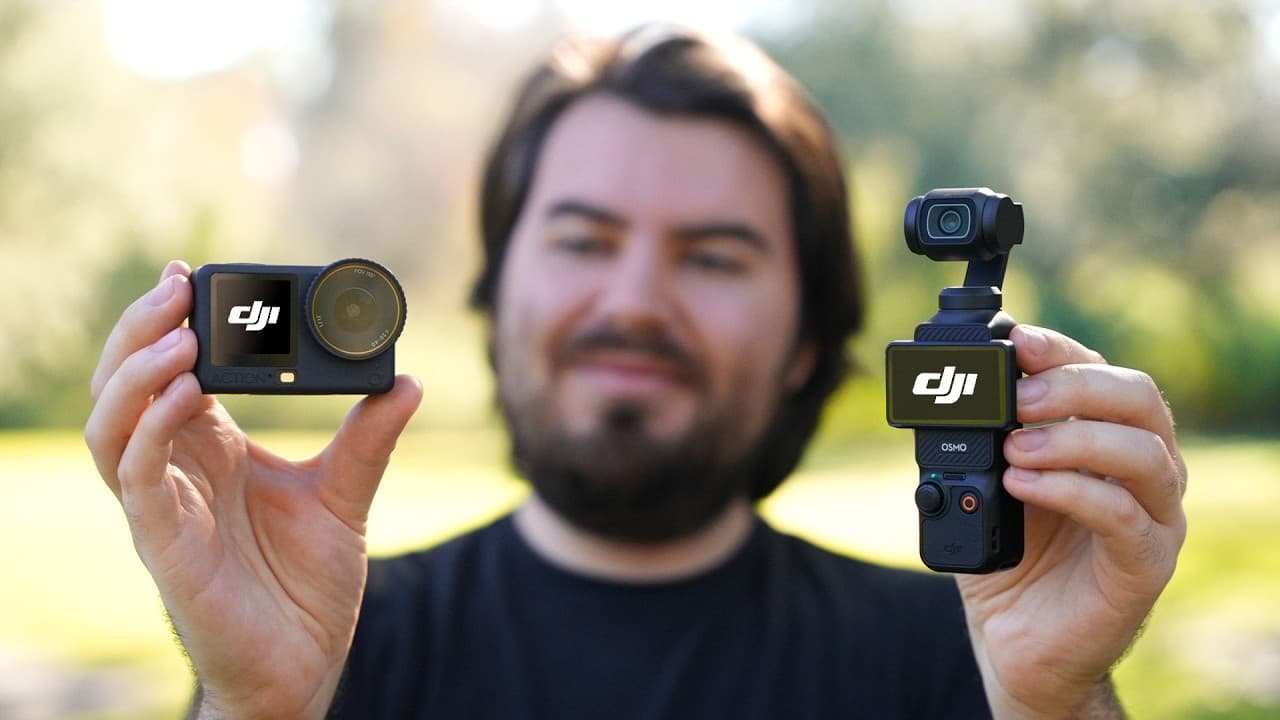
TL;DR
Choose the DJI Pocket 3 for smoother handheld movement, autofocus, face tracking, natural skin tones, background blur, and stronger low-light results. Choose the Action 6 for waterproof durability, faster operation, longer tested battery life, flexible mounting, 4K vertical recording, and easy reframing from its square format. Both offer strong internal audio, wireless microphone support, DLOG M, and 4K recording up to 120 frames per second.
Transcript
If you're looking for the best camera that you can take anywhere, DJI has two great options, the Osmo Pocket 3 and the Action 6. I've been using both, and while they can achieve very similar looking video, they're built for different kinds of creators. So, in this video, we're going to compare them side by side so you know which one is best for you... Read More
Key Insights
- The Pocket 3 is better suited to handheld vlogging because its mechanical gimbal creates smooth, natural movement, while autofocus and face tracking help keep a self-filming creator sharp without requiring constant attention to focus.
- The Action 6 is the stronger rugged option because it is waterproof to 20 meters, feels more durable, and supports mounting on tripods, clamps, chest mounts, and cars with fewer concerns about protecting delicate moving parts.
- The Action 6 is faster for spontaneous or behind-the-scenes recording because a user can turn it on and immediately press record. The Pocket 3 needs time for its gimbal to wake up and requires some familiarity with gimbal operation.
- Both cameras are practical for slow motion because they can record 4K at up to 120 frames per second. Although the Action 6 can capture 8K at 30 frames per second, that creates larger files and offers limited visible benefit without substantial cropping or reframing.
- The Action 6 square recording format is useful for multiplatform production because one recording can be reframed for horizontal YouTube videos and vertical social posts. Pocket 3 users must frame more intentionally because that square format is unavailable.
- The Pocket 3 produces more natural-looking colors and skin tones in the comparison, along with greater background blur. The Action 6 delivers a sharp, clean image, but its fixed-focus design can leave close subjects out of focus without an additional macro lens.
- The Pocket 3 is stronger in low light because its sensor is slightly larger and its mechanical stabilization does not depend on available light. The Action 6 improves light capture with a larger sensor than previous models and a wider f2 aperture, but can show more noise and weaker stabilization after dark.
- Both cameras provide capable internal microphones and can connect to the DJI Mic 3. Connecting as many as two wireless microphones supports interviews, while wireless audio maintains a clean and consistent signal when the subject moves farther from the camera.
- Related book: YouTube Secrets
Install to Summarize YouTube Videos and Get Transcripts
Explore YouTube Video Summarizer or Get YouTube Transcript Extractor
Questions & Answers
Q: Which DJI camera is better for YouTube vlogging?
The Pocket 3 is generally better for handheld, walk-and-talk YouTube vlogging because its mechanical gimbal produces smooth, natural footage. Autofocus and face tracking keep the creator sharp, while its image shows more natural skin tones and greater background blur. The Action 6 becomes the better choice when the vlog involves water, rough conditions, rapid setup, or frequent mounting.
Q: Why should a creator choose the Action 6 over the Pocket 3?
A creator should choose the Action 6 when durability, speed, and mounting flexibility matter most. It is waterproof to 20 meters, can attach to a tripod, clamp, chest mount, or car, and is simple enough to hand to another crew member. Its square recording format also lets creators derive horizontal and vertical edits from the same original footage.
Q: Which camera produces better image quality and skin tones?
The Pocket 3 produces more natural-looking colors and skin tones in the side-by-side comparison, and its background blur helps separate a person from the scene. Its autofocus and face tracking are also valuable for self-filming. The Action 6 creates a sharp, clean image and offers film tones for attractive footage without color grading, but it uses fixed focus.
Q: Can the Action 6 and Pocket 3 record slow-motion video?
Both cameras can record 4K video at up to 120 frames per second, providing clean slow-motion footage. Higher frame rates are also available when recording at lower resolutions for a more pronounced slow-motion appearance. The Action 6 additionally records up to 8K at 30 frames per second, although the resulting files are larger and the improvement is most useful for cropping or reframing.
Q: Which camera is better for vertical and social media videos?
The Action 6 offers more flexibility for vertical production because it records vertical footage in 4K and includes a one-by-one square format. That square frame can be edited into both horizontal YouTube videos and vertical social content from one recording. The Pocket 3 has a vertical mode limited to 3K and requires more deliberate framing because it lacks the square option.
Q: Which DJI camera performs better in low light?
The Pocket 3 performs better in low light because its sensor is slightly larger than the Action 6 sensor and its mechanical gimbal does not depend on light for stabilization. The Action 6 has improved through a larger sensor and wider f2 aperture, but darker scenes can introduce more noise and make its digitally stabilized footage look less clean.
Q: How does subject tracking differ between the two cameras?
The Pocket 3 physically pans its gimbal head to follow a subject, making it the stronger tracking option. The Action 6 cannot move its body, so it tracks by cropping into the frame, reducing the output to 2.7K. It can also lose the subject when that person leaves the original frame, although it may reacquire them after they return.
Q: How do battery life and audio compare on both cameras?
The Pocket 3 delivered about two to two and a half hours on one charge in the test, while the Action 6 delivered around three hours on one battery. Both internal microphones sound good for quick vlogging and capturing spontaneous moments. Both cameras can also connect to the DJI Mic 3 and support as many as two microphones for a creator and guest.
Summary & Key Takeaways
-
The Pocket 3 is designed around a mechanical gimbal that produces smooth, natural movement while walking or filming intentional camera moves. Its autofocus, face tracking, larger sensor, background separation, and more natural-looking colors make it particularly effective for self-filming, handheld vlogging, subject tracking, and shooting in lower-light environments.
-
The Action 6 prioritizes durability, simplicity, and mounting flexibility. It is waterproof to 20 meters, starts recording quickly, works with accessories such as clamps and chest or car mounts, and uses fixed focus for straightforward operation. Its square recording format also supports efficient horizontal and vertical content creation from one recording.
-
Both cameras record 4K at up to 120 frames per second, capture usable internal audio, connect with as many as two wireless microphones, and offer DLOG M for color grading. The choice depends primarily on shooting conditions: Pocket 3 favors polished handheld footage, while Action 6 favors rugged, fast, mountable production.
Read in Other Languages (beta)
Share This Summary 📚
Summarize YouTube Videos and Get Video Transcripts with 1-Click
Try YouTube Summary with ChatGPT & Claude or YouTube Transcript Generator
Explore More Summaries from Think Media 📚

Summarize YouTube Videos and Get Video Transcripts with 1-Click
Try YouTube Summary with ChatGPT & Claude or YouTube Transcript Generator