Where Are the Best Investing Opportunities in 2026?
TL;DR
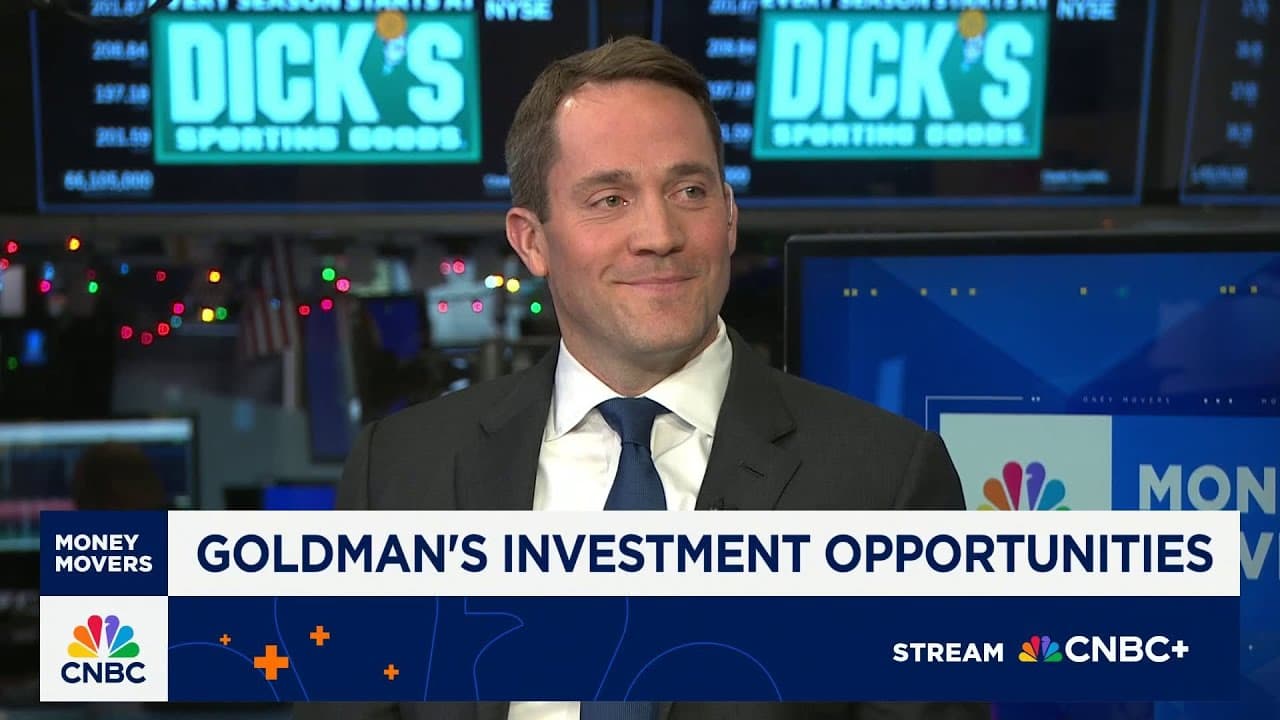
Small caps, international developed markets, and income-producing assets offer opportunities heading into 2026 as Federal Reserve cuts, attractive valuations, fiscal expansion, and broader market participation create a constructive backdrop. Investors should maintain roughly market-weight exposure to mega-cap AI companies, diversify beyond government bonds, and add downside protection because uncertainty and complexity remain elevated.
Transcript
NOW THAT WE KNOW THAT THERE ARE A FEW MEMBERS OUT THERE THAT ARE SAYING PUBLICLY IN THE LAST FEW WEEKS THAT THEY DO NOT WANT TO CUT, SO JUST ADDING SOME REPORTING IN THERE. OUR NEXT GUEST SAYING THE MACROECONOMIC ENVIRONMENT ICONSTRUCTIVE FOR RISK ASSETS HEADING INTO 2026, IDENTIFYING OPPORTUNITIES ACROSS SMALL CAPS, INTERNATIONAL MARKETS AND FIXED... Read More
Key Insights
- Small-cap performance is sensitive to expectations for Federal Reserve cuts. Calnon says small caps accelerated when cuts appeared likely, sold off as the perceived probability declined, and began recovering when expectations strengthened again.
- Small caps offer more than a valuation discount. Calnon argues that smaller companies are developing AI-related innovations and can compete effectively within niche markets without attempting to challenge hyperscalers directly.
- Equity market broadening does not require investors to choose between technology and healthcare. Calnon expects opportunities across multiple S&P 500 sectors, with healthcare serving as a prominent example of participation beyond the largest technology companies.
- International developed markets can continue participating in equity gains. Calnon cites fiscal expansion beginning in Germany and a new Japanese administration supportive of fiscal expansion as conditions that could sustain economic growth and market momentum.
- International outperformance does not have to come at the expense of United States equities. The interview notes that the S&P 500 had gained 13.5% during the year discussed, while international developed markets had risen 25%.
- A long-term investment horizon matters more than year-end trading impulses. Calnon focuses on the market backdrop for the following year rather than choosing between positive seasonal patterns and investors locking in gains before year-end.
- Downside protection remains important despite a constructive risk-asset outlook. Calnon emphasizes that markets still contain substantial uncertainty and complexity, so portfolios should balance participation in potential gains with protection against adverse outcomes.
- Income can be generated beyond government bonds. Calnon identifies higher-dividend international stocks, securitized fixed income, high yield, covered calls, and other options-based income strategies as potential sources of additional portfolio yield.
Install to Summarize YouTube Videos and Get Transcripts
Explore YouTube Video Summarizer or Get YouTube Transcript Extractor
Questions & Answers
Q: Why could small-cap stocks perform well heading into 2026?
Small-cap stocks could benefit from expected Federal Reserve cuts, attractive relative valuations, and company-level innovation. Calnon says the Russell 2000 was up close to 10% during the year discussed, compared with approximately 13.5% for the S&P 500. He also observed that small caps rose when a cut appeared more likely and declined when expectations weakened.
Q: How do Federal Reserve cut expectations affect small caps?
Federal Reserve cut expectations appear to influence small-cap performance significantly. Calnon says small caps began taking off when indications in August and September suggested that a cut was likely. They later sold off when the perceived probability moved from about 70% to 40%, then recovered as expectations for a cut strengthened again.
Q: Can small companies compete in artificial intelligence?
Small companies can compete in artificial intelligence by concentrating on specialized markets rather than challenging hyperscalers directly. Calnon describes them as AI innovators operating at the front lines of the technology. Their opportunity comes from identifying distinct niches where focused products or capabilities can succeed without requiring the scale and capital of the largest technology companies.
Q: Does healthcare growth require investors to rotate out of technology?
Healthcare growth does not require a complete rotation away from technology or artificial intelligence. Calnon rejects the idea that the sectors must be locked in a tug of war. He instead expects equity participation to broaden across sectors within the S&P 500, with healthcare at the leading edge while AI and technology opportunities continue to retain momentum.
Q: Why could international developed markets keep outperforming?
International developed markets could retain momentum because fiscal policy may support additional growth. Calnon points to fiscal expansion beginning in Germany and a new administration in Japan that also supports fiscal expansion. If those conditions remain in place, he believes economic growth and equity-market momentum can continue, although not necessarily at the same pace already recorded.
Q: Must international gains come at the expense of US stocks?
International gains do not need to come at the expense of United States equities. Calnon argues that investors have become too focused on an exclusively United States-centered outcome, even though several markets can advance together. The interview notes gains of 13.5% for the S&P 500 and 25% for international developed markets during the year discussed.
Q: How can investors generate income beyond government bonds?
Investors can seek income through international stocks, which typically offer higher dividend yields, and through other fixed-income segments such as securitized assets and high yield. Calnon also mentions covered calls and other options-based income strategies within the S&P 500. These approaches may supplement government-bond income when the Federal Reserve is cutting rates.
Q: How much exposure should investors have to mega-cap AI stocks?
Calnon recommends keeping mega-cap technology and AI exposure roughly aligned with market-cap weights. He would neither move substantially overweight nor substantially underweight the theme. His reasoning is that artificial intelligence still has considerable opportunity and momentum, and he does not view it as a bubble, although he acknowledges that valuations have increased.
Summary & Key Takeaways
-
Greg Calnon sees a constructive environment for risk assets heading into 2026, supported by expected Federal Reserve cuts and broader equity participation. Small caps may benefit from lower rates, attractive valuations, and innovation in specialized AI markets, while healthcare represents a leading example of market performance expanding beyond the largest technology companies.
-
International developed markets remain part of the opportunity set after outperforming the United States during the year discussed. Calnon points to emerging fiscal expansion in Germany and a supportive new administration in Japan. He argues that international gains can continue without requiring weak United States returns, rejecting an exclusively United States-focused investment outlook.
-
Portfolio construction should combine growth opportunities, income generation, and downside protection. Potential income sources include higher-dividend international stocks, securitized fixed income, high yield, covered calls, and other options-based strategies. Calnon recommends approximately market-cap-weight exposure to mega-cap AI companies because momentum remains strong, while uncertainty makes excessive concentration inappropriate.
Read in Other Languages (beta)
Share This Summary 📚
Summarize YouTube Videos and Get Video Transcripts with 1-Click
Try YouTube Summary with ChatGPT & Claude or YouTube Transcript Generator
Explore More Summaries from CNBC Television 📚





Summarize YouTube Videos and Get Video Transcripts with 1-Click
Try YouTube Summary with ChatGPT & Claude or YouTube Transcript Generator