How to Improve Your Line Art Skills Effectively
TL;DR
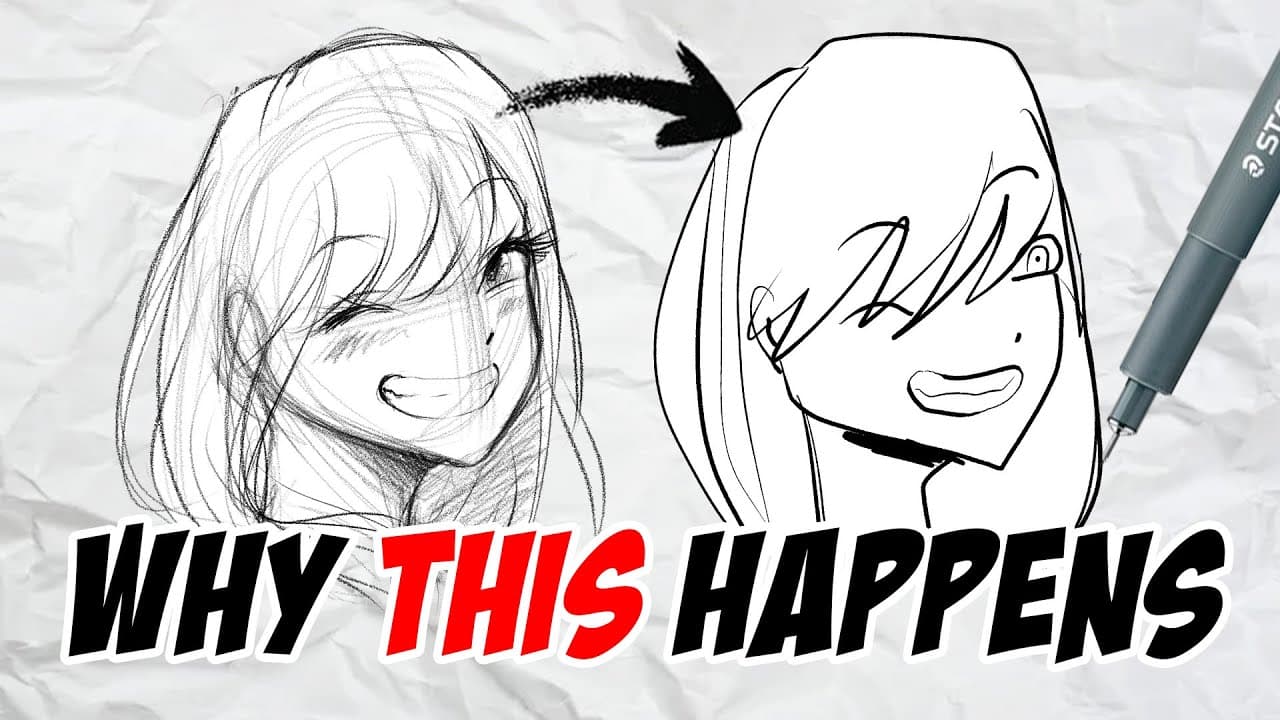
To enhance your line art skills, focus on line variation, maintain momentum while inking, and pay attention to details. Start by using the right tools such as 0.1 and 0.3 liners, and practice inking at the same speed as your sketches. This approach will help your line art look crisp and professional.
Transcript
[music] Hi guys. My name is Marcel and today you've been drawing like a Sir. That's right. You're probably here because you already drew something, and then you realized that your line arts skills are about as useful as the bottom half of a condom. But don't worry because today, I'm teaching you how I'm making my line arts as crisp as possible. Act... Read More
Key Insights
- 😉 Line art often suffers from misinterpretation of shapes once the sketch is erased, requiring thoughtful inking strategies.
- 🔏 Utilizing an eraser pen can help in delineating clearer paths for inking, making the process smoother and more efficient.
- 🔏 Beginners benefit from starting with accessible ink supplies like liners, while pen nibs offer advanced control for experienced artists.
- 🫥 Dynamics in line art communicate emotion and confidence; careful speed adjustments can greatly affect line quality.
- 🥰 Achieving a good balance in detail is essential, as both meticulously parallel lines and dynamic scribbles have their place in quality art.
- 💬 Engaging with your audience through comments about future content ideas fosters a community and ensures relevant tutorial topics are covered.
- 🧑🎨 Marcel’s tutorials cater to artists of different skill levels, making them applicable and approachable for all.
Install to Summarize YouTube Videos and Get Transcripts
Explore YouTube Video Summarizer or Get YouTube Transcript Extractor
Questions & Answers
Q: What are the main reasons why line art often looks worse than the initial sketch?
Marcel identifies four reasons for subpar line art, including the inherent difficulty in drawing perfect shapes post-sketch, the loss of line variation, dynamic energy during inking, and insufficient detailing in the final product, which leads to a lack of visual appeal.
Q: How can you improve line variation in your art?
Improving line variation involves understanding which lines should be thicker and which should be thinner. Beginners are encouraged to use 0.1 and 0.3 liners for ease of control. Additionally, using pen nibs allows for greater nuanced thickening of lines while inking, leading to a more organic and appealing appearance.
Q: Why is inking speed important, and how does it affect the outcome?
Inking speed is crucial as it affects the confidence and perceived quality of the line work. Marcel illustrates that lines inked slowly may appear insecure, while confident, quick strokes result in more dynamic lines. Maintaining a similar speed to the initial sketch enhances cohesion in the artwork.
Q: What role do details play in making line art more appealing?
Details add depth and interest to line art. Marcel points out that even subtle, scribbly details can enhance the overall aesthetic. Effective detailing involves systematic approaches rather than random strokes, contributing to a cohesive and visually satisfying final piece.
Summary & Key Takeaways
-
The video focuses on enhancing line art skills for drawing enthusiasts, addressing common mistakes and providing practical tips for improvement.
-
Marcel emphasizes the importance of line variation, dynamics, and details in creating quality line art, while demonstrating using simple examples like circles.
-
Viewers are encouraged to engage with the content, suggesting future topics through comments, and are reminded of Marcel's broader art tutorial offerings.
Read in Other Languages (beta)
Share This Summary 📚
Summarize YouTube Videos and Get Video Transcripts with 1-Click
Try YouTube Summary with ChatGPT & Claude or YouTube Transcript Generator
Explore More Summaries from Draw like a Sir 📚

Summarize YouTube Videos and Get Video Transcripts with 1-Click
Try YouTube Summary with ChatGPT & Claude or YouTube Transcript Generator