How to Start Learning to Draw: A Complete Roadmap
TL;DR
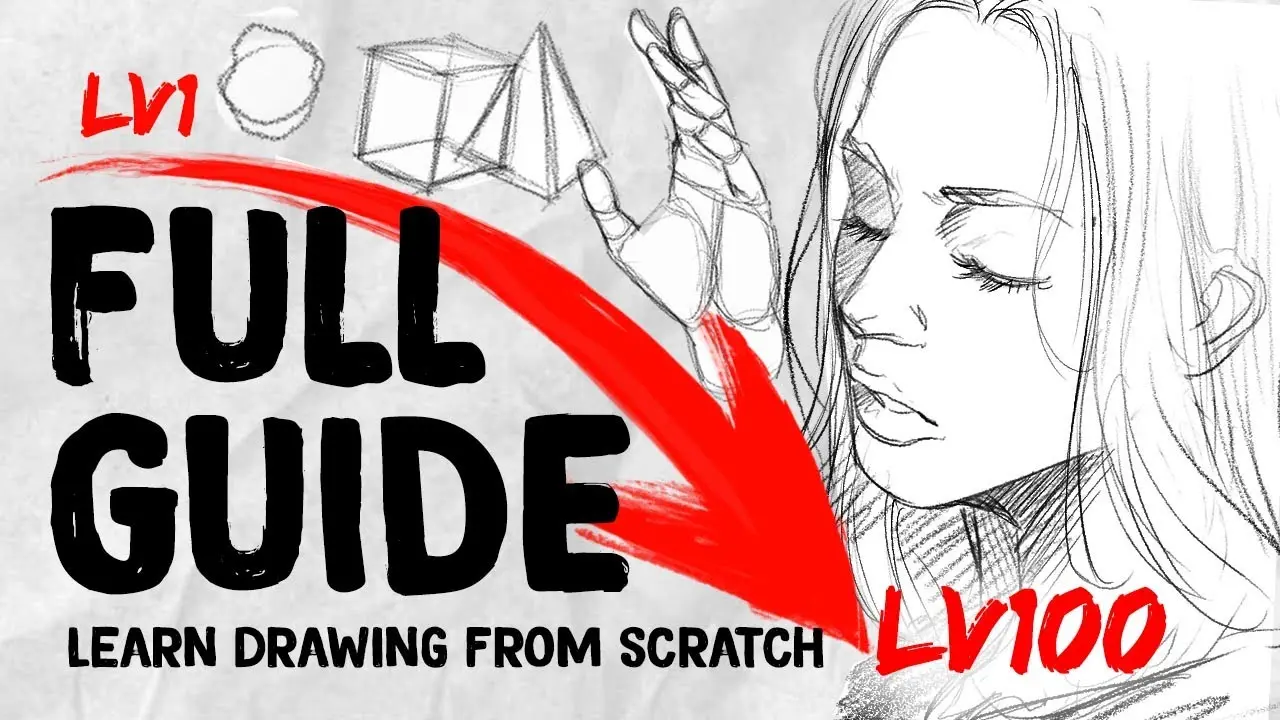
To begin learning to draw, focus on mastering clean linework and basic shapes, then progress to understanding 3D vision, simple anatomy, and proportions. After that, explore advanced concepts such as perspective, shading, and composition. Developing your ability to observe and analyze artworks critically will also enhance your skills and creativity over time.
Transcript
Hi Guys, names marcel - And you guys have been mighty excited for this video, huh? A comment that I got a lot was INHALE "WHERE DO I START TO LEARN HOW TO DRAW THERE ARE SO MANY TUTORIALS WHERE SHOULD I EVEN BEGIN-" this one... This video; right here So what I'm gonna do today is to give you a whole roadmap on how to learn how to draw and get int... Read More
Key Insights
- 🧭 Learning to draw: The video provides a roadmap for beginners to learn how to draw and get into art, regardless of their preferred style.
- 💥 Importance of clean linework: Practicing clean strokes with a pencil makes a significant difference in the overall quality of the drawing.
- 🔲 Shape design: Mastering the ability to draw basic shapes, both 2D and 3D, is essential in creating realistic and believable artwork.
- ♀️ Proportions: Learning the proportions of the human body before delving into detailed anatomy is crucial to avoiding unrealistic and awkward drawings.
- 👀 3D Vision: Understanding the 3-dimensionality of shapes and objects and knowing how to draw them is key to creating realistic and convincing artwork.
- 🎨 Style-specific skills: Different art styles require different skills, such as facial anatomy and shading for portraits, composition for landscapes, and a range of skills for comics or manga.
- 🔎 Observing and analyzing artwork: Developing the ability to analyze and understand what makes a piece of art successful allows for continuous learning and development as an artist.
- 🎯 Autodidactic learning: The ultimate skill for an artist is the ability to learn from any artwork by observing and implementing successful techniques into one's own art.
Install to Summarize YouTube Videos and Get Transcripts
Explore YouTube Video Summarizer or Get YouTube Transcript Extractor
Questions & Answers
Q: How should a beginner start learning to draw?
Begin with clean linework, then practice basic shapes such as triangles, circles, and squares. Progress to 3D shapes and 3D vision, simple anatomy and proportions, 1-point perspective, and dynamic poses before studying more advanced skills.
Q: Why should linework be the first drawing skill to practice?
Clean, distinct pencil strokes provide a foundation for drawing clear shapes and more complex forms. The transcript says practiced linework makes a world of difference even when comparing very simple drawings.
Q: How should beginners practice basic shape design?
First practice making clean triangles, circles, and squares, using controlled linework. If those shapes are not clean yet, the recommended response is quantity: keep drawing them before moving into 3D forms.
Q: What is 3D vision in drawing?
3D vision means seeing objects as three-dimensional forms and understanding which shapes construct them. It goes beyond replacing a rectangle with a cube and helps drawings look more believable across manga, portraits, and other styles.
Q: Should beginners learn detailed anatomy right away?
No. Beginners should first learn proportions and simple anatomy: how the body is constructed and how large its individual parts are. Adding detailed muscle groups before understanding basic proportions can produce unrealistic figures.
Q: How much perspective should a beginner learn first?
Start by learning at least 1-point perspective and how to use a vanishing point. It combines clean linework with 3D shapes and boxes directed toward one vanishing point, while 2-point and 3-point perspective can be studied later.
Q: When should an artist practice dynamic poses?
Practice dynamics after gaining the initial beginner skills but before becoming absorbed in details. Dynamics are planned at the start of a drawing, so simple mannequins are useful for exploring dynamic poses.
Q: How long does it take to learn the drawing fundamentals?
There is no single correct timeframe. The concepts may be explained in one day, but actually acquiring the skills can require weeks or months of practice; tutorials alone are not enough.
Summary & Key Takeaways
-
Start with mastering linework, focusing on making clean strokes with your pencil.
-
Progress to learning shape design and 3D vision, understanding the construction of objects and adding depth to your drawings.
-
Next, learn simple anatomy and proportions before diving into more detailed anatomical studies.
-
Explore advanced skills such as advanced perspective, shape design, shading, rendering, and composition.
-
Finally, develop your observing skill, allowing you to analyze and learn from other artworks to continuously improve.
Read in Other Languages (beta)
Share This Summary 📚
Summarize YouTube Videos and Get Video Transcripts with 1-Click
Try YouTube Summary with ChatGPT & Claude or YouTube Transcript Generator
Explore More Summaries from Draw like a Sir 📚

Summarize YouTube Videos and Get Video Transcripts with 1-Click
Try YouTube Summary with ChatGPT & Claude or YouTube Transcript Generator