Is Bitcoin Preparing for a Fourth-Quarter Peak?
TL;DR
Bitcoin has not shown the weekly or monthly trend breakdown that would confirm the cycle is over, while low retail interest and sideways volatility resemble earlier periods before major moves. Historical cycle timing and seasonal search patterns point toward a possible new all-time high in the fourth quarter, although rising US dollar strength presents a risk to asset prices.
Transcript
We've seen the same playbook happen before on Bitcoin, right before significant moves. There is a drop in interest from retail traders, one of the lowest on record. There's a lack of narratives forming, stuff that hasn't been seen by the market before. And there is a drop in volatility. That's price volatility. We're seeing things go sideways. Now,... Read More
Key Insights
- Bitcoin is approximately 34 months into the current cycle, compared with historical cycle durations of roughly 35 to 37 months. This timing creates notable fourth-quarter confluence, but cycle duration alone does not confirm whether the August high was the final peak.
- A macro trend breakdown is necessary to support the conclusion that Bitcoin’s cycle has ended. Four-hour or one-day trend changes identify short-term movement, while weekly and monthly price structures provide more meaningful evidence about whether the broader market cycle has reversed.
- A new Bitcoin all-time high is considered unlikely in September but remains possible in October, November, or December. October corresponds to 35 months, November to 36 months, and December to 37 months within the cycle timing framework presented.
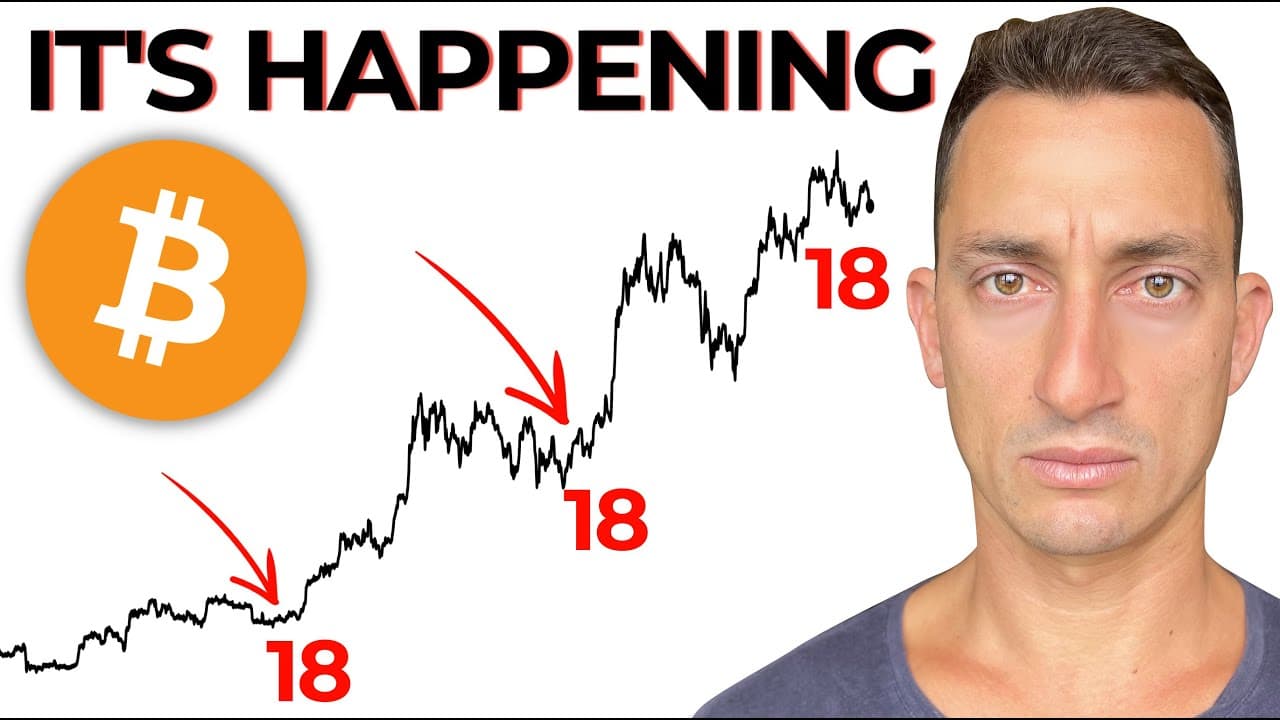
- Retail search interest in Bitcoin and crypto is near a cycle low. Worldwide Google Trends readings cited in the analysis show crypto at 9 and Bitcoin at 18, levels comparable with several earlier periods when public attention had faded.
- Retail attention commonly follows rising prices rather than anticipating them. Search activity and investor interest tend to increase after an asset begins advancing, leaving retail participants more active near market highs and less engaged during sideways or declining periods.
- Low September and October search activity appears repeatedly in the five-year Google Trends comparison. Earlier examples showed attention beginning to recover during October or November, although the 2022 increase was connected to the FTX and SBF collapse rather than a bullish price move.
- Patience is presented as an important advantage during quiet market periods. Retail participants often stop monitoring an asset when price moves sideways, then return after attention, messages, group activity, and search volume surge in response to renewed price movement.
- US dollar strength is a risk signal because the analysis associates a climbing dollar with generally lower asset prices. Bitcoin and US stock markets are near all-time highs, so continued dollar strength could challenge the remaining case for a late-cycle Bitcoin advance.
Install to Summarize YouTube Videos and Get Transcripts
Explore YouTube Video Summarizer or Get YouTube Transcript Extractor
Questions & Answers
Q: How can investors tell whether the Bitcoin cycle is over?
The cycle would require a macro change in price structure before it could be treated as conclusively over. Short-term reversals on four-hour or daily charts only show temporary trend changes. Weekly and monthly bars are more relevant because they reveal whether Bitcoin has broken important support and shifted its broader trend. No such macro breakdown had appeared in the analysis.
Q: When could Bitcoin reach another all-time high?
The analysis considers a September all-time high unlikely but identifies October through December as the main remaining window. October would place the cycle at approximately 35 months, November at 36 months, and December at 37 months. Those dates align with the 35-to-37-month duration of previous cycles, creating fourth-quarter confluence without guaranteeing another peak.
Q: Why does low retail interest matter for Bitcoin?
Low retail interest matters because similar periods of disengagement have occurred before significant market moves. When Bitcoin trades sideways, people often lose patience, stop searching, and reduce their involvement. Interest commonly returns only after price begins moving and public discussion increases. The cited Google Trends readings suggest retail attention is currently near one of the lowest levels of this cycle.
Q: What do Google Trends readings show about Bitcoin interest?
The worldwide five-year comparison shows crypto search interest at 9 and Bitcoin at 18 during the period discussed. Bitcoin’s reading is below the cited June and July level of 19 and matches other low-interest periods near 18. Comparable readings also appeared before attention later increased, although not every rise in searches reflected bullish market conditions.
Q: Does retail interest usually lead or follow Bitcoin price?
Retail interest generally follows price in the examples discussed. As Bitcoin or another asset rises, more people search for it, conversations become active, and late participants enter near higher prices. When the asset moves sideways or falls, attention fades and some investors sell. This behavior can create a quiet reset before another breakout, but it does not independently predict one.
Q: Why is the fourth quarter important for this Bitcoin cycle?
The fourth quarter aligns with both historical cycle timing and earlier Bitcoin peak months. A peak in October would occur around month 35, November around month 36, and December around month 37. The analysis also notes previous tops in November 2021, on November 30 in 2013, and in mid-December 2017, strengthening the timing comparison.
Q: What could invalidate the case for another Bitcoin peak?
A weekly or monthly breakdown in Bitcoin’s market structure would weaken the argument for another all-time high because it would indicate a macro trend change. Continued US dollar strength is another risk, since the analysis associates a rising dollar with generally lower asset prices. Failure of search interest to begin recovering could also reduce support for the expected seasonal pattern.
Q: When might Bitcoin search interest begin to recover?
The analysis suggests the first signs of improving search volume could appear within one to three weeks, with a clearer rise potentially beginning in roughly four to five weeks. Earlier five-year examples showed interest recovering during the second half of October or in November. Such a turn would support the outlook for a larger upward price move, but would not confirm it alone.
Summary & Key Takeaways
-
Bitcoin is 34 months into the current cycle, while previous cycles lasted approximately 35 to 37 months. The August high could become the cycle peak, but the absence of a macro price breakdown leaves open the possibility of another all-time high during October, November, or December.
-
Worldwide Google Trends readings for Bitcoin and crypto are near the lowest levels observed during the current cycle. Comparable periods of weak search interest appeared during September and October in earlier years, often before attention increased alongside price or in response to major market events.
-
The analysis interprets low retail interest, reduced volatility, and sideways trading near all-time highs as conditions that can precede another breakout. Confirmation would require search activity to turn upward within the coming weeks and price to retain its macro structure, while US dollar strength remains a warning signal.
Read in Other Languages (beta)
Share This Summary 📚
Summarize YouTube Videos and Get Video Transcripts with 1-Click
Try YouTube Summary with ChatGPT & Claude or YouTube Transcript Generator
Explore More Summaries from Jason Pizzino 📚




Summarize YouTube Videos and Get Video Transcripts with 1-Click
Try YouTube Summary with ChatGPT & Claude or YouTube Transcript Generator