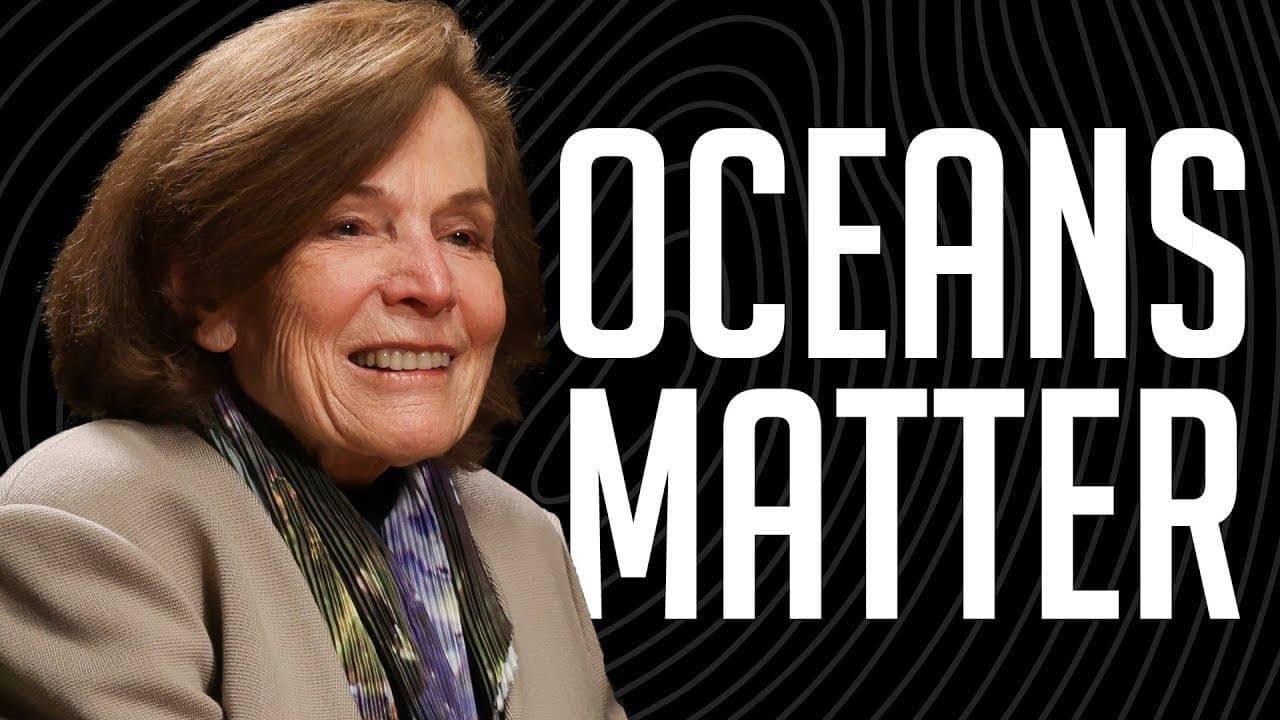
What Does Oceanographer Sylvia Earle Say About Resilience, Hope, and Mysteries of the Deep on the Rich Roll Podcast?
TL;DR
Sylvia Earle says ocean recovery is possible if enough people protect nature and move in the right direction. She argues that COP26 made some progress but lacked the necessary speed and scale, while computer technologies now help humanity gather data, share information, and recognize environmental connections. Read on for her case for putting nature at the center of climate action.
Transcript
(gentle music) By protecting nature, recovery is possible. If enough people start moving in the right direction, we'll get there. (gentle music) Greetings, earthlings. Good to be with you. Welcome to the podcast. Dubbed "Her Deepness," my guest today is an absolute living legend. Her name is Sylvia Earle, and she's a marine botanist, an oceanograph... Read More
Key Insights
- Ocean recovery is possible when nature is protected and enough people move toward conservation, according to Sylvia Earle. She presents hope as a practical consequence of coordinated action, while emphasizing that the required movement must become broad enough to change humanity's direction.
- Climate conferences are valuable because nations gather around a problem that some people still deny, but participation alone does not deliver sufficient action. Earle believes COP26 produced progress while falling short of the speed, scale, and urgency required by climate and ocean decline.
- Nature is frequently treated as less important than technological solutions because engineered projects can attract investment. Earle argues that protecting natural systems should be central to climate action and that individuals can participate through choices involving their backyards, daily conduct, and eating habits.
- Modern information technology creates an unprecedented opportunity to understand environmental connections. Computers allow people to share information quickly, collect data, recognize patterns, and see how separate observations relate, providing knowledge and practical capacity that did not exist for earlier generations.
- Ocean decline is difficult to recognize because the surface can look the same whether the water below is healthy, dying, or dead. This visual similarity weakens public urgency and can also limit scientific understanding when measurements concentrate mainly on the surface and sunlit zone.
- Most of the planet's living space lies below ordinary diving depths and the areas where most ocean measurements have historically been taken. Deep currents, including cold flows moving beneath familiar surface currents, influence climate through interactions involving salinity, temperature, water movement, animals, and other life.
- The ocean is a layered system rather than a uniform body of water. Density, salinity, light, temperature, and biological communities create distinct layers that can persist even when the surface appears wavy or turbulent, making physical disruption more consequential than surface observations suggest.
- Human activity disrupts ocean systems through transportation, engine noise, churning, mixing, and potential deep-sea mining. Earle says the consequences remain insufficiently measured, while mapping efforts seek a consistent picture of the ocean floor's mountains, valleys, and flat areas over the coming decade.
Install to Summarize YouTube Videos and Get Transcripts
Explore YouTube Video Summarizer or Get YouTube Transcript Extractor
Questions & Answers
Q: Why does Sylvia Earle believe ocean recovery is possible?
Sylvia Earle believes recovery is possible when nature is protected. She says that if enough people start moving in the right direction, humanity can get there.
Q: What did Sylvia Earle think about COP26?
Earle viewed COP26 as a success in the limited sense that nations gathered to address a problem some people still deny. She said some progress was made, but not nearly enough to meet the need to scale up and speed up action.
Q: Why does Sylvia Earle want nature placed at the center of climate action?
Earle says nature is often treated as less important than technological fixes that attract investment. She argues that saving nature should be a primary focus because people can contribute through choices in their own backyards and eating habits.
Q: How can everyday people help protect nature and the ocean?
Earle says individuals can become part of the solution through their everyday actions. She specifically points to choices involving their backyards and eating habits.
Q: Why are people poorly equipped to consider environmental consequences?
The conversation suggests that humans tend to prioritize short-term gains over the long-term consequences of their actions. It also notes that incentives must better reward people and industries for preserving delicate ecosystems.
Q: What gives Sylvia Earle hope for future environmental action?
Earle says people share an almost universal desire to leave their children a safe and better world. She also sees the present as a sweet spot because humanity now has unprecedented knowledge and the capacity to act.
Q: How do computer technologies improve environmental understanding?
Computer technologies enable people to share information quickly, gather data, and identify patterns. They help people see how one observation connects with another instead of treating each data point separately.
Q: Who is Sylvia Earle on the Rich Roll Podcast?
Sylvia Earle is introduced as a marine botanist, oceanographer, writer, lecturer, and expert on ocean science and conservation. She was the first female chief scientist at NOAA, pioneered submersible engineering, authored more than 20 books, and established Mission Blue.
Summary & Key Takeaways
-
Definition: Mission Blue protects marine areas considered critical to ocean health, which Sylvia Earle calls Hope Spots.
-
Who: Sylvia Earle is a marine botanist, oceanographer, writer, lecturer, and ocean science and conservation expert.
-
Number: Sylvia Earle has devoted all of her 85 years to understanding oceans and breaking glass ceilings.
-
Number: Sylvia Earle has authored more than 20 books.
-
Who: Sylvia Earle served as the first female chief scientist at NOAA, the National Oceanic and Atmospheric Administration.
-
When: On day two of COP26, nations had gathered around climate change and made some progress.
-
Compare: Nature receives less attention than technological fixes because engineering solutions can attract investment.
-
Tool: Computer technologies help people share information, gather data, identify patterns, and connect observations.
-
Step 1: Protect nature to make recovery possible.
-
Step 2: Scale up and speed up action while putting nature at the center.
-
Step 3: Contribute through everyday choices, including backyard decisions and eating habits.
Read in Other Languages (beta)
Share This Summary 📚
Summarize YouTube Videos and Get Video Transcripts with 1-Click
Try YouTube Summary with ChatGPT & Claude or YouTube Transcript Generator
Explore More Summaries from Rich Roll 📚


Summarize YouTube Videos and Get Video Transcripts with 1-Click
Try YouTube Summary with ChatGPT & Claude or YouTube Transcript Generator