How Has Romanticism Destroyed Our Capacity to Love? | Alain de Botton | Google Zeitgeist
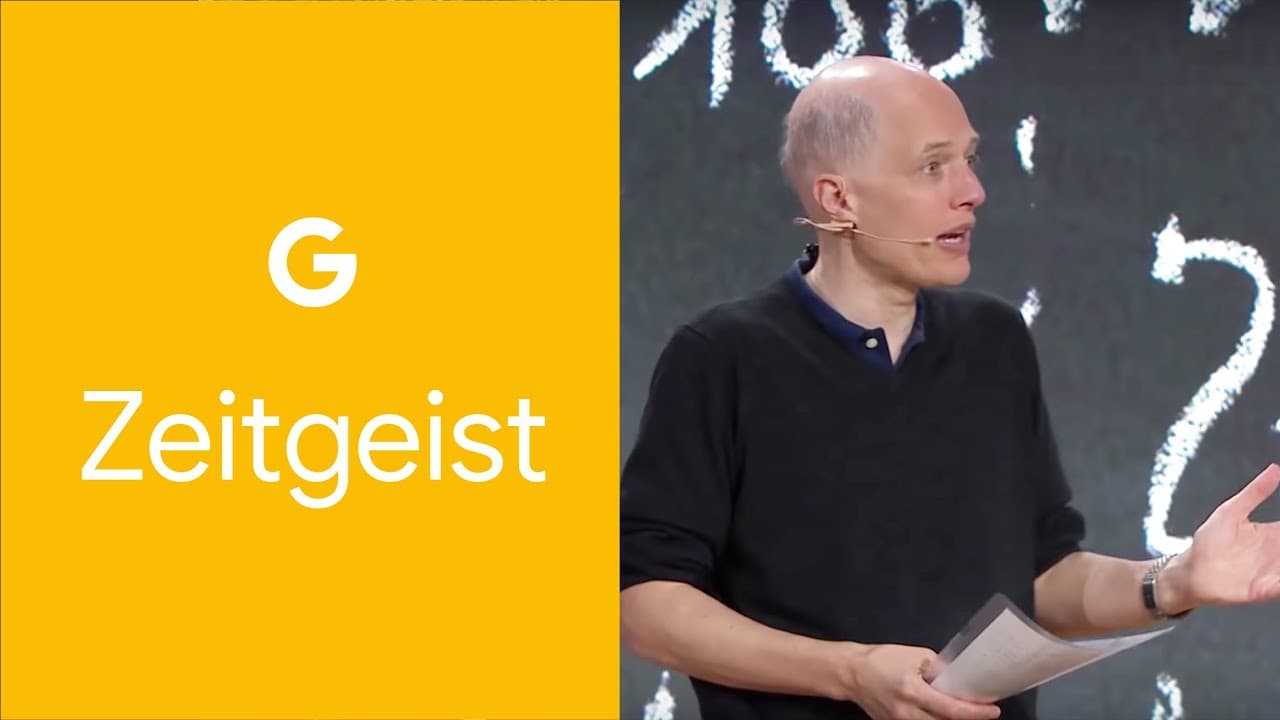
TL;DR
Romanticism destroyed our capacity to love by teaching us to expect a soulmate who understands us wordlessly, says Alain de Botton at Google Zeitgeist. He argues that for most of human history, loving your long-term partner was considered insane, and only in the last 200 to 250 years have we adopted the romantic script. Read on for the specific romantic assumptions he says we must abandon to become better lovers.
Transcript
let me introduce our first speaker he is a best-selling author whose books have been described as a philosophy of every day's life he's also the founder of the School of Life which is a new vision for education to help people find fulfillment in their everyday with that please welcome and land Bhutan thank you so we've been hearing a lot about the ... Read More
Key Insights
- 🥊 Love, as understood through romantic ideals, has heavily influenced our expectations and behaviors in relationships.
- 🥊 Love is not just a feeling but a skill that needs to be learned and cultivated.
- 🉑 True love involves accepting and embracing our own flaws and those of our partners.
- 🥊 Communication is vital in maintaining a healthy and fulfilling love relationship.
- 🉑 Love requires a balance between accepting and guiding each other, as well as maintaining some level of privacy and mystery.
- 💯 Compatibility is an achievement of love, not a precondition that can be found through algorithms and perfect matches.
- 🥊 Love entails being both a teacher and a pupil, constantly learning and growing together.
- 🎙️ More videos with Alain de Botton:
Install to Summarize YouTube Videos and Get Transcripts
Explore YouTube Video Summarizer or Get YouTube Transcript Extractor
Questions & Answers
Q: How has romanticism destroyed our capacity to love, according to Alain de Botton?
De Botton argues that the romantic way of loving sets expectations no relationship can meet, so it has destroyed our capacity to love in the true sense. Romanticism tells us a soulmate will understand every part of us without words, that we should have no secrets, and that we find that person through a sudden intuitive feeling. To become better lovers, he says, we have to exit many of these romantic assumptions rather than try harder inside them.
Q: How long have people actually loved the way we do now?
Only about 200 to 250 years, de Botton says. For most of human history, the idea that you would love the person you were betrothed to long-term would have been seen as completely insane; at best you tolerated them. The romantic account of love was popularized by a group of poets and writers, mostly in continental Europe.
Q: What is the romantic idea of a soulmate?
The romantic belief is that somewhere out there is one person who, once met, means you will never be lonely again. They will understand every part of you and you every part of them, with no secrets on either side, and your souls will communicate often without words. You are supposed to find them by intuition, through a very strong feeling that pulls you toward them without your knowing why.
Q: Why did the romantics link love and sex so tightly?
De Botton notes that people have been having sex and falling in love since the beginning of time, but the romantics fused the two, making sex the ultimate expression of love. That single move turned adultery from a problem into a catastrophe, because breaking marriage vows became an emotional betrayal rather than merely a legal one. He points out that almost every great novel of the 19th century has adultery at its heart for exactly this reason.
Q: What did the romantics believe about work and nature?
De Botton says the romantics held that loving properly takes so much time that it helps not to have a job, and most of the leading romantics were unemployed and unemployable. They spent a lot of time in nature, treating long walks as conducive to romantic feeling, especially beside waterfalls, open water, or cliff edges. Certain hours were also considered romantic, such as five or six o'clock when the setting sun lights the underside of the clouds.
Q: Why does de Botton say you are not a decent human being?
He challenges the first romantic assumption, that you are a decent person, by arguing that everyone is a deeply corrupt, deeply troubled, emotionally complicated creature, and anyone who partners with you will have a problem on their hands. He connects this to the Christian idea of original sin, which he reads not as condemnation but as the recognition that all of us are imperfect, warped, and crooked. The practical conclusion is that we need to go easy on each other.
Q: What is love if it is not finding the perfect match?
De Botton defines love as the mutual recognition that the person you encounter is flawed, broken, and in the deepest sense in need of charity. He also frames love as a skill to be learned and cultivated rather than a feeling that simply arrives. On that view, compatibility is an achievement of love rather than a precondition to be found through perfect matching.
Q: Can love survive imperfection and flaws?
Yes, and de Botton argues that accepting imperfection is what love actually consists of. It means extending charity to your partner's flaws and to your own, while still guiding each other toward growth, which makes both people teacher and pupil at once. He also suggests that a healthy relationship keeps some privacy and mystery rather than demanding total transparency.
Summary & Key Takeaways
-
Love, as seen through the lens of romantics, involves finding a soulmate who will understand us completely and fulfill all our desires.
-
Romantics believe in the concept of love at first sight and that true love involves a fusion of love and sex, making adultery a catastrophic problem.
-
The speaker argues that the romantic way of loving has hindered our capacity to love and that we need to challenge and discard these assumptions to become better lovers.
Read in Other Languages (beta)
Share This Summary 📚
Summarize YouTube Videos and Get Video Transcripts with 1-Click
Try YouTube Summary with ChatGPT & Claude or YouTube Transcript Generator
Explore More Summaries from Google Zeitgeist 📚
Summarize YouTube Videos and Get Video Transcripts with 1-Click
Try YouTube Summary with ChatGPT & Claude or YouTube Transcript Generator