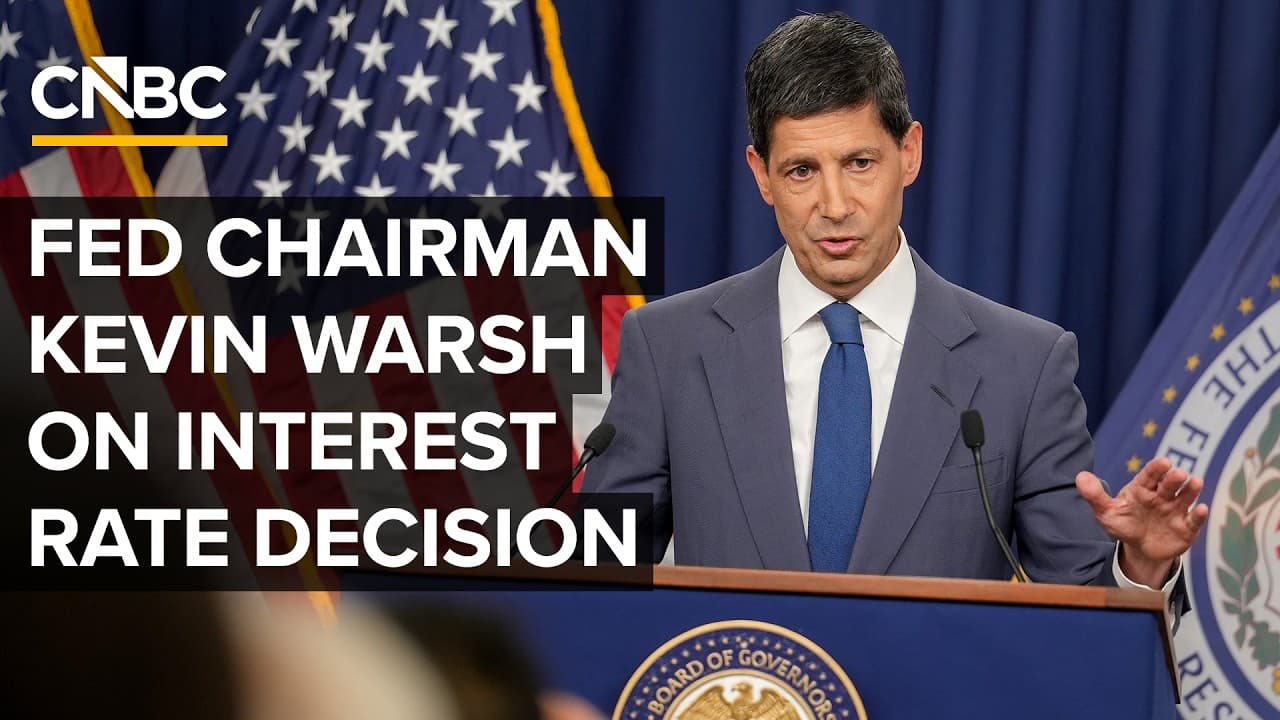
What impact will the Fed rate hike have on inflation and markets
TL;DR
The Fed raised the federal funds rate by 25 basis points, bringing the range to 3.75 percent to 4.00 percent, and signaled potential further moves to reach its 2 percent inflation goal. The central bank stressed price stability and a resilient economy with a strong labor market, while acknowledging uncertainty from geopolitics.
Transcript
as many questions. As a result, we're ask questions answered. Please take a moment. Okay. Thank you all. Good day. In the meeting just concluded, the FOMC decided to raise the target range for the federal funds rate by a quarter of a percentage point to 3 and 3/4 to 4% in support of the Federal Reserve's dual mandate. The committee is continuing it... Read More
Key Insights
- The Fed raised the target range for the fed funds rate by 25 basis points to 3.75 percent to 4 percent. The move signals a continued stance to address inflation while supporting the economy.
- Inflation has remained elevated and is not yet moving clearly toward the 2 percent objective, according to the committee’s commentary and projections.
- The labor market is described as strong with a jobless rate around 4.1 percent and healthy job openings, contributing to resilience in domestic demand.
- The Fed emphasizes price stability and the need to prevent second order effects from relative price shifts, even if energy prices or other inputs are volatile.
- Policy remains data attentive but not strictly data point dependent, with a focus on broader inflation trends and labor market signals.
- The committee's projections show GDP growth around a couple of percent with inflation trending down to the 2 percent target range over time.
- Geopolitical shocks and external risks are acknowledged as factors that can influence inflation and financial conditions, affecting policy adjustments.
- The decision is described as unanimous, reflecting a shared view on the appropriate monetary stance given the current conditions.
Install to Summarize YouTube Videos and Get Transcripts
Explore YouTube Video Summarizer or Get YouTube Transcript Extractor
Questions & Answers
Q: What did the Federal Reserve decide at the meeting regarding the target range for the federal funds rate
The Federal Reserve voted to raise the target range for the federal funds rate by 25 basis points, moving to 3.75 percent to 4.00 percent. This decision aligns with a policy stance intended to curb inflation while sustaining a robust labor market and resilient economic activity. The Fed indicated readiness for further actions if needed to achieve price stability.
Q: Why did the Fed raise rates despite a strong economy
The Fed raised rates to address inflation that remains elevated and not yet clearly trending toward the 2 percent objective. Despite a strong economy and solid labor market, the central bank believes increases are necessary to prevent inflation from becoming more persistent and to maintain credibility about price stability over the longer term.
Q: What does the Fed say about inflation trends and the 2 percent target
The Fed states that inflation has been too high for too long and that underlying trends have not shown meaningful improvement. The committee maintains a commitment to achieving the 2 percent PCE inflation objective and will adjust policy as needed to ensure that inflation expectations stay well anchored.
Q: How does the Fed view the labor market in this decision
The Fed characterizes the labor market as strong, with a low unemployment rate and robust job openings, contributing to continued consumer spending and overall economic resilience. This strength supports a monetary stance aimed at reducing inflation without unduly restraining job creation.
Q: Is this move considered market driven or policy driven
The Fed states that the decision is policy driven, based on assessment of the economy, the trajectory of employment, and inflation dynamics. While markets may price in expectations, the committee emphasizes its independent judgment and resolution to achieve price stability and sustainable growth.
Q: What are the main risks acknowledged by the Fed
The Fed acknowledges geopolitical shocks and other external risks that could affect inflation and financial conditions. These uncertainties can influence the path of policy, requiring vigilance and potential adjustments to ensure that policy remains consistent with the dual mandate of maximum employment and price stability.
Q: What did the Fed say about future policy actions
The Fed indicated that future actions depend on evolving economic data and trends in inflation and employment. While this meeting did not reveal a fixed trajectory, the committee stressed a disciplined, data-informed approach and readiness to act if necessary to keep inflation moving toward the 2 percent goal.
Q: How did the Fed describe the relationship between inflation and energy prices
The Fed noted that it cannot control specific price levels such as energy or food, but it can influence broader inflation by preventing second order effects from price shifts. This involves maintaining stable financial conditions and ensuring that relative price changes do not broaden into sustained inflationary pressures.
Summary & Key Takeaways
-
The Fed implements a 25 basis point rate increase to tighten monetary policy while maintaining ample bank reserves, signaling a path toward its 2 percent inflation objective. This move reflects ongoing evaluation of inflation dynamics and labor market strength, with emphasis on avoiding second order effects from price shifts.
-
The committee notes inflation remains too high and has not yet shown meaningful improvement in underlying trends, reinforcing a disciplined approach to future policy actions. Market expectations and the interplay between financial conditions and the real economy are acknowledged as important to the outcome.
-
The communication emphasizes price stability as the core mandate, aiming for durable expansion and full employment. The statement details projections and risks, including external shocks, while underscoring the Fed's commitment to price stability and orderly economic progress.
Read in Other Languages (beta)
Share This Summary 📚
Summarize YouTube Videos and Get Video Transcripts with 1-Click
Try YouTube Summary with ChatGPT & Claude or YouTube Transcript Generator
Explore More Summaries from CNBC Television 📚



Summarize YouTube Videos and Get Video Transcripts with 1-Click
Try YouTube Summary with ChatGPT & Claude or YouTube Transcript Generator