What Do Near-Death Experiences Reveal About Consciousness?
TL;DR
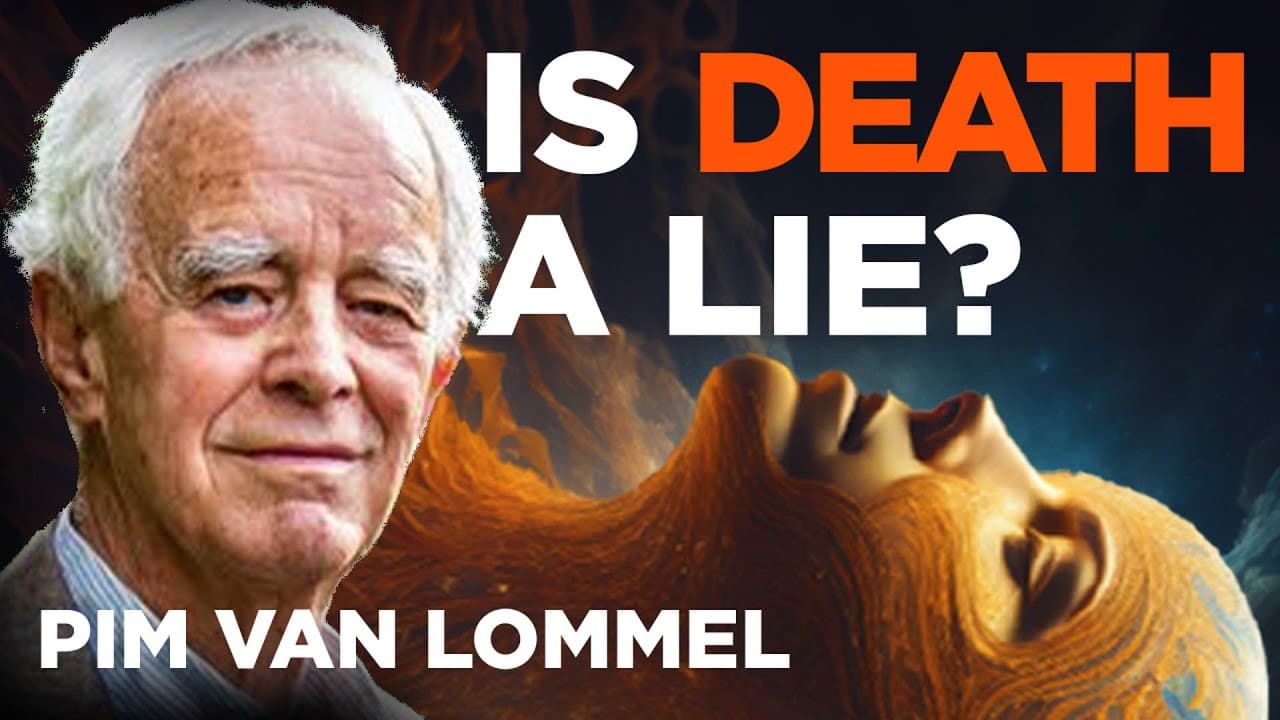
Near-death experiences (NDEs) suggest that consciousness exists independently of brain function. Dr. Pim van Lommel's research found patients reporting detailed perceptions and transformative experiences during cardiac arrest, supporting the notion that consciousness transcends the physical body. Common explanations, like hallucinations or lack of oxygen, fail to account for these phenomena.
Transcript
It should be impossible to explain these kinds of experiences by just claiming the never proven assumption that consciousness is a byproduct of brain function. Well, here we are in the city of Velp, in the Netherlands, and we came here to visit Dr. Pim van Lommel. Pim has done extensive research in the field of Near-Death Experience. He's done it f... Read More
Key Insights
- 🧠 NDE research challenges the assumption that consciousness is a byproduct of brain function.
- 🧠 Patients have reported detailed perceptions and enhanced consciousness during cardiac arrest, a time when the brain is not functioning.
- 😖 Verifiable experiences during NDEs suggest that consciousness exists beyond the body.
- 🪡 Materialist science needs to expand to include subjective experiences and consciousness as fundamental aspects of reality.
- 🥰 Love, empathy, and interconnectedness are essential aspects of life that can transform how we live and experience the world.
Install to Summarize YouTube Videos and Get Transcripts
Explore YouTube Video Summarizer or Get YouTube Transcript Extractor
Questions & Answers
Q: How did Dr. van Lommel get involved in NDE research?
As a cardiologist, he initially dismissed NDEs but became curious after hearing patients' accounts. His interest grew when he read George Ritchie's book "Return From Tomorrow" and started asking cardiac arrest survivors about their experiences.
Q: Can NDEs be explained by hallucinations or neurochemical releases?
No, the brain during cardiac arrest shows no signs of consciousness. The lack of oxygen and other factors do not explain the detailed perceptions and enhanced consciousness reported by NDE patients.
Q: What evidence supports the existence of consciousness beyond the brain?
Patients have had verifiable perceptions during NDEs, such as seeing and accurately describing events while clinically dead. These accounts cannot be explained by the brain's activity or traditional scientific theories.
Q: How do NDEs relate to the concept of subjective experiences?
NDEs challenge the materialist paradigm that consciousness is solely a product of brain function. They suggest that consciousness is independent of the body, with experiences that go beyond time and space.
Summary & Key Takeaways
-
Dr. Pim van Lommel conducted extensive research on NDEs, involving ten hospitals in the Netherlands. His findings were published in The Lancet, a prestigious medical journal.
-
NDEs involve enhanced consciousness and perceptions, even when the brain is not functioning. Patients have reported out-of-body experiences, seeing and hearing events while clinically dead or in a coma.
-
The study found that explanations such as lack of oxygen or fear of death cannot account for NDEs. The transformative effects and verifiable experiences reported by patients provide evidence for consciousness beyond the brain.
Read in Other Languages (beta)
Share This Summary 📚
Summarize YouTube Videos and Get Video Transcripts with 1-Click
Try YouTube Summary with ChatGPT & Claude or YouTube Transcript Generator
Explore More Summaries from Essentia Foundation 📚

Summarize YouTube Videos and Get Video Transcripts with 1-Click
Try YouTube Summary with ChatGPT & Claude or YouTube Transcript Generator