What Are the 7 High-Value AI Skills, and How Can You Start in 30 Days?
TL;DR
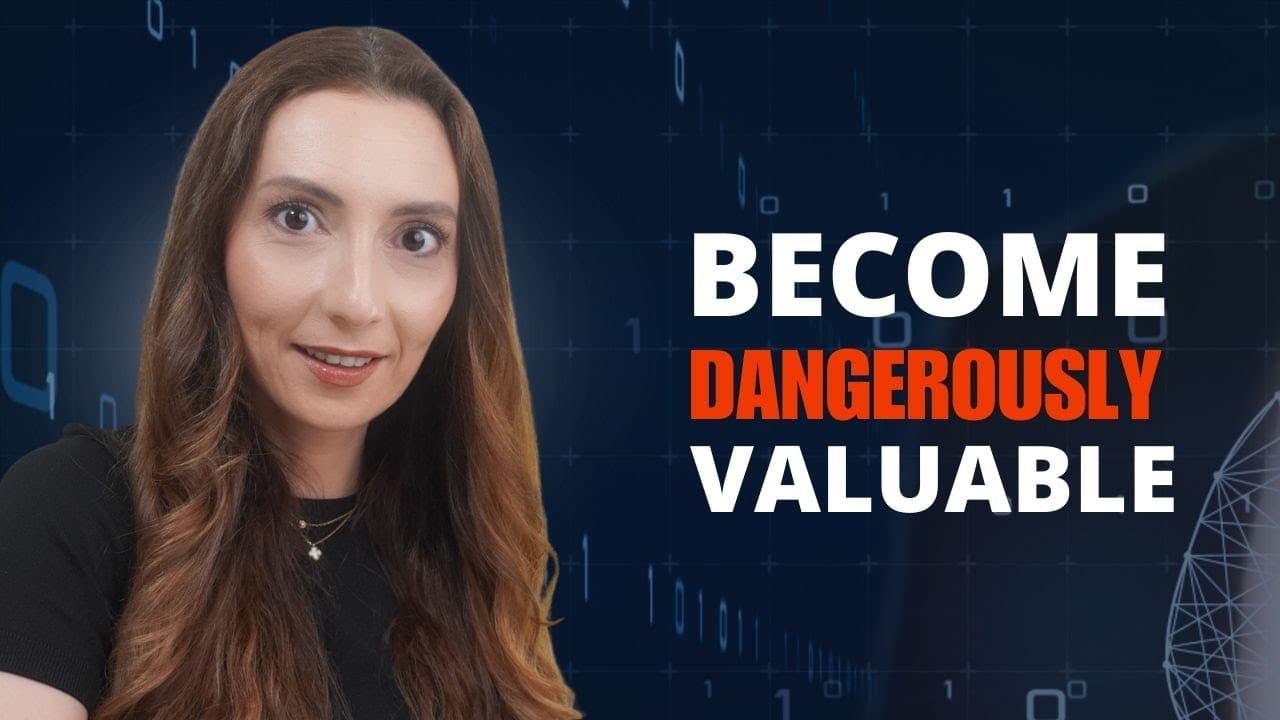
To become harder to replace in an AI-driven workplace, choose one high-value skill, develop it quickly, and monetize it while demand is high. The seven skills are presented as a compass rather than a checklist, with detailed examples for the AI business strategist and workflow optimizer plus a 30-day strategist learning plan. Read on for the roles, business results, and four-week path.
Transcript
Ever worry you'll be the next one let go during company layoffs? AI is changing the rules if you pick the right skills. So in this video I'm going to show you seven high-paying AI skills that employers desperately need and exactly how you can master them to make yourself irreplaceable. Almost half a million tech workers lost their jobs since 2023. ... Read More
Key Insights
- Almost half a million tech workers have lost their jobs since 2023, and many were highly skilled yet still replaced, while others pivoted into AI-leveraged skills and now earn more than they did in big tech.
- Skill chasing is a trap: jumping from tool to tool and course to course stacks half-learned skills that feel productive but never get monetized. Being great at one high-value skill beats being average at seven.
- The visionary strategist, or AI business strategist, designs the decision architecture for how AI fits a business, including which processes to automate, what metrics to track, and how to manage ethical, financial, and operational risks.
- 85% of AI projects fail, usually not because models or tools are bad but because there is no clear strategy, leaving a gap that the visionary strategist fills by asking where AI makes money, saves time, or could blow up.
- Only about 30% of consulting tasks can be automated in the next decade according to McKinsey, meaning the rest requires human judgment, context, and trust, so AI cannot fully replace the strategist role.
- BCG worked with IBM on a systematic AI transformation roadmap focused on support functions like legal, IT, procurement, and HR, unlocking $3.5 billion in cost savings and a 50% productivity increase over two years.
- The design thinker, or workflow optimizer, redesigns processes so humans focus on decisions while AI and agents handle repetitive work; most companies have broken processes, not broken technology, and gains come from rethinking workflows.
- A marketing agency reduced client onboarding from 3 hours to 1 hour and cut manual work by 70% after a design thinker mapped the process and automated 60% of repetitive steps using Zapier, Make, and AI integration.
Install to Summarize YouTube Videos and Get Transcripts
Explore YouTube Video Summarizer or Get YouTube Transcript Extractor
Questions & Answers
Q: How can you become irreplaceable in an AI world?
Choose one high-value AI skill, go deep quickly, and monetize it while demand remains high. Companies want specialists who own a lane and deliver a specific result, so the seven skills should be treated as a compass rather than a checklist.
Q: Why is chasing multiple AI skills a trap?
Jumping between tools and courses can produce a collection of half-learned skills without generating income. The transcript argues that mastering seven skills over four years is risky because the environment may shift before you are ready to sell them.
Q: What does an AI business strategist do?
An AI business strategist designs how AI fits into business decisions. The work includes identifying processes to automate, selecting metrics, and managing ethical, financial, and operational risks through roadmaps, ROI models, readiness assessments, and governance guidance.
Q: Why do many corporate AI projects fail?
The transcript says 85% of AI projects fail, often because companies lack a clear strategy rather than because their models or tools are inadequate. A strategist addresses this gap by determining where AI can make money, save time, or create risk.
Q: Can AI replace consulting and strategy work?
The transcript cites an estimate that only about 30% of consulting tasks can be automated in the next decade. The remaining work depends on human judgment, context, and trust, so AI cannot fully replace the strategist role described here.
Q: What business impact can an AI transformation strategy produce?
BCG worked with IBM on a systematic AI transformation roadmap covering support functions including legal, IT, procurement, and HR. The transcript says IBM achieved $3.5 billion in cost savings and a 50% productivity increase over two years.
Q: How can you become an AI business strategist in 30 days?
In week one, read industry reports and write an AI value thesis; in week two, study ROI and risk models and draft a roadmap. In week three, conduct two to three mock audits and document savings, then launch a fixed-fee AI readiness audit in week four.
Q: What does a workflow optimizer do, and what results can the role deliver?
A workflow optimizer redesigns processes so people focus on decisions while AI and agents handle repetitive work. In the marketing-agency example, automating 60% of repetitive steps with Zapier, Make, and AI integration reduced onboarding from 3 hours to 1 hour and cut manual work by 70%.
Summary & Key Takeaways
-
We live in an age of speed and outcomes rather than degrees or 10-year plans. Most people fall into a dopamine-driven skill-chasing trap, stacking half-learned skills without monetizing them. Companies no longer hire generalists; they hire the person who owns a lane and delivers a specific result.
-
The first high-value lane is the visionary strategist, an AI business strategist who designs how AI fits into business decisions. Because 85% of AI projects fail from lack of strategy and only 30% of consulting tasks can be automated, this role requires human judgment. BCG helped IBM unlock $3.5 billion in savings.
-
A 30-day sprint to become a strategist: week one read industry reports and write an AI value thesis, week two learn ROI and risk models and draft a roadmap, week three run mock audits, week four launch a fixed-fee AI readiness audit. The second lane, the design thinker, turns roadmaps into automated workflows.
Read in Other Languages (beta)
Share This Summary 📚
Summarize YouTube Videos and Get Video Transcripts with 1-Click
Try YouTube Summary with ChatGPT & Claude or YouTube Transcript Generator
Explore More Summaries from AI Founders 📚



Summarize YouTube Videos and Get Video Transcripts with 1-Click
Try YouTube Summary with ChatGPT & Claude or YouTube Transcript Generator