How Will AI and Tokenization Drive Crypto Growth?
TL;DR
AI payments, real-world asset tokenization, and stablecoins could drive crypto’s next growth phase by expanding practical uses beyond speculation. Changpeng Zhao argues that crypto winters reflect mass psychology, while blockchain’s long-term value comes from becoming part of mainstream financial services, global commerce, and asset trading.
Transcript
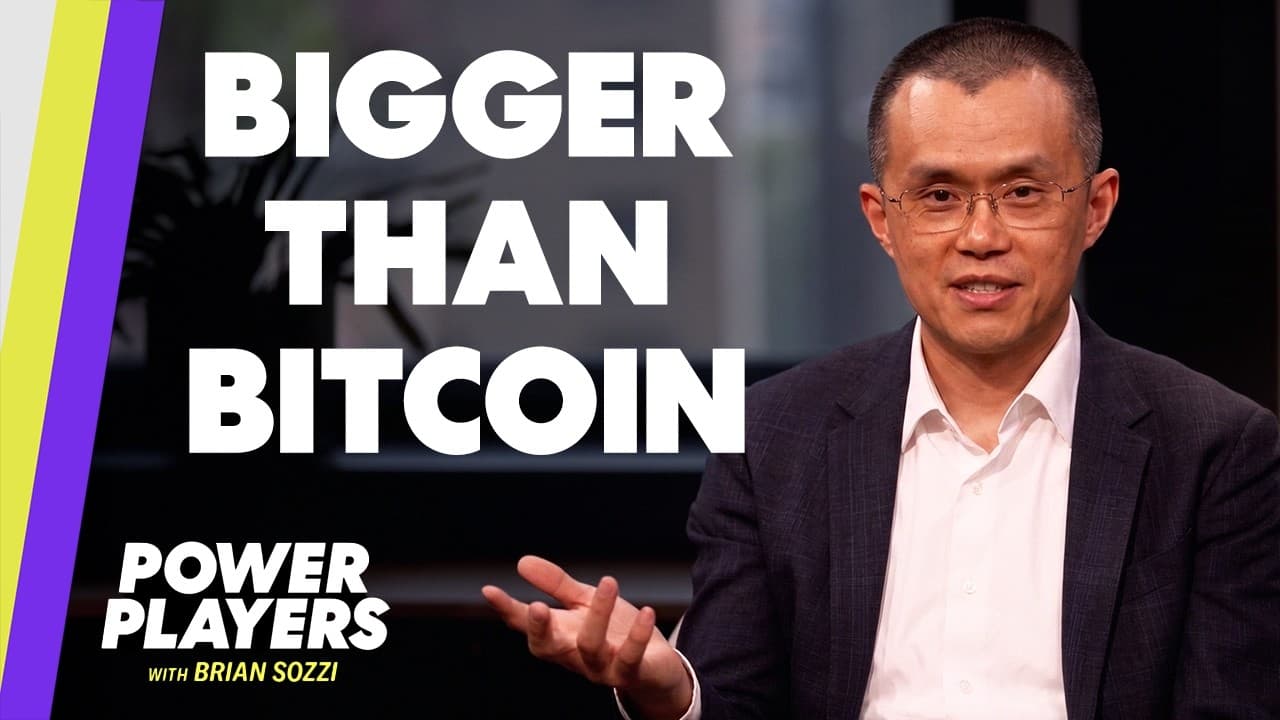
All right, welcome to a new episode of Power Players with Brian Sozzi. I'm your host Brian Sozzi and I have a special guest here, someone that I've I've followed his career and background for a while, but I've actually never seen him physically in person. So, this is the first time for me. He always would come remote. Changpeng Zhao, better known a... Read More
Key Insights
- Crypto remains a growing industry despite recurring winters. Zhao notes that Bitcoin near $60,000 is still roughly three to four times its level around the previous cycle’s bottom, supporting his view that long-term development can continue beneath severe short-term price fluctuations.
- Crypto winters are largely driven by mass psychology. Large groups rush into rising markets, help create bubbles, then panic and sell together, causing prices to overcorrect even when the underlying industry and its practical value continue developing along a steadier path.
- Blockchain is a technology for money and financial services. Zhao argues that growing economies will require more transactions, so blockchain is unlikely to disappear and should increasingly support payments, savings, loans, trading, and other products rather than remain an isolated speculative sector.
- AI payments could become a major source of cryptocurrency adoption. AI can already search for suitable tickets, but completing purchases globally requires a transaction system, and Zhao believes supporting cryptocurrency may be the fastest way for AI companies to enable worldwide commerce.
- Crypto adoption is likely to progress incrementally rather than through one decisive breakthrough. DeFi, NFTs, and meme coins each became popular and then less prominent, but they remained part of the industry while new applications and narratives continued to emerge.
- Real-world asset tokenization is growing faster than Zhao expected. He describes multi-billion-dollar asset allocations and significant trading activity, suggesting that blockchain can expand global access to financial and non-financial assets, including instruments connected to company stocks.
- Crypto and traditional finance should converge rather than compete. Existing financial institutions can use blockchain technology, while crypto platforms can provide traditional products such as loans, savings programs, payments, and stock trading, making the current distinction largely a matter of labeling.
- Crypto regulation remains at an early stage and will mature slowly. Zhao expects frameworks to evolve for multiple decades as industries develop, new products appear, and regulators respond to events, with continuing debate over specific features and legal nuances.
- More videos from this channel:
- More from this channel: Yahoo Finance
Install to Summarize YouTube Videos and Get Transcripts
Explore YouTube Video Summarizer or Get YouTube Transcript Extractor
Questions & Answers
Q: Why do crypto winters happen?
Crypto winters happen largely because of mass psychology, according to Zhao. Large groups of investors tend to rush into a rising market together, pushing prices above underlying value, and then panic and sell when sentiment changes. This collective behavior produces sharp overcorrections, even while the industry’s technology, applications, and long-term value may continue growing more steadily.
Q: What could end the current crypto winter?
Continued innovation and the creation of more practical applications could support recovery from the current crypto winter. Zhao does not identify one guaranteed trigger. Instead, he points to expanding use cases, including AI payments, stablecoins, and real-world asset tokenization. He argues that winters repeatedly come and go while the broader blockchain industry continues developing over time.
Q: How could AI increase cryptocurrency adoption?
AI could increase cryptocurrency adoption by moving from finding products or services to purchasing them on a user’s behalf. Zhao uses ticket buying as an example: AI can search for an attractive option today but does not yet complete the transaction. If AI companies want automated purchases to work globally, cryptocurrency may offer a fast route to worldwide payment support.
Q: What are real-world assets in crypto?
Real-world assets are financial or non-financial assets represented and traded through blockchain-based instruments. Zhao says this area is expanding faster than he expected, with multi-billion-dollar asset allocations and significant trading volumes. He highlights the possibility of using crypto infrastructure to provide global audiences with access to instruments connected to company stocks and other assets.
Q: Will one major event trigger the next crypto boom?
The next crypto expansion is more likely to develop incrementally than result from one defining event. Zhao notes that DeFi, NFTs, and meme coins each attracted intense attention before becoming less prominent, yet none disappeared entirely. AI payments, stablecoins, and tokenized real-world assets may similarly add adoption through many accumulating products, transactions, and use cases.
Q: Should crypto compete with traditional finance?
Crypto should not exist in permanent competition with traditional finance, according to Zhao. He considers blockchain a technology that can improve financial tools and applications. Traditional institutions can adopt blockchain capabilities, while crypto platforms can offer familiar services such as loans, savings products, payments, and trading. Over time, the two categories should increasingly merge.
Q: Why does Zhao remain optimistic about crypto?
Zhao remains optimistic because he sees long-term industry growth beneath cyclical price declines. He compares Bitcoin near $60,000 in the current winter with roughly $16,000 around the previous cycle’s bottom, noting that the newer level is still three to four times higher. He also expects expanding applications to create demand for additional blockchain transactions.
Q: How long will cryptocurrency regulation take to mature?
Cryptocurrency regulation will likely take multiple decades to mature. Zhao suggests a period of 50–70 years and expects debates to continue even then because new products, features, and legal nuances will keep emerging. He describes regulation as slow and event-driven, with authorities adjusting frameworks as the industry develops rather than establishing a final, perfect system immediately.
Summary & Key Takeaways
-
Changpeng Zhao remains optimistic about crypto despite the current downturn. He compares Bitcoin near $60,000 with its roughly $16,000 level during the previous winter, arguing that underlying industry growth continues even when prices fall. He attributes dramatic market cycles primarily to mass psychology, collective enthusiasm, panic, and overcorrection.
-
The next phase of adoption may come from applications outside the crypto industry itself. AI agents could use cryptocurrency to complete global purchases, while real-world asset tokenization could let wider audiences trade financial and non-financial assets. Zhao expects these developments to advance incrementally rather than through one transformative event.
-
Zhao rejects a lasting division between crypto and traditional finance. He views blockchain as a technology that can enhance payments, loans, savings, trading, and other financial products. Existing institutions can adopt blockchain, while crypto platforms can offer conventional services. Regulation will evolve slowly alongside these products for many decades.
Read in Other Languages (beta)
Share This Summary 📚
Summarize YouTube Videos and Get Video Transcripts with 1-Click
Try YouTube Summary with ChatGPT & Claude or YouTube Transcript Generator
Explore More Summaries from Yahoo Finance 📚






Summarize YouTube Videos and Get Video Transcripts with 1-Click
Try YouTube Summary with ChatGPT & Claude or YouTube Transcript Generator