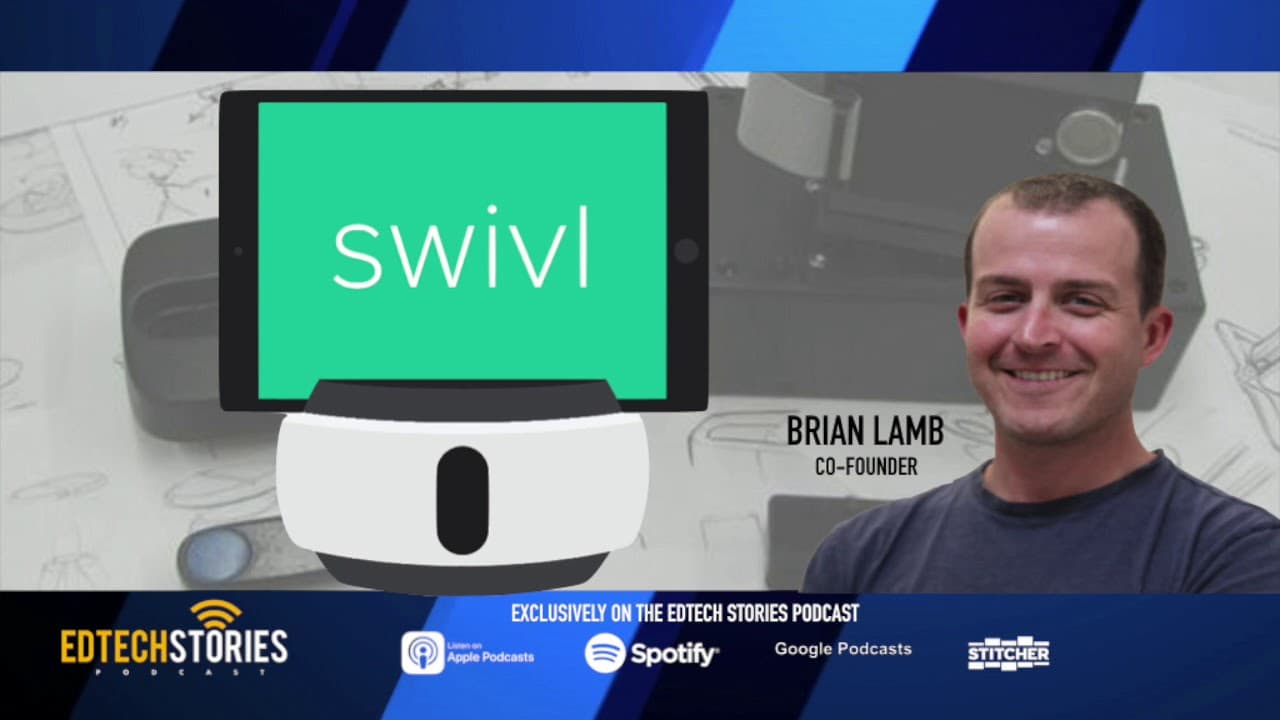
How Crowdfunding Campaigns Helped Launch Swivl
TL;DR
Crowdfunding helped launch Swivl by financing a finished prototype, proving customer demand, and strengthening the founders’ pitch to angel investors. An IndieGoGo campaign raised almost $25,000 above its initial goal, followed by another successful campaign on Kickstarter. When broad consumer sales struggled, steady orders from schools led Swivl to focus on education. Read on to see how funding, market feedback, and educators shaped the company’s direction.
Transcript
researching potential ideas Brian and Vlad began exploring the concept of video production we were excited about video so we had a compass towards creating products for video applications and it was very early it was late in flip cameras trajectory early in go post cameras trajectory and we knew that there was energy in that space and so as we star... Read More
Key Insights
- 🎥 The founders identified a market gap in video production by addressing people's self-consciousness on camera.
- 🤖 Crowdfunding provided the necessary capital to bring the Swivl robot to fruition.
- 🥺 The initial focus on the general consumer market didn't gain much traction, leading Swivl to shift its focus to the education sector.
- 🪡 Connecting with educators and understanding their needs and value propositions was crucial for Swivl's success in the education market.
- 🎯 The journey from concept to market success involved multiple crowdfunding campaigns, a shift in target audience, and constant adaptation to feedback.
- 🥺 Lack of funding for hardware startups during that period led Swivl to experiment with crowdfunding as a viable option.
- 😇 The success of the crowdfunding campaigns and the demand from schools acted as proof of concept, attracting angel investors.
Install to Summarize YouTube Videos and Get Transcripts
Explore YouTube Video Summarizer or Get YouTube Transcript Extractor
Questions & Answers
Q: How did crowdfunding campaigns help launch Swivl?
Swivl’s IndieGoGo campaign raised almost $25,000, exceeded its initial goal, and provided enough capital to produce a finished prototype. It also demonstrated that customers were willing to pay for the product, helping the founders attract angel investors and raise enough money to launch their first products.
Q: Why did Brian and Vlad create the product that became the Swivl robot?
Brian and Vlad observed that people often become self-conscious when a camera is pointed at them. They wanted to make recording feel more comfortable and natural by creating a camera mount that could automatically follow a person’s movements.
Q: What was the Satori Star, and how did it work?
The Satori Star was an innovative mount designed to hold a phone or iPad. It communicated with a wireless receiver called the marker, which a person could hold or clip to clothing, allowing the mounted camera to track that person’s movements.
Q: Why did the founders turn to crowdfunding in 2010?
Brian had built working prototypes, but the company lacked the capital needed for mass production. Because few hardware companies had received funding during the preceding period, the founders decided to try the relatively new crowdfunding model.
Q: How did the IndieGoGo campaign demonstrate the Satori Star?
The campaign used a video to show the device tracking people in several situations. It followed a child crossing monkey bars, recorded a woman playing tennis, and tracked Brian as he ran across the street.
Q: How did crowdfunding help Swivl attract angel investors?
Reaching the crowdfunding goal gave the founders evidence of market traction because people had shown they were willing to pay for the product. They presented that proof to angel investors and eventually combined crowdfunding success with angel investment to finance the launch.
Q: When did the Satori Star become the Swivl robot?
After successful campaigns on IndieGoGo and Kickstarter, the founders partnered with angel investors to bring the product to market. They eventually renamed the company from Satori to Swivl, and the Satori Star became the Swivl robot; an improved Swivl was unveiled in 2012.
Q: Why did Swivl shift from general consumers to the education market?
The company initially marketed Swivl for activities such as filming golf swings, cooking, and FaceTime chats, but overall consumer sales gained little traction. A steady stream of orders from schools prompted the founders to focus on education and speak with educators to understand why they valued the product.
Summary & Key Takeaways
-
Brian and Vlad explored video production and discovered that people feel self-conscious on camera.
-
They created the Satori star, a camera mount that tracks movements to make being recorded more natural.
-
Lack of funding led them to crowdfunding, which was successful and allowed them to launch their product.
Read in Other Languages (beta)
Share This Summary 📚
Summarize YouTube Videos and Get Video Transcripts with 1-Click
Try YouTube Summary with ChatGPT & Claude or YouTube Transcript Generator
Explore More Summaries from EdTech Hustle 📚






Summarize YouTube Videos and Get Video Transcripts with 1-Click
Try YouTube Summary with ChatGPT & Claude or YouTube Transcript Generator