What Are the 7 Hidden Ways Society Programs You to Stay Poor?
TL;DR
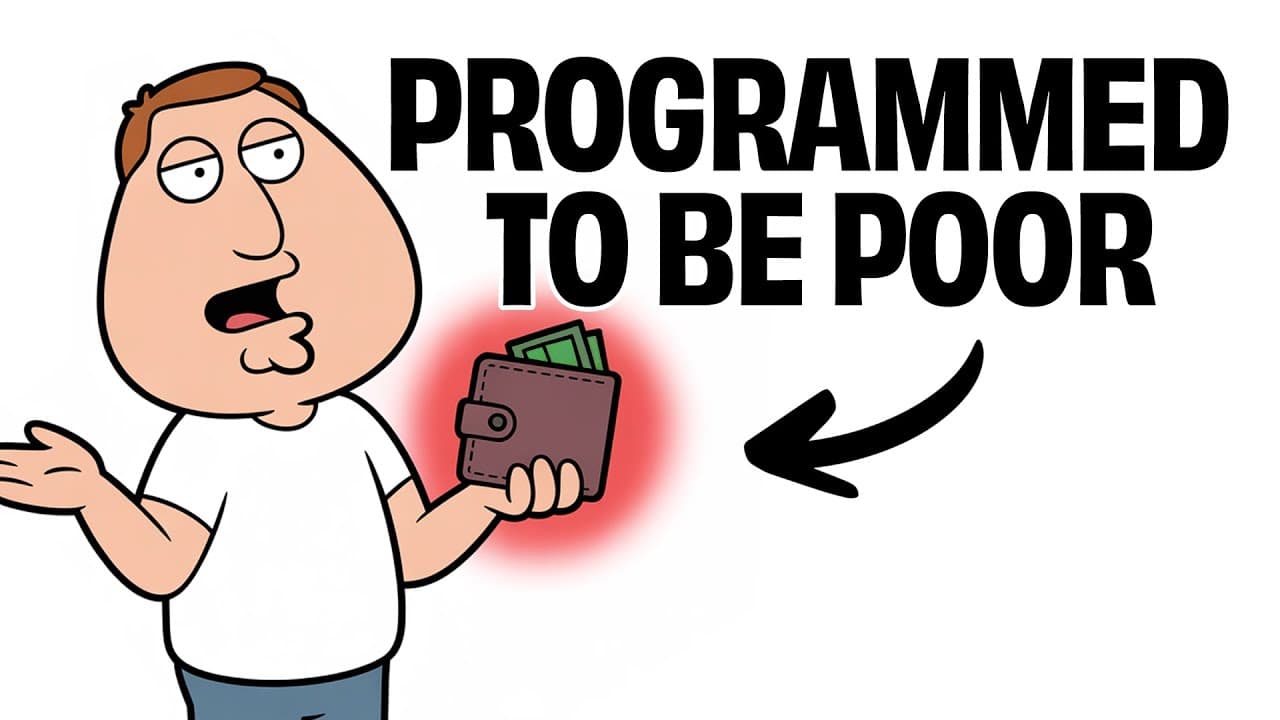
Society can keep people poor by normalizing seven patterns: distrusting wealth, choosing conventional security over opportunity, accepting consumer debt, thinking like a consumer, trading time for wages, following discouraging influences, and believing wealth is unattainable. Breaking those patterns involves building multiple income streams, acquiring productive assets, evaluating total costs, developing valuable skills, and questioning limiting beliefs. Read on for practical ways to recognize each pattern and rethink financial decisions.
Transcript
Have you ever noticed how the people who tell you money doesn't matter are usually the ones who never seem to have any? Meanwhile, the wealthy quietly follow a completely different set of rules that nobody bothered to teach the rest of us. It's almost like there's an invisible manual for staying broke that society handed you at birth. And you've be... Read More
Key Insights
- Negative beliefs about money can discourage wealth building by framing financial ambition as greedy or shallow. The transcript argues that money can instead provide freedom to help family members, pursue meaningful work, practice generosity, and support positive change.
- Traditional job security is presented as dependence on systems outside an individual's control. Employers can end employment, economic conditions can deteriorate, inflation can reduce savings, and a single income source can disappear, so multiple income streams and valuable skills are described as stronger safeguards.
- Consumer debt becomes harmful when borrowers focus on affordable monthly payments rather than total cost. The transcript contrasts borrowing for depreciating purchases with using cash for reliable used vehicles or applying debt strategically to assets that produce income rather than ongoing expenses.
- Investor thinking evaluates money by what it can build and how spending affects future wealth. Instead of asking only whether a purchase is affordable, the transcript recommends considering its opportunity cost and favoring assets that appreciate or generate income over possessions that lose value.
- Trading time directly for wages places an artificial ceiling on earnings because available working hours are limited. The proposed alternative is to create systems, assets, and income streams that continue producing value without requiring constant personal presence.
- Social environments can reinforce financially limiting behavior through skepticism, jokes, and discouragement. People may resist another person's investing or wealth goals because that progress makes them uncomfortable about their own choices, making the selection of supportive influences an important part of changing financial behavior.
- Limiting beliefs can become self-fulfilling prophecies when people assume wealth is unavailable because of their background, education, or circumstances. Those assumptions discourage financial education, calculated risks, persistence, business attempts, and investing, producing outcomes that appear to confirm the original belief.
- Financial deprogramming begins with deliberate changes in language, influences, and action. Replacing "I can't afford it" with "How can I afford it?" and identifying as someone learning about money can support education, calculated risk-taking, persistence, and more constructive financial decisions.
Install to Summarize YouTube Videos and Get Transcripts
Explore YouTube Video Summarizer or Get YouTube Transcript Extractor
Questions & Answers
Q: What are the 7 hidden ways society programs you to stay poor?
The seven patterns are treating financial ambition as greed, prioritizing conventional security over opportunity, normalizing debt, thinking like a consumer, tying income directly to working hours, accepting discouraging social influences, and believing wealth is beyond your reach. The transcript argues that these patterns feel normal because family, friends, education, employment, media, and advertising reinforce them.
Q: Why can believing that money is bad limit financial progress?
Treating the desire for money as greedy or shallow can prevent wealth building from becoming a legitimate goal. The transcript says rejecting money can lead to stress about bills, difficulty helping family members, and choices based only on affordability, while wealth can enable generosity, meaningful work, and positive change.
Q: Why is a stable job not complete financial security?
A stable job creates dependence on an employer and economic conditions outside a worker’s control. An employer can end the job, the economy can crash, and inflation can weaken savings, so the transcript presents multiple income streams, passive-income assets, and valuable skills as a broader foundation for security.
Q: How should debt and monthly payments be evaluated?
Debt should be judged by its total cost and by whether it buys a depreciating possession or an income-producing asset. The transcript cites an average American car payment of over $700 per month, amounting to $42,000 plus interest over five years for something that loses value.
Q: What is the difference between consumer thinking and investor thinking?
Consumer thinking focuses on what money can buy, while investor thinking considers what money can build. The transcript recommends considering a purchase’s effect on future wealth and favoring assets that appreciate or generate income over possessions that lose value.
Q: How can someone stop trading only time for money?
Someone can reduce dependence on wages by creating repeatable systems, owning productive assets, and developing income streams that do not require constant personal involvement. The transcript argues that exchanging hours directly for money limits earnings because the number of available working hours is finite.
Q: How can friends and family affect wealth-building behavior?
Friends, relatives, and other close contacts can reinforce limiting financial patterns through skepticism, jokes, or discouragement about investing and wealth goals. The transcript recommends recognizing that resistance and seeking influences that support financial education, constructive ambition, and disciplined action.
Q: How can limiting financial beliefs be changed?
The transcript recommends changing internal language, seeking wealth-oriented influences, educating yourself, taking calculated risks, and persisting through uncertainty and failure. One specific shift is replacing “I can’t afford it” with “How can I afford it?” and viewing yourself as someone who is learning about money.
Summary & Key Takeaways
-
Negative beliefs about money can make financial struggle appear virtuous and wealth morally suspect. The transcript argues that rejecting wealth as a goal can increase stress, restrict choices, and reduce the ability to help others, while responsible wealth building can support generosity, meaningful work, and positive change.
-
Conventional security can create dependence on employers, economic conditions, inflation, and savings. The suggested alternative is to develop multiple income streams, valuable skills, passive-income assets, and systems that function without constant personal involvement, creating a broader foundation than relying entirely on one job and exchanging hours for wages.
-
Consumer debt, social pressure, and limiting self-beliefs can reinforce financial stagnation. Deprogramming begins by considering total cost instead of monthly payments, treating money as productive capital, changing discouraging internal language, seeking different influences, educating yourself, taking calculated risks, and continuing through uncertainty and failure.
Read in Other Languages (beta)
Share This Summary 📚
Summarize YouTube Videos and Get Video Transcripts with 1-Click
Try YouTube Summary with ChatGPT & Claude or YouTube Transcript Generator
Explore More Summaries from Nick Invests 📚




Summarize YouTube Videos and Get Video Transcripts with 1-Click
Try YouTube Summary with ChatGPT & Claude or YouTube Transcript Generator