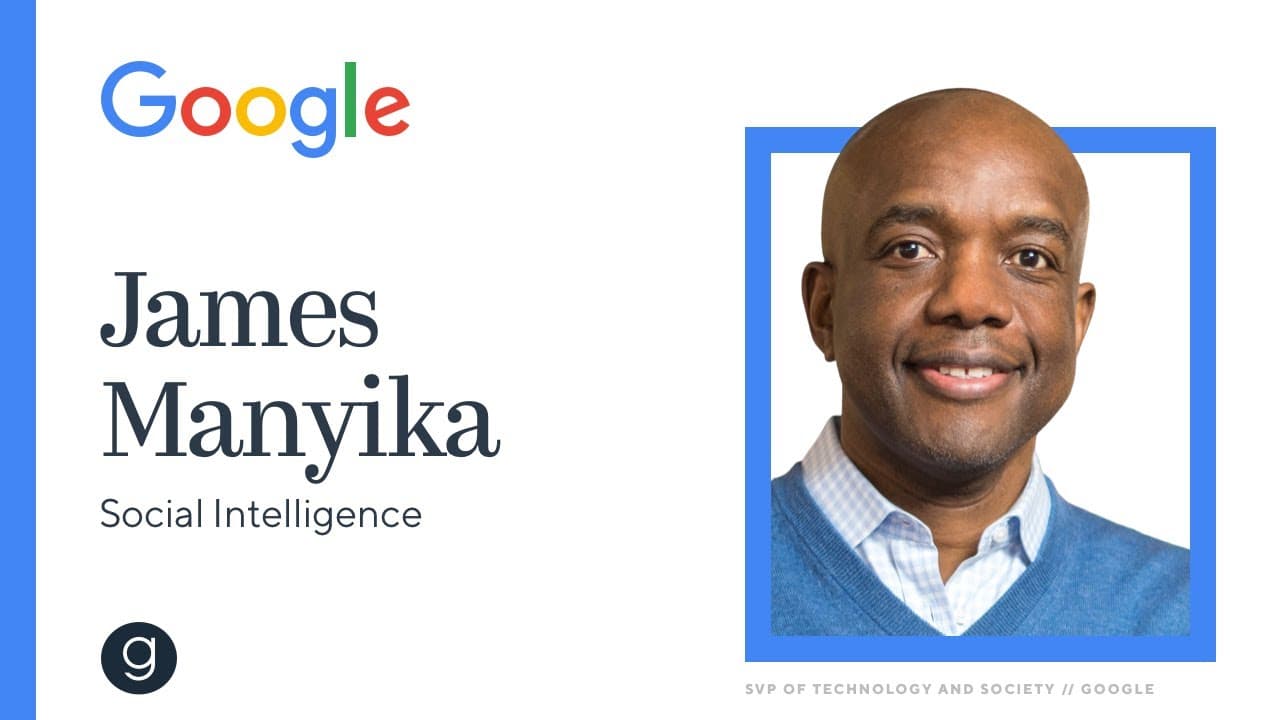
Google's James Manyika on Social Intelligence
TL;DR
James Manyika emphasizes that advanced technologies like AI can transform our economy but may also lead to significant wage inequality and job displacement. He advocates for public trust through transparency and collaboration among technologists, policymakers, and communities. Reskilling will be crucial to adapting to these changes, as most jobs will evolve rather than disappear.
Transcript
hi everyone welcome to another edition of graylocks at conversations i'm reid hoffman a general partner greylock and your host for today's event i am thrilled to welcome james monica as our guest today james is the newly appointed svp of technology and society google a role he has taken out on following more than 27 years at mckinsey global where h... Read More
Key Insights
- 🪡 James Monica stresses the importance of public trust in advanced technologies and the need for transparency in their development and deployment.
- 😀 Reskilling and adapting to technological advancements are crucial in the face of changing job markets.
- 🪡 The economic potential of AI is significant, but wage effects and inequality are areas that need attention.
- 🛀 Large language models have shown promise in various applications, but there are still significant challenges in achieving AGI.
Install to Summarize YouTube Videos and Get Transcripts
Explore YouTube Video Summarizer or Get YouTube Transcript Extractor
Questions & Answers
Q: How did James Monica first become interested in AI and robotics?
Monica's interest in AI began when he worked on an undergraduate research project involving neural networks. He then pursued a doctorate in AI and robotics at Oxford, which solidified his passion for the field.
Q: How did Monica transition from academia to working at McKinsey?
Monica took a leave of absence from academic work to pursue a role at McKinsey in California. He was drawn to the large-scale problems and societal questions that the global consultancy could address.
Q: What is Monica's role at Google as SVP of Technology and Society?
Monica's role involves conducting research, collaborating with AI teams, and considering the societal implications of advanced technologies. He aims to ensure that AI and robotics are developed and implemented in a responsible and beneficial manner.
Q: What are some of the key questions and debates in the field of AI, according to Monica?
One key debate is whether current AI techniques are sufficient to achieve artificial general intelligence (AGI). Monica believes that more conceptual breakthroughs are needed. Additionally, questions about fairness, bias, and transparency in AI algorithms and data collection are important considerations.
Summary
In this video, Reid Hoffman interviews James Manyika, the newly appointed SVP of Technology and Society at Google. They discuss topics such as artificial intelligence, robotics, and the impact of technology on society. Manyika shares his insights on various issues, including the limitations of AI algorithms, the importance of public trust in technology, and the future of work in the age of automation. They also touch on subjects like bias in algorithms and the societal implications of advanced technologies. Manyika provides an overview of an upcoming AI issue of Daedalus, a magazine published by the American Academy of Arts and Sciences, which features essays by AI pioneers and experts on the societal impact of AI.
Questions & Answers
Q: What led James Manyika to pursue a career in artificial intelligence and robotics?
Manyika's interest in AI and robotics began during his undergraduate studies when a postdoc visiting from Canada introduced him to the concept of neural networks, which sparked his fascination with the field. He pursued a doctorate in AI and robotics at Oxford, where he further explored the technical and ethical aspects of AI.
Q: How did Manyika transition from academia to working at McKinsey?
Manyika initially joined McKinsey as an excuse to be in California and pursue his interest in autonomous vehicles. However, he soon realized the potential of working at a large-scale consultancy to address societal and economic challenges, which aligns with his passion for technology's impact on society.
Q: What is Manyika's new role at Google as the SVP of Technology and Society?
Manyika's role at Google involves conducting research, collaborating with AI teams, and exploring the societal implications of advanced technologies. He will also be focused on investments and engaging in discussions about technology and society, with the goal of ensuring that AI and robotics developments are beneficial and aligned with societal values.
Q: What are some of the themes covered in the upcoming AI issue of Daedalus?
The AI issue of Daedalus includes contributions from both AI pioneers and experts in the social sciences. The essays cover a wide range of topics, such as the future of AI, its impact on society, ethical considerations, and the broader implications of AI advancements. The issue aims to provide a comprehensive view of the opportunities and challenges posed by AI.
Q: What is the current state of AI technology, and are current approaches sufficient?
Manyika discusses the ongoing debate within the AI community regarding the sufficiency of current approaches. While techniques like deep learning and reinforcement learning have led to significant progress, there are still challenging problems to solve. These include issues such as causal reasoning, meaning, transfer learning, and system two tasks. The debate revolves around whether these techniques are enough to achieve remarkable AI capabilities or if additional conceptual breakthroughs are necessary.
Q: What are some of the limitations of AI algorithms and how can public trust be maintained?
Manyika highlights several limitations that can erode public trust in AI, such as bias in algorithms and data, brittleness of systems, and the lack of explainability. He emphasizes the importance of addressing these limitations through research, transparency, and engagement with the public. The AI community is working on examining data sets for structural biases, developing counterfactual fairness approaches, and involving diverse perspectives to ask the right questions during the development process.
Q: How can biases in algorithms be corrected to ensure fairness and eliminate discriminatory outcomes?
Manyika mentions ongoing research focused on identifying and addressing biases in algorithms. Techniques like examining data sets for biases and using counterfactual fairness approaches show promise. Additionally, involving diverse perspectives during the development process can help uncover and correct biases. Manyika notes that societal biases, rather than intentional bias in algorithms, often contribute to the problem, making it essential to address the data collection process and decision-making procedures.
Q: How can the future of work be shaped in the age of automation and AI?
Manyika provides insights into the future of work, highlighting the importance of reskilling to adapt to changing job requirements. While certain jobs may be lost, there will also be new jobs created through technology advancements. The challenge lies in the scale of reskilling required and ensuring that the jobs of the future pay enough to sustain individuals and communities. Manyika acknowledges the discussions around universal basic income (UBI) and the need to address wage effects caused by advances in technology.
Q: What are the potential economic impacts of AI and advanced technologies?
Manyika emphasizes the transformative potential of AI and related technologies in driving economic growth and productivity. Current use cases indicate significant economic benefits across various sectors, not limited to the tech industry. The economic possibilities are extensive, with estimates suggesting trillions of dollars annually from realistic use cases. The challenge lies in mitigating any adverse wage effects and ensuring the equitable distribution of economic surpluses.
Q: How can the issues surrounding automation and globalization be addressed?
Manyika discusses the historical context of wage effects, highlighting that globalization poses less of a concern today due to rising wages in countries previously known for labor arbitrage. The focus has shifted to the structure of the economy, wages, and the need for reskilling. While there may be concerns about wage inequality, the debate should focus on how to ensure jobs pay enough rather than whether jobs will disappear entirely.
Takeaways
Manyika's discussion with Hoffman provides several key takeaways. Firstly, the current state of AI technology shows significant progress, but there are still challenging problems to solve. Secondly, there is a need to address the limitations of AI algorithms, including biases, explainability, and public trust. Transparency, research, and involving diverse perspectives are crucial in this process. Thirdly, the future of work in the age of automation requires a focus on reskilling, balancing wage effects, and ensuring job quality to avoid an adverse impact on individuals and communities. Lastly, the economic potential of AI and advanced technologies is vast, but efforts should be made to mitigate adverse effects and promote equitable distribution of economic surpluses.
Summary & Key Takeaways
-
James Monica, SVP of Technology and Society at Google, has a wealth of experience in AI, robotics, and globalization.
-
He emphasizes the need to think about the impact of advanced technologies on society and the opportunities and challenges they present.
-
Monica highlights the importance of public trust, transparency, and collaboration between technologists, policymakers, and regulators.
Read in Other Languages (beta)
Share This Summary 📚
Summarize YouTube Videos and Get Video Transcripts with 1-Click
Try YouTube Summary with ChatGPT & Claude or YouTube Transcript Generator
Explore More Summaries from Greymatter Podcast (Audio) 📚




Summarize YouTube Videos and Get Video Transcripts with 1-Click
Try YouTube Summary with ChatGPT & Claude or YouTube Transcript Generator