What Did 15 Years of Marketing Research Reveal About Increasing Conversions in 11 Minutes?
TL;DR
Increase conversions by mapping and improving every micro yes in the customer’s thought sequence until those decisions produce the macro yes of a sale. Research involving more than 10,000 path tests and experiments found that one no can halt the entire journey, especially when perceived cost outweighs perceived value. Read on to identify conversion leakage, design stronger decision paths, and make marketing tests more informative.
Transcript
hello I'm Flint mlin I'm the managing director of Mech laabs a lot of people ask about our methodology what we've learned these many years that we established the research institution and how we approach solving a particular problem as it relates to conversion or something of that nature I want to take just a few short minutes to try to help you un... Read More
Key Insights
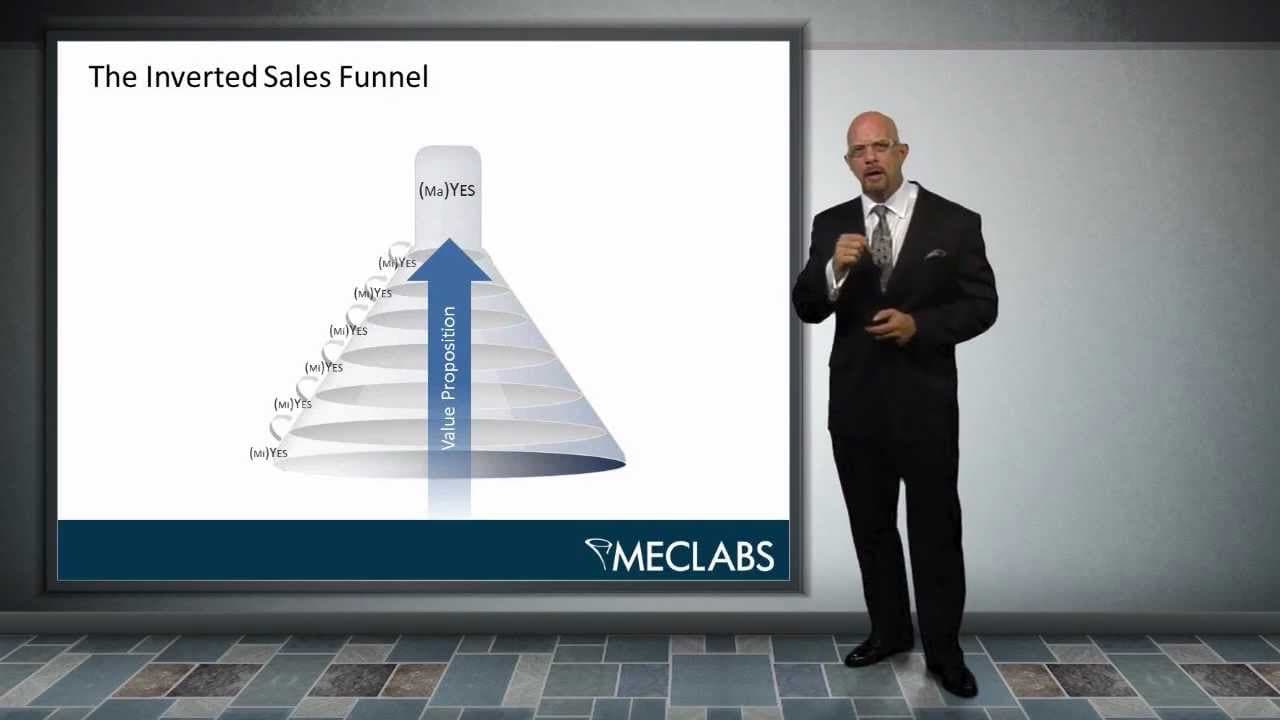
- The marketing funnel is more accurate when inverted because prospective customers face resistance while moving toward a purchase. Competitive noise, distractions, and other marketplace forces pull people away, so marketers must actively help them advance rather than assume they will naturally fall toward a sale.
- A macro yes is the final close or sale produced by a series of micro yeses. Every small decision matters because a single no can stop all previous progress, even when earlier emails, pages, or sales interactions successfully moved the customer forward.
- Micro yeses are decisions such as continuing from a headline to an opening paragraph, reading bullet points, responding to a call to action, entering information into a form, and completing confirmation. Mapping these decisions reveals the complete mental path behind a conversion.
- Customers move through multiple paths rather than traveling through the center of one simple funnel. Each path contains distinct decision points, so achieving the highest possible yield requires marketers to identify, map, and improve the relevant routes customers take.
- Conversion leakage is evidence that part of the decision process is underperforming. For a company generating substantial revenue, even a limited percentage of leakage represents lost money, making conversion improvement a matter of stopping an existing loss rather than merely finding a new opportunity.
- A conversion problem occurs when perceived cost outweighs perceived value at a micro yes. The marketer's task is to tilt that balance by strengthening perceived value or reducing negative factors at every decision point where performance begins to deteriorate.
- The purpose of testing is to obtain learning rather than merely produce a lift. A conversion increase may appear satisfactory while larger losses remain, so every experiment should reveal something useful about customers and strengthen the theory used to predict their behavior.
- A useful customer theory contains enough information to predict behavior. As marketers test offers and decision points, they deepen their understanding of customers, improve their ability to win future yeses, and build a sustainable competitive advantage rooted in accumulated learning.
Install to Summarize YouTube Videos and Get Transcripts
Explore YouTube Video Summarizer or Get YouTube Transcript Extractor
Questions & Answers
Q: What are micro yeses in conversion marketing?
Micro yeses are the small decisions customers make while progressing toward the macro yes of a close or sale. They can include reading past a headline, continuing to bullet points, responding to a call to action, entering information in a form field, and completing confirmation.
Q: How can marketers increase conversions with micro yeses?
Map every decision point in the customer’s thought sequence and identify where performance begins to decline. At each weak point, improve the balance between perceived value and perceived cost so more customers give the required micro yes and continue toward the sale.
Q: Why should marketers invert the traditional funnel?
Customers do not naturally fall toward a purchase; competitive noise, distractions, and other marketplace forces pull them away. Inverting the funnel represents the resistance marketers must overcome to move customers toward the final macro yes.
Q: How does one no affect the conversion journey?
A single no can stop all progress toward the final close or sale, even after several earlier micro yeses. That is why marketers must improve each decision junction instead of focusing only on transitions such as an email sending someone to a landing page.
Q: What did more than 10,000 path tests and experiments reveal?
The research showed that customers move through a mental process before giving the ultimate macro yes. They follow multiple paths containing essential decision points, so marketers must understand and map those paths to achieve the highest possible yield.
Q: Why should marketers optimize thought sequences instead of web pages?
Customers progress through a sequence of decisions rather than buying merely because they encounter a web page or company. Marketers must first map the micro yeses in the customer’s mind, then design the technology and visual cues that support that sequence.
Q: How does the conversion fulcrum explain poor performance?
The conversion fulcrum represents the balance between perceived value and perceived cost at a micro yes. When performance degrades, the requested step may appear to cost more than it is worth, so marketers need to strengthen perceived value or reduce the negative factors.
Q: What should marketers learn from conversion testing?
Testing should produce knowledge about customers rather than only an immediate conversion lift. Repeated experiments strengthen a customer theory that helps predict behavior and guide future offers, communications, and decision points.
Summary & Key Takeaways
-
The conventional marketing funnel should be inverted because customers do not naturally fall toward a purchase. Competitive noise, distractions, and other forms of resistance cause people to leave. Marketers must identify the multiple paths customers follow and understand the decisions required to keep them progressing toward a sale.
-
A sale is a macro yes created by a sequence of micro yeses. These decisions can include reading beyond a headline, continuing to bullet points, responding to a call to action, entering form information, and completing confirmation. One no at any junction can halt progress through the entire conversion process.
-
Conversion problems occur when perceived cost outweighs perceived value at a decision point. Testing should adjust that balance while producing knowledge about the customer. Repeated experimentation strengthens a customer theory that helps predict behavior, select appropriate offers, improve future communications, and build an increasingly informed advantage based on customer understanding.
Read in Other Languages (beta)
Share This Summary 📚
Summarize YouTube Videos and Get Video Transcripts with 1-Click
Try YouTube Summary with ChatGPT & Claude or YouTube Transcript Generator
Explore More Summaries from Flint McGlaughlin 📚

Summarize YouTube Videos and Get Video Transcripts with 1-Click
Try YouTube Summary with ChatGPT & Claude or YouTube Transcript Generator