Why Is PHP Gaining Ground Again With Laravel?
TL;DR
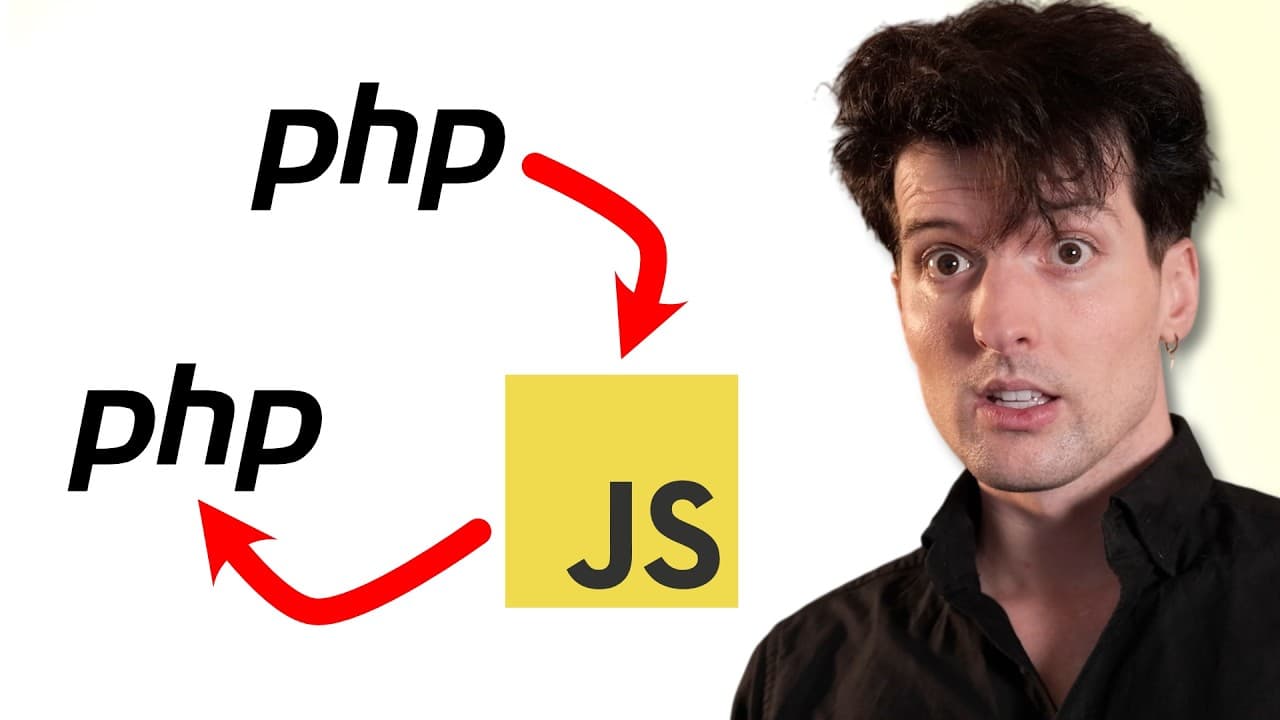
PHP has become substantially faster and more capable than the language many developers abandoned years ago, while Laravel is driving renewed interest and investment. Its easy setup still makes development approachable, but modern performance improvements and deployment services now make PHP more credible for production applications, scheduled tasks, workers, and other contemporary web workloads.
Transcript
Look out kids, PHP is the new JavaScript. I am excited to give this one a read. Dave works over at MX. We've had some fun chats in the past. Seems like he took my advice of write articles that bait me into reading them seriously because uh I have to read this one. I haven't taken a serious look at PHP in over a decade, and that's on me. It feels ba... Read More
Key Insights
- PHP is regaining attention because Laravel has created sustained enthusiasm around the ecosystem and attracted investment referenced as $57 million. The renewed interest is prompting developers who left PHP more than a decade ago to reconsider whether their assumptions still match the language and its tooling.
- PHP is easy to begin using because developers can place logic in a file, run it locally, and generate dynamic output without extensive configuration. That low learning curve helped many people feel productive quickly and made PHP, WordPress, shared hosting, cPanel, and FTP common entry points into web development.
- PHP's lack of guardrails contributed to its poor reputation because the same flexibility that enabled quick experimentation also encouraged procedural, top-to-bottom applications. Many developers consequently concluded that PHP would not be suitable for scaling future applications, then stopped checking how the language evolved.
- PHP performance is substantially better in the cited WordPress comparison, where the average response time dropped from 475 milliseconds with PHP 5.6 to 164 milliseconds with PHP 8.0. The transcript also says PHP 8.1 and 8.2 improved further, without providing additional figures.
- PHP's broader benchmark improvement is illustrated by a test suite that took roughly 263–310 seconds during the PHP 4.0 era and about 20 seconds on the most recent tested version. The comparison represents approximately a tenfold performance gain across the versions discussed in the transcript.
- WordPress security maintenance is essential because outdated installations can be compromised and used to distribute malware. The host described in the transcript responded to one compromise by restricting account access, which also disrupted email and ultimately contributed to the loss of more than ten years of stored web-development history.
- PHP's Swiss Army knife character is demonstrated by its use beyond serving websites. The transcript cites a PHP script as the recommended method encountered for converting a PostgreSQL dump into a MySQL dump, showing how developers continue to use PHP as a practical local utility.
- Modern deployment platforms can give PHP applications conveniences associated with contemporary web development. The sponsored Sevalla demonstration includes GitHub-linked automatic deployment, configurable cron commands, jobs, workers, instance sizing, automatic scaling, synchronized code updates, and a Cloudflare CDN that can be placed in front of an application with two clicks.
Install to Summarize YouTube Videos and Get Transcripts
Explore YouTube Video Summarizer or Get YouTube Transcript Extractor
Questions & Answers
Q: Why is PHP becoming popular again?
PHP is receiving renewed attention because Laravel has been growing, generating enthusiasm, and attracting an investment referenced as $57 million. The language itself has also achieved major performance improvements since earlier releases. Together with modern deployment features such as automatic GitHub deployments, workers, jobs, cron processes, scaling, and CDN integration, these changes challenge the outdated perception that PHP cannot support contemporary applications.
Q: How did PHP make web development accessible to beginners?
PHP offered a very low barrier to entry because developers could write a procedural file, run it locally, upload it through FTP, and quickly produce dynamic pages. Built-in functions could handle tasks such as selecting a random array value, while echo statements printed results directly into a page. This simplicity helped many developers begin their careers through PHP and WordPress without complicated setup.
Q: Why did PHP develop a bad reputation among developers?
PHP developed a bad reputation because its flexible Swiss Army knife design provided few guardrails and made loosely structured, procedural code easy to produce. Early developers often combined everything inside files such as home.php and uploaded them directly to inexpensive hosting. Poor historical performance, inconsistent design, and difficult experiences with WordPress security reinforced the belief that PHP was unsuitable for scalable future applications.
Q: How much faster did PHP become in the cited benchmarks?
The cited WordPress benchmark reported an average response time of 475 milliseconds under PHP 5.6 and 164 milliseconds under PHP 8.0. Another combined test took roughly 263–310 seconds during the PHP 4.0 era but only 20 seconds on the most recent version tested. The transcript characterizes that broader result as approximately a tenfold performance improvement.
Q: What role does Laravel play in PHP's resurgence?
Laravel is presented as the central force behind PHP's renewed momentum. Its continued growth has made developers excited about the ecosystem and encouraged people who left PHP years ago to examine it again. The discussion connects Laravel with a large investment referenced as $57 million, suggesting that both developer interest and financial backing are contributing to PHP's return to wider consideration.
Q: What risks come with maintaining an outdated WordPress site?
An outdated WordPress installation can be discovered by automated bots probing public services for familiar WordPress endpoints, then compromised and used to distribute malware. In the experience described, the hosting company locked the account after a breach, restricted access to files, interrupted hosted email, and did not provide a complete data dump. Recovering service eventually required deleting the server's contents.
Q: How can modern platforms deploy PHP applications and background tasks?
The demonstrated platform can connect a project to GitHub and deploy it automatically. Within the same project, a developer can create a worker, job, or cron process, specify a command or schedule expression, and choose an instance size. These processes use the existing codebase, update alongside the primary application, and can scale while remaining separate from the production server.
Q: Is PHP now a credible option for modern web applications?
The evidence presented supports reconsidering PHP as a modern option, although it does not claim that PHP is universally preferable. Major performance gains have addressed an important historical weakness, Laravel has renewed ecosystem interest, and current hosting tools provide automatic deployments, background workers, jobs, cron scheduling, scaling, and CDN integration. Developers whose opinions were formed years ago may therefore be judging an outdated version.
Summary & Key Takeaways
-
PHP attracted many early web developers because a single file could mix logic with generated output and run without complicated setup. WordPress, inexpensive hosting, cPanel, FTP deployment, and built-in functions made dynamic websites accessible, but this low-friction environment also encouraged poorly structured code and insecure maintenance practices.
-
The language earned a lasting reputation for inconsistent design, weak guardrails, and poor performance. The cited WordPress benchmark improved from an average response time of 475 milliseconds on PHP 5.6 to 164 milliseconds on PHP 8.0, while another test fell from roughly 263–310 seconds to 20 seconds.
-
Laravel is central to the renewed excitement around PHP and has attracted a large investment referenced as $57 million. The surrounding deployment experience has also modernized, with GitHub-linked automatic deployments, dedicated workers, jobs, cron processes, automatic scaling, synchronized code updates, and an easily configured Cloudflare CDN available through Sevalla.
Read in Other Languages (beta)
Share This Summary 📚
Summarize YouTube Videos and Get Video Transcripts with 1-Click
Try YouTube Summary with ChatGPT & Claude or YouTube Transcript Generator
Explore More Summaries from Theo - t3․gg 📚






Summarize YouTube Videos and Get Video Transcripts with 1-Click
Try YouTube Summary with ChatGPT & Claude or YouTube Transcript Generator