The Last Images of the Tasmanian Tiger | [OFFICE HOURS] #006 Highlight
TL;DR
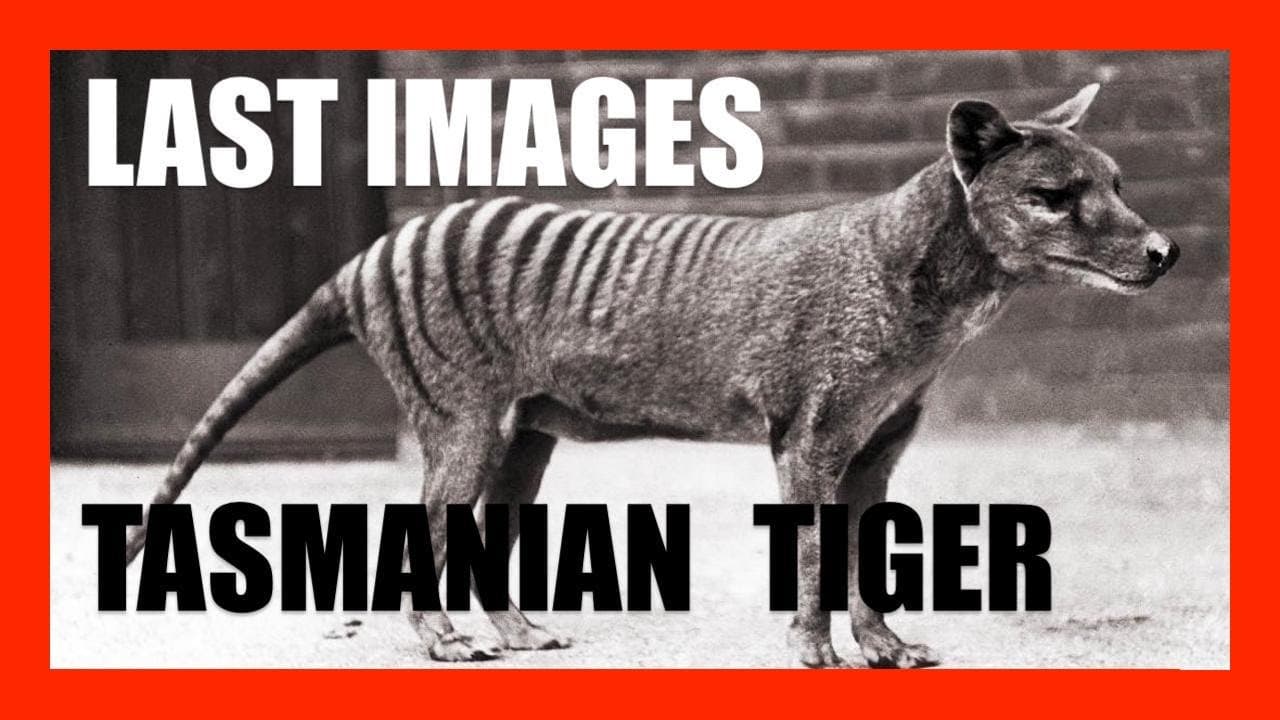
The Tasmanian Tiger, an extinct marsupial resembling a dog, evolved to look like a canine due to convergent evolution.
Transcript
the Tasmanian Tiger or the thigh thylacine I got it what's amazing about the thylacine to me is I don't know if you're if you're about the same age as me maybe you had the same experience you know I'm immortal but you know relatively how I look the ty the Tasmanian Tiger was the poster animal for extinction so if anyone knows anything about extinct... Read More
Key Insights
- 🤬 The Tasmanian Tiger was a well-known symbol of extinction due to its resemblance to a dog.
- 👀 Despite looking like a canine, the Tasmanian Tiger was a marsupial.
- ❓ Convergent evolution explains how unrelated species can develop similar traits due to similar environmental pressures.
- 😃 Nature has shown instances of reaching the same conclusion in different lineages, such as the development of echolocation and eyes.
- 💅 The recently released 4k clip of the last living Tasmanian Tiger showcases its stunning beauty.
- 🍃 The Tasmanian Tiger's extinction in 1933 has left a lasting impact on public perception.
- 🤵 The animal's dog-like appearance made it relatable and endeared it to people.
Install to Summarize YouTube Videos and Get Transcripts
Explore YouTube Video Summarizer or Get YouTube Transcript Extractor
Questions & Answers
Q: Why did the Tasmanian Tiger resonate with people despite its extinction?
The Tasmanian Tiger's dog-like appearance made people connect with it emotionally, similar to how we feel about our pets, making its extinction particularly saddening.
Q: What distinguishes the Tasmanian Tiger from a dog or wolf?
The Tasmanian Tiger had stripes on its back and a solid tail, unlike dogs or wolves. It also had a pouch like a kangaroo, as it was a marsupial.
Q: How did the Tasmanian Tiger evolve to look like a dog despite being unrelated?
Convergent evolution played a role in shaping the Tasmanian Tiger's appearance. Similar environmental factors and evolutionary pressures led to its dog-like morphology.
Q: Can you provide other examples of nature coming to the same conclusion?
Bats and dolphins independently developed echolocation, and eyes evolved multiple times in different lineages, showing nature's ability to reach similar solutions through evolution.
Summary & Key Takeaways
-
The Tasmanian Tiger, also known as the thylacine, was an iconic symbol of extinction due to its dog-like appearance.
-
The last living Tasmanian Tiger was displayed in 1933, and a recently released 4k clip reveals its stunning beauty.
-
Despite its resemblance to a dog, the Tasmanian Tiger was a marsupial and evolved to look canine-like through convergent evolution.
Read in Other Languages (beta)
Share This Summary 📚
Summarize YouTube Videos and Get Video Transcripts with 1-Click
Try YouTube Summary with ChatGPT & Claude or YouTube Transcript Generator
Explore More Summaries from Kyle Hill 📚

![🔴 Viral "Hanger Reflex" Explained! | [OFFICE HOURS] Podcast 090 thumbnail](/_next/image?url=https%3A%2F%2Fi.ytimg.com%2Fvi%2F-GQPNu0erKc%2Fhqdefault.jpg&w=750&q=75)
![What Made MEGALODON So Huge? | [OFFICE HOURS] Podcast #025 thumbnail](/_next/image?url=https%3A%2F%2Fi.ytimg.com%2Fvi%2F2F_zCTfPt-I%2Fhqdefault.jpg&w=750&q=75)


Summarize YouTube Videos and Get Video Transcripts with 1-Click
Try YouTube Summary with ChatGPT & Claude or YouTube Transcript Generator