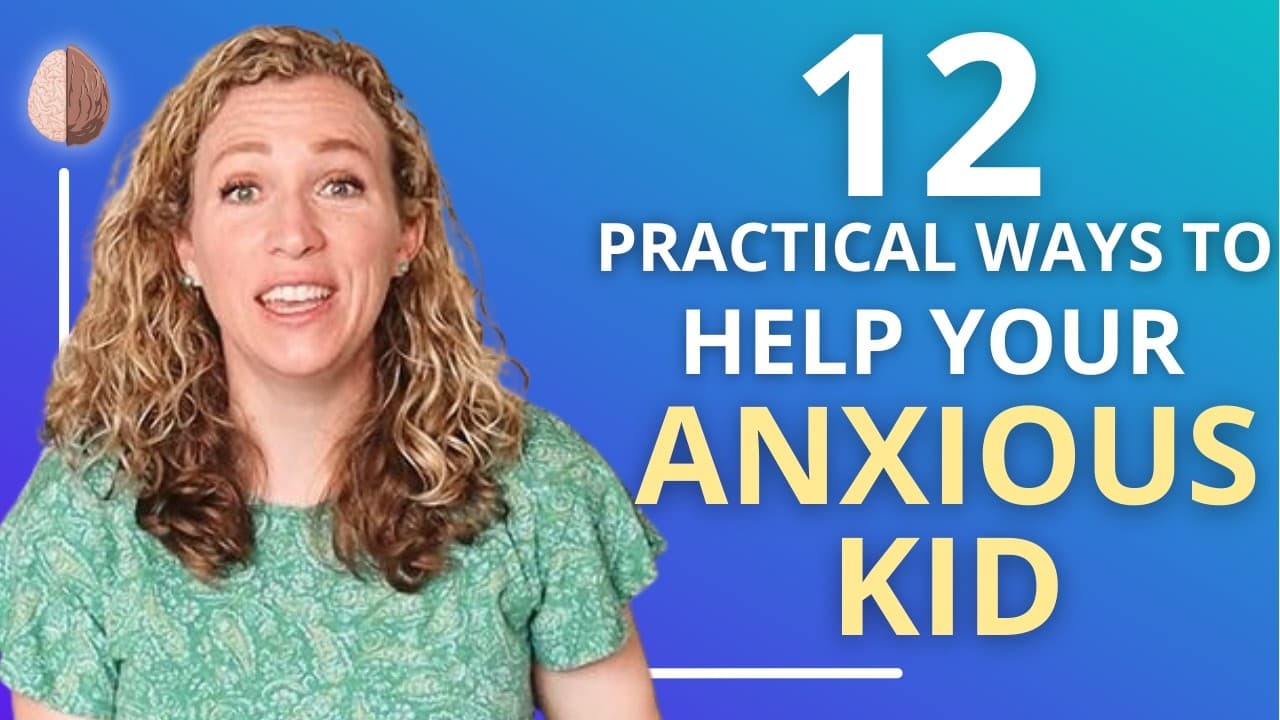
How to Help a Child With Anxiety: 12 Practical Tools
TL;DR
Managing emotions is a learnable skill, not something children are born knowing. Parents help anxious kids most by predicting and rehearsing stressful situations beforehand, keeping consistent routines, naming worry thoughts, telling their own stories of fear, praising brave actions, and co-regulating through calm touch and eye contact instead of shaming or shielding them.
Transcript
No one is born knowing what to do with their emotions, but it is a skill that can be learned. In the last three videos we learned that the most effective way to help kids with anxiety is to teach parents how to think about anxiety differently and to stop shaming their kids about it or protecting their kids from it. Instead, parents show their k... Read More
Key Insights
- No one is born knowing what to do with their emotions, but managing emotions is a skill that can be learned, which means anxious children can be actively coached rather than simply protected or told to toughen up.
- Predicting and rehearsing a stressor is a powerful tool: the creator walked her nervous eight-year-old through what snorkeling would feel like beforehand, took tiny steps, and helped her stay instead of escape until she enjoyed it.
- Consistent routines reduce anxiety because the relationship is the number one thing that helps a child feel safe, and predictable morning and evening routines remove uncertainty so the child knows what to expect.
- Family mantras foster resilience, such as 'I can feel scared and do it anyway,' 'I can do hard things,' or 'You can't turn off scared, but you can turn up brave,' pairing fear with the ability to act.
- Naming and normalizing worry thoughts helps children treat feelings as parts of themselves, like the fear character in Inside Out, that they can acknowledge and befriend without having to believe, agree with, or obey.
- A shame-proof home comes from parents telling stories about their own nervousness, mistakes, and times they faced fears, making it normal to learn about emotions and grow through them.
- What you pay attention to, you get more of: heavy attention on fears makes children more scared, while emphasizing successes and brave actions makes them feel more resilient.
- Physical health is essential to mental health, so ensuring enough sleep, exercise, sunlight, healthy food, play, and downtime, plus co-regulation through hugs and calm talk, helps children regulate their fear response.
Install to Summarize YouTube Videos and Get Transcripts
Explore YouTube Video Summarizer or Get YouTube Transcript Extractor
Questions & Answers
Q: How can I prepare my anxious child for a scary new experience?
Help your child predict and rehearse how they'll respond to the stressor before it happens. The creator prepared her eight-year-old for snorkeling by sharing her own childhood story of getting scared and giving up, practicing breathing through the snorkel on shore, and describing what to expect, such as the cold shock and the weird feeling of breathing through a snorkel. She asked for permission to help and a commitment to keep trying, then took tiny steps, which turned a terrifying start into an amazing experience.
Q: Why do consistent routines help reduce a child's anxiety?
Your relationship is the number one thing that helps your child feel safe, and second to that, consistent routines are really powerful. When morning and evening routines are consistent and predictable, your child learns what to expect. When you consistently expect them to go to school or do their homework, the uncertainty is gone, which decreases anxiety and helps them step up to the task at hand. Predictability removes the guesswork that fuels worry.
Q: What are some mantras that help anxious children?
Mantras act like a family rallying cry that fosters resilience. Examples include 'I can feel scared and do it anyway,' 'I can do hard things,' and 'You can't turn off scared, but you can turn up brave.' The creator's kids came home from Grandma's Camp saying 'McAdams do hard things' with a little cheer. The point is not telling kids to just get over it or be tough, but paying attention to their ability to face fears and overcome challenges with parental support.
Q: How do I help my child deal with worry thoughts?
Notice and name worry thoughts, saying things like 'Oh, hi there little worry thought, seems like you always show up at bedtime,' and normalize them by explaining everyone has a worry voice, even you. Think of the fear character in Inside Out: we all have parts, and we can befriend each of them without pushing them away. Children don't have to believe, agree with, or obey every thought. Coach them to acknowledge thoughts and feelings, then choose what action to take, and notice other more encouraging thoughts too.
Q: How can parents create a shame-proof environment at home?
Create a shame-proof environment by telling stories about yourself: times you felt nervous, times you were scared, times you avoided something and regretted it, and times you faced your fears and did it anyway. Tell stories about mistakes you've made and what you learned from them. This makes it normal to be learning about emotions and shows children they can grow through them. Removing shame helps kids feel safe enough to admit fear and try again.
Q: Why should I focus on my child's successes rather than their fears?
This works because what you pay attention to, you get more of. If you put a lot of attention on the things your child is scared of, they will get more scared. If you put a lot of attention on their accomplishments and successes, they will feel more resilient. Emphasize successes heavily, such as saying 'You slept in your bed all by yourself, I'm so proud of you, I knew you could do it,' hang up pictures of brave actions, and retell the story of them facing their fears over and over.
Q: How does physical health affect a child's anxiety?
Physical health is essential to mental health. Kids and adults are less resilient when they are tired, hungry, or have had too much sugar. Make sure your child gets enough sleep, exercise, and sunlight, has time to play with friends and downtime to relax, and is not kept too busy. When possible, help them eat healthy food and consider a vitamin supplement. Supporting the body's basic needs strengthens a child's capacity to face and regulate their fear response.
Q: What is co-regulation and why is it powerful for calming a child?
Co-regulation is soothing and regulating a child's nervous system by hugging and touching them, using eye contact, or talking calmly with them, and it is one of the most powerful ways to regulate emotions. Alongside it, you can teach children self-soothing skills like deep breathing and belly breathing, which can be found in videos online or through the creator's Grounding Skills for Anxiety course, then practiced and taught to kids so they can regulate their fear response themselves.
Summary & Key Takeaways
-
Emotional regulation is a learnable skill. Building on the prior three videos, parents help anxious kids not by shaming or shielding them, but by showing anxiety is okay to feel and coaching them to break scary tasks into achievable steps. This video gives practical tools for parents asking 'But what do I do?'
-
Predicting and rehearsing a stressor works powerfully. The creator prepared her anxious eight-year-old for snorkeling by sharing her own childhood failure, practicing on shore, and describing what to expect. Taking tiny steps and gently helping her stay rather than flee, the child moved from terrified to touching stingrays and enjoying the experience.
-
Additional tools include consistent routines, family mantras, acting out scenarios with toys, naming and normalizing worry thoughts, telling personal stories, emphasizing successes, creating a safe space, supporting physical health, teaching calming and grounding skills, co-regulating through touch and eye contact, and clarifying which choices belong to the child versus the parent.
Read in Other Languages (beta)
Share This Summary 📚
Summarize YouTube Videos and Get Video Transcripts with 1-Click
Try YouTube Summary with ChatGPT & Claude or YouTube Transcript Generator
Explore More Summaries from Therapy in a Nutshell 📚

Summarize YouTube Videos and Get Video Transcripts with 1-Click
Try YouTube Summary with ChatGPT & Claude or YouTube Transcript Generator