Science in Focus. The Kavli Prize 2020 | Astrophysics
TL;DR
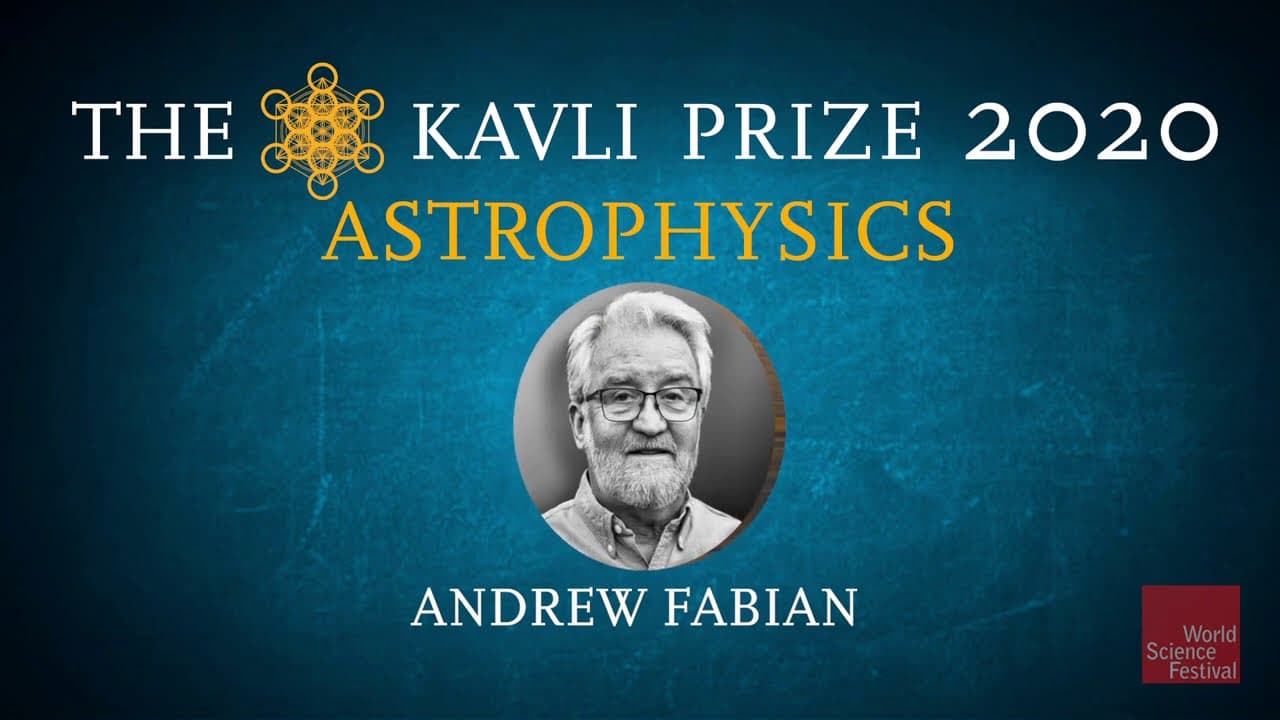
Astrophysicist Andrew Fabian discusses the use of x-ray telescopes for studying celestial objects and black holes.
Transcript
when andrew fabian looks out at the night sky he does it with the most powerful tools on earth i make use of optical telescopes infrared telescopes radio telescopes so i i'm prompted mostly by what i see in the x-ray band but nowadays you've got to take all wavelengths into account here's what the perseus cluster of galaxies looks like with an opti... Read More
Key Insights
- 📤 Andrew Fabian utilizes multiple telescopes to study the night sky and galaxies, including x-ray telescopes.
- 😅 X-rays reveal objects that are significantly hotter in the universe.
- 🫢 The interactions between black holes and surrounding gas are crucial for understanding the transmission of energy in cluster atmospheres.
- 🫢 Black holes have an immensely strong gravitational pull, causing gases to spin and expel gas that may form new stars.
- 📤 X-ray telescopes provide unique insights into highly energetic processes in the universe.
- 🫢 Celestial gases may produce vibrations, but their frequencies fall far below the range of audible sound for humans.
- 💦 Fabian's work is driven by the excitement of using cutting-edge telescopes and the potential for new discoveries.
Install to Summarize YouTube Videos and Get Transcripts
Explore YouTube Video Summarizer or Get YouTube Transcript Extractor
Questions & Answers
Q: What are the advantages of using x-ray telescopes?
X-ray telescopes enable us to observe objects and phenomena that emit x-rays, such as very hot gases and black holes. They provide crucial insights into the highly energetic processes occurring in the universe.
Q: How do black holes influence their surroundings?
Black holes, with their immense gravitational pull, cause nearby gases to spin as they fall into the hole. They also expel gas, which can potentially form new stars. Understanding this process helps us unravel the complex dynamics of black holes.
Q: Can celestial gases produce sound?
While gases in the universe may create vibrations, the frequencies are incredibly low, around one cycle per 10 million years. These sounds cannot be detected by humans, as they fall far below the range of audible sound waves.
Q: What drives Andrew Fabian's work as an astrophysicist?
Andrew Fabian is motivated by the excitement of using cutting-edge telescopes to make new discoveries and study celestial phenomena in great detail. He is driven by the vast potential for exciting findings in his field.
Summary & Key Takeaways
-
Andrew Fabian utilizes various telescopes, including optical, infrared, and radio telescopes, to study the night sky and galaxies.
-
X-rays, with frequencies a thousand times higher than visible light, reveal objects that are a thousand times hotter in the universe.
-
Fabian focuses on understanding the interaction between black holes and the surrounding gas in cluster atmospheres.
Read in Other Languages (beta)
Share This Summary 📚
Summarize YouTube Videos and Get Video Transcripts with 1-Click
Try YouTube Summary with ChatGPT & Claude or YouTube Transcript Generator
Explore More Summaries from World Science Festival 📚

Summarize YouTube Videos and Get Video Transcripts with 1-Click
Try YouTube Summary with ChatGPT & Claude or YouTube Transcript Generator