Can Xi Jinping's Xiong'an Defy Economic Realities?
TL;DR
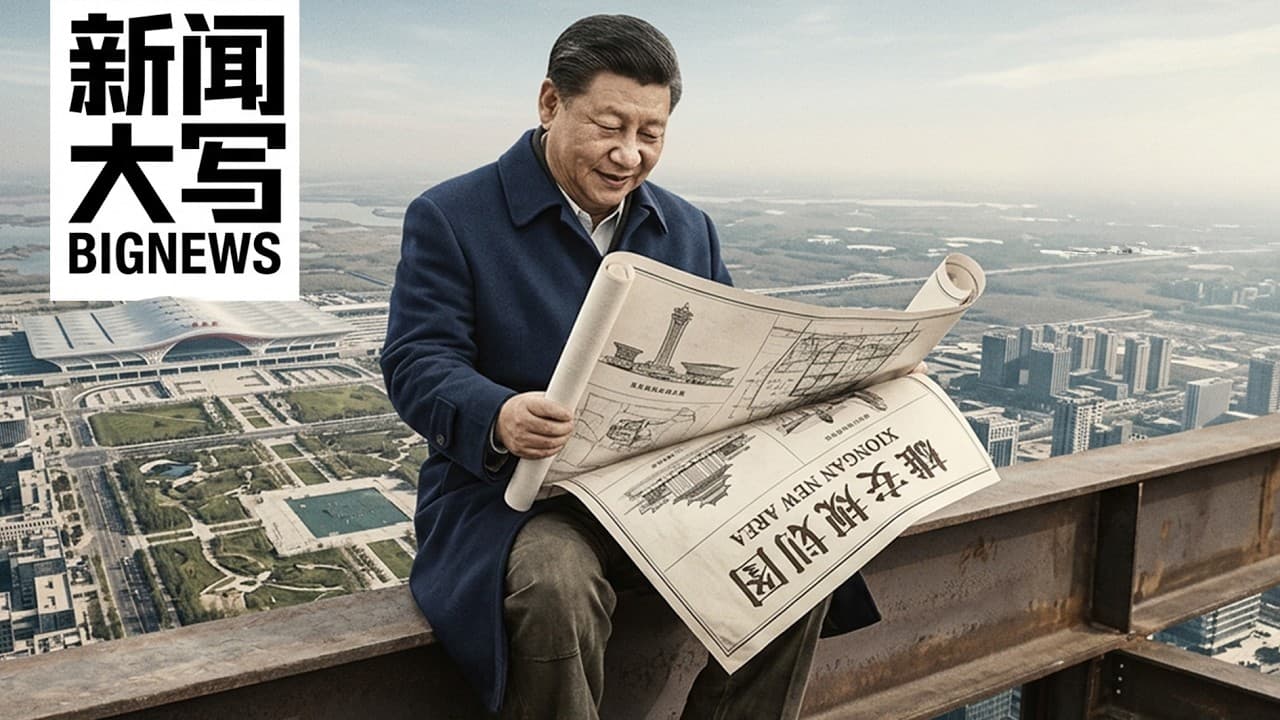
Xiong'an New Area, a massive infrastructure project in China, has seen over 1 trillion RMB invested since 2017. Despite world-class amenities, it struggles with low population growth and economic returns. The city's success hinges on state-driven development rather than market forces, testing the limits of administrative will against economic principles.
Transcript
On the evening of April 1, 2017, April Fool’s Day Xinhua News Agency suddenly pushed out an official bulletin across the entire internet The central authorities decided to establish the Hebei Xiong’an New Area As soon as the news landed, wild Buffetts from all over the country rushed overnight and jammed the Beijing–Hong Kong–Macao Expressway In th... Read More
Key Insights
- Xiong'an New Area was established in 2017 as a major national project, with an investment of over 1 trillion RMB.
- The city's development is driven by state planning, with a focus on low housing prices and administrative relocation of enterprises.
- Despite infrastructure investments, Xiong'an faces challenges in attracting a permanent population and sustaining economic growth.
- The city employs a points-based housing system to prioritize residents contributing to its development, limiting market speculation.
- Xiong'an's development contrasts with past successes like Shenzhen, which thrived on market forces and globalization.
- The project has faced resistance from relocated enterprises and universities, reluctant to leave Beijing's established resources.
- Flood management decisions in 2023 highlighted the prioritization of Xiong'an over surrounding areas, sparking controversy.
- Xiong'an's future hinges on its ability to transition from state-supported construction to a self-sustaining urban ecosystem.
Install to Summarize YouTube Videos and Get Transcripts
Explore YouTube Video Summarizer or Get YouTube Transcript Extractor
Questions & Answers
Q: What is the Xiong'an New Area?
Xiong'an New Area is a state-driven urban development project in China, launched in 2017 with the goal of creating a futuristic city. It is part of a national strategy to relieve Beijing of non-capital functions and has seen over 1 trillion RMB invested into its infrastructure. The project emphasizes state planning, low housing prices, and administrative relocation of enterprises.
Q: How is the Xiong'an New Area funded?
The funding for Xiong'an New Area comes from multiple sources, including the central government budget, local government bonds, and loans from policy banks and major state-owned banks. The central government provides fiscal subsidies and special treasury bonds, while local government bonds and bank loans offer long-term credit to support infrastructure development.
Q: What challenges does Xiong'an face in attracting residents?
Xiong'an faces challenges in attracting residents due to its reliance on administrative relocation rather than market forces. The city struggles with low population growth, as many enterprises and universities resist relocating from Beijing. Additionally, the lack of equivalent social resources and amenities compared to Beijing makes it difficult to attract long-term residents.
Q: How does Xiong'an's housing system work?
Xiong'an employs a points-based housing system that ties home-buying eligibility to an individual's contribution to the city. This system prioritizes residents who relocate with enterprises, have higher educational backgrounds, and have paid local taxes. It aims to prevent market speculation and maintain low housing prices, contrasting with traditional land finance models.
Q: Why is Xiong'an compared to Shenzhen and Pudong?
Xiong'an is compared to Shenzhen and Pudong because all three are major urban development projects in China. However, unlike Shenzhen and Pudong, which thrived on market forces and globalization, Xiong'an relies heavily on state planning and administrative will. This comparison highlights the challenges Xiong'an faces in replicating the economic success of its predecessors.
Q: What role do enterprises play in Xiong'an's development?
Enterprises play a crucial role in Xiong'an's development, as the city relies on the administrative relocation of companies from Beijing. However, many enterprises resist substantive relocation, opting for administrative registration without moving their core operations. This resistance highlights the challenges of attracting businesses to Xiong'an and achieving economic growth.
Q: How did the 2023 flood impact Xiong'an?
The 2023 flood in North China led to controversial flood management decisions prioritizing Xiong'an's protection over surrounding areas like Zhuozhou. This decision sparked controversy as it highlighted the prioritization of Xiong'an and its political significance over the interests of local residents, causing significant economic and personal losses in affected areas.
Q: What is the future outlook for Xiong'an?
The future outlook for Xiong'an depends on its ability to transition from state-supported construction to a self-sustaining urban ecosystem. While it faces challenges in attracting residents and businesses, its success hinges on the state's ability to maintain long-term support and create a new model of urbanization. The project tests the limits of administrative will against economic principles.
Summary & Key Takeaways
-
Xiong'an New Area, a state-driven urban project in China, has seen over 1 trillion RMB invested since its 2017 inception. Despite significant infrastructure development, the city struggles with low population growth and economic returns. The project challenges traditional market logic, relying on administrative will to drive its success.
-
The development of Xiong'an New Area emphasizes state planning over market forces, with policies like low housing prices and a points-based housing system. However, resistance from relocated enterprises and universities, along with demographic challenges, hinder its progress. Flood management decisions in 2023 further sparked controversy over prioritizing Xiong'an.
-
Xiong'an's future depends on its ability to transition from a state-supported construction phase to a self-sustaining urban ecosystem. While its development contrasts with past successes like Shenzhen, which thrived on market forces, the project tests the limits of administrative will against economic principles, aiming to create a new model of urbanization.
Read in Other Languages (beta)
Share This Summary 📚
Summarize YouTube Videos and Get Video Transcripts with 1-Click
Try YouTube Summary with ChatGPT & Claude or YouTube Transcript Generator
Explore More Summaries from 王志安 📚


Summarize YouTube Videos and Get Video Transcripts with 1-Click
Try YouTube Summary with ChatGPT & Claude or YouTube Transcript Generator