How to Weigh Hormone Therapy Risks and Benefits
TL;DR
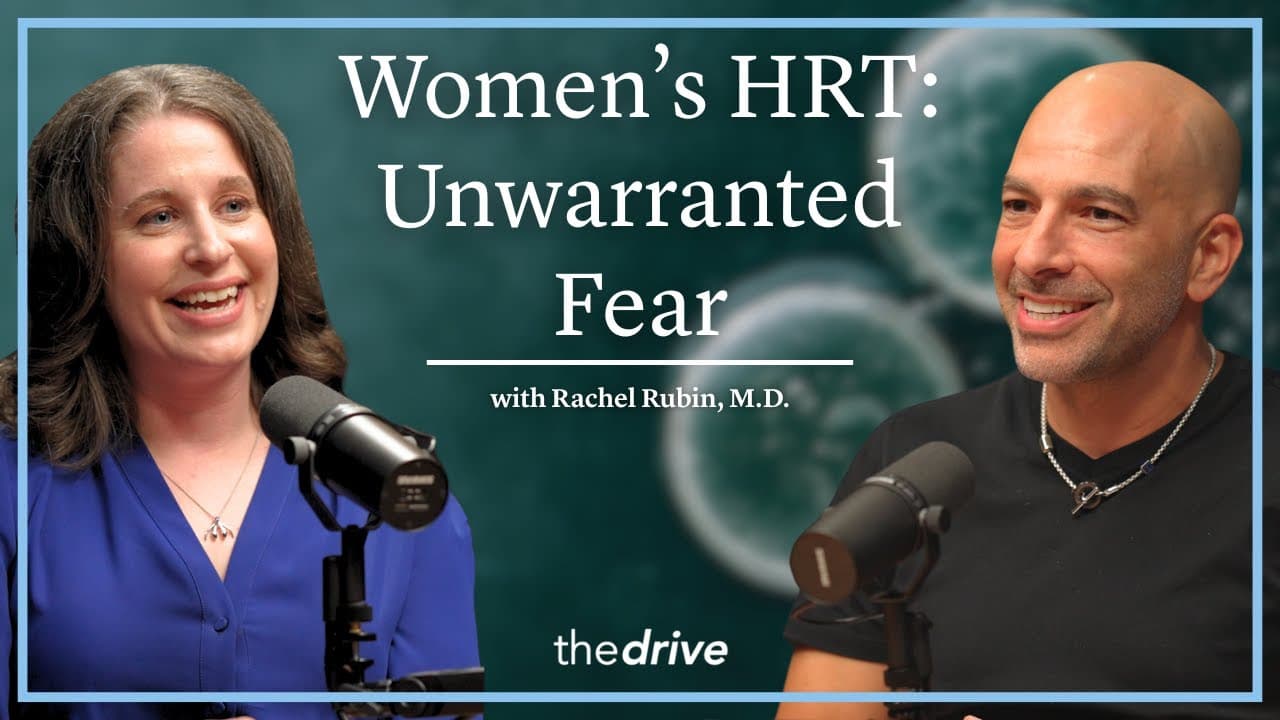
Hormone therapy has historically reduced fractures and even overall mortality in some contexts, but the WHI study caused widespread fear by misinterpreting data. The absolute risk increase for breast cancer with combined hormones was very small, and estrogen alone showed a different risk profile. Modern practice uses different medications and dosages, with more nuanced patient selection.
Transcript
Do you want to talk about the history of HRT? I mean, you know, it was a largely normal practice uh in the 1960s. They, you know, certainly had some fits and starts, right? They initially were just replacing estrogen. Um figured out pretty quickly, i.e. within a few years that if you only gave a woman estrogen, you were going to run the risk of end... Read More
Key Insights
- Hormone therapy historically reduced endometrial cancer risk by adding progesterone to estrogen, which limits endometrial hyperplasia.
- The WHI study led to a sharp decline in hormone therapy use due to perceived increases in breast cancer and cardiovascular risks.
- Estrogen alone in women without a uterus was associated with a decreased risk of breast cancer and death, a fact that was not highlighted in early communications.
- The absolute risk increase for breast cancer with combined hormone therapy was very small, shrinking the perceived danger when viewed in context.
- The marketing and media coverage surrounding WHI created a fear-based narrative that persisted for decades, affecting physician practices and patient choices.
- There is a distinction between the synthetic hormones used in WHI and the modern FDA approved products like estradiol and progesterone used today.
- The interpretation of study data should consider placebo group baselines and past hormone exposure to avoid misattributing outcomes.
- Current practice emphasizes individualized risk assessment and safer, more effective hormone therapy options for qualifying patients.
Install to Summarize YouTube Videos and Get Transcripts
Explore YouTube Video Summarizer or Get YouTube Transcript Extractor
Questions & Answers
Q: A real search query question about the video (e.g. 'How to...', 'What is...', 'Why does...', 'When should...'). Question 1
What did the Women’s Health Initiative WHI study find about hormone therapy and why did it lead to fear and practice changes? The WHI reported increased risks in the combined estrogen and progesterone arm, which sparked widespread concern and a rapid drop in hormone therapy use. However, later analysis showed the absolute risk increases were small and context matters, including different formulations and patient history. This question explores how study design, messaging, and media coverage contributed to lasting misconceptions about hormone therapy.
Q: Question 2
How did estrogen alone versus combined hormone therapy affect breast cancer outcomes in the WHI data, and why is this distinction important for current practice? Estrogen alone in women without a uterus was associated with a decreased risk of breast cancer and death in the data, while the combined therapy showed an increased incidence of breast cancer but not necessarily mortality. This distinction matters because it underscores that different hormone formulations and patient conditions produce different risk profiles, informing today’s personalized treatment decisions.
Q: Question 3
What is the difference between relative risk and absolute risk in the context of hormone therapy, and why does it matter for patients? Relative risk can exaggerate perceived danger, while absolute risk shows the actual additional cases per 1,000 patients. Understanding absolute risk clarifies that the small increased incidence of breast cancer with combined therapy translates to a very small number of extra cases, guiding informed consent and shared decision making for patients.
Q: Question 4
Why did the adoption of synthetic hormones in WHI differ from the modern hormone therapies used today, and what are the implications for safety and outcomes? WHI used a birth control pill style combination of synthetic estrogen and progestin, whereas modern practice uses different medications like estradiol and natural progesterone with different dosing. This matters because formulation and dosing influence risk profiles, side effects, and overall safety in current therapeutic contexts.
Q: Question 5
How did public messaging around WHI affect the training and practice of physicians prescribing hormone therapy, and what changes are needed now? Public messaging created a knowledge gap by neglecting nuance in trial results, leading to fewer clinicians trained in prescribing HRT. Today, there is a push to re-educate physicians, restore appropriate risk assessment skills, and offer balanced information to patients seeking menopause management.
Q: Question 6
What are the key benefits of hormone therapy beyond cancer risk, according to the discussed material, and how do these benefits factor into treatment decisions? Benefits include reduced fractures, potential reductions in diabetes risk, and possible overall mortality benefits in certain contexts. These advantages must be weighed against risks, with decisions tailored to individual health status, risk factors, and patient preferences.
Q: Question 7
What lessons can be drawn about the relationship between epidemiology and randomized trials in hormone therapy, as discussed in the material? Epidemiology can show associations, but randomized trials like WHI are needed to establish causality. Yet misinterpretation and marketing can distort outcomes. An integrated approach uses randomized data with careful contextual understanding to guide safe, effective clinical practice.
Q: Question 8
What changes are suggested for the future of hormone therapy education and patient care based on the discussion, and how might these impact patient outcomes? The future calls for better clinician training on prescribing hormones, clearer patient education on absolute risks, and more nuanced use of hormone therapy. This could improve long-term health outcomes by expanding beneficial use while minimizing unnecessary fears and unsafe practices.
Summary & Key Takeaways
-
Hormone therapy evolved from estrogen alone to combined formulations with progesterone to protect the endometrium, but later guidance shifted due to misinterpretation of study results.
-
The WHI trial prompted a dramatic drop in hormone prescribing, driven by fear rather than a balanced understanding of risks and benefits across different patient groups.
-
Today, the conversation emphasizes educating patients on absolute risk, updating medications, and training physicians to prescribe hormone therapy more thoughtfully.
Read in Other Languages (beta)
Share This Summary 📚
Summarize YouTube Videos and Get Video Transcripts with 1-Click
Try YouTube Summary with ChatGPT & Claude or YouTube Transcript Generator
Explore More Summaries from Peter Attia MD 📚





Summarize YouTube Videos and Get Video Transcripts with 1-Click
Try YouTube Summary with ChatGPT & Claude or YouTube Transcript Generator