How Can AI Enhance Our Curiosity and Questions?
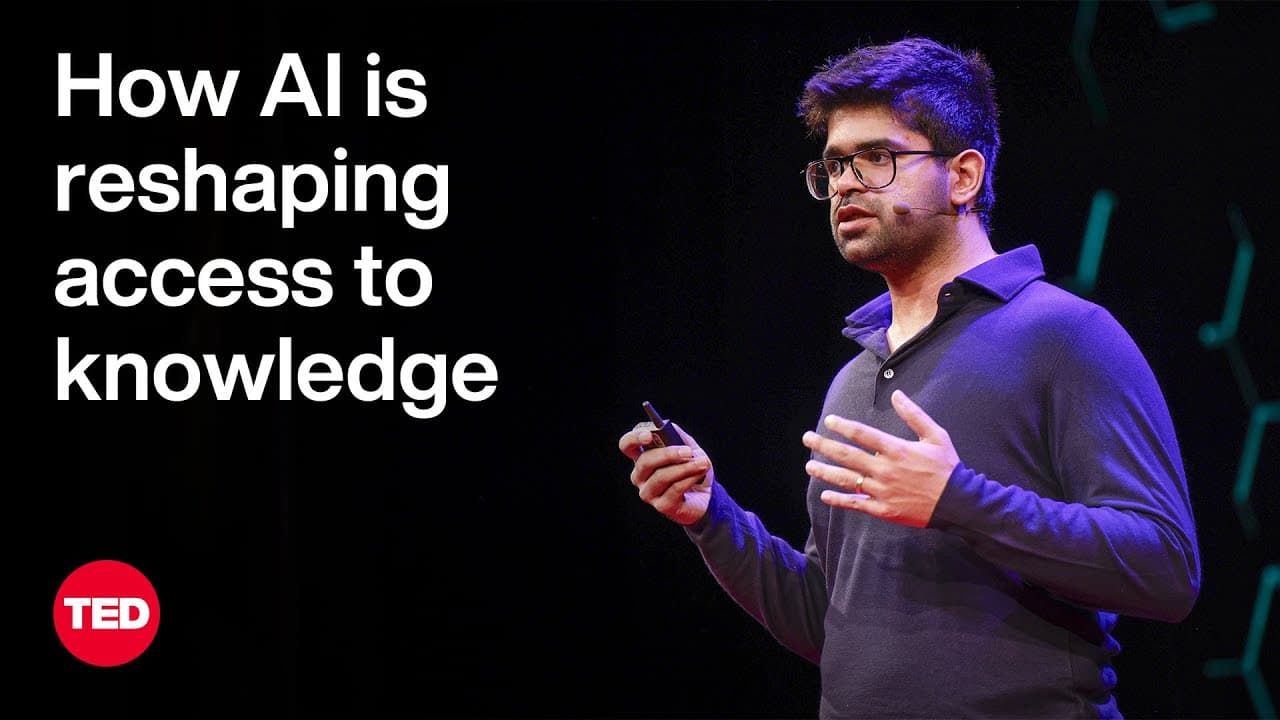
TL;DR
AI enhances human curiosity by providing trustworthy answers that lead to further questioning. It democratizes knowledge access, allowing everyone, regardless of background, to seek information and ask deeper questions. This shift represents a fundamental change in how we learn, fostering a culture of relentless inquiry.
Transcript
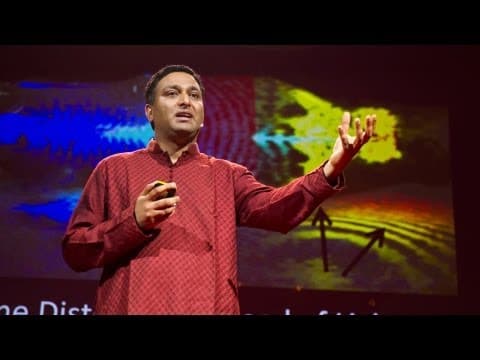
There are a couple of ways I'm not a traditional tech founder. I never dropped out of college. (Laughter) In fact, I kept going. I'm an academic, you could say. And it’s OK to be proud that I have a PhD in AI from Berkeley, right here in the Bay Area. (Applause) But there's something interesting in AI that I've noticed, compared to other tech found... Read More
Key Insights
- 🥹 A significant portion of startup founders in AI hold advanced academic degrees, signaling an emerging trend of academic involvement in technology.
- 🥺 Relentless questioning, a practice integral to academic thought, can be enhanced through AI, leading to a more profound understanding of various subjects.
- 🔇 The speaker connects AI's growth to a historical precedent of human curiosity, suggesting that it will remain a central driver of technological progress.
- 👻 The democratization of knowledge through AI allows individuals from all backgrounds to access reliable information, fundamentally altering how we learn and engage with the world.
- ℹ️ AI systems that provide citations and sources empower users to trust the information, enhancing their ability to make informed decisions.
- 🔇 The speaker believes that the next generation of technology will hinge on how well we continue to cultivate human curiosity and foster a culture of questioning.
- 🥺 The transition towards AI-powered information access could lead to a future where knowledge acquisition costs become negligible, enhancing learning opportunities for all.
- 🎙️ More videos with Aravind Srinivas:
Install to Summarize YouTube Videos and Get Transcripts
Explore YouTube Video Summarizer or Get YouTube Transcript Extractor
Questions & Answers
Q: What are the key differences between traditional tech founders and those with academic backgrounds in AI?
Traditional tech founders often come from a varied range of experiences, sometimes opting for the startup world early on, while founders with academic backgrounds, particularly those in AI, like the speaker, typically possess advanced degrees and research experience. This intellectual foundation may influence their approach to technology, with a focus on rigorous questioning and a deeper understanding of theoretical underpinnings, potentially leading to innovative solutions driven by curiosity.
Q: How does the speaker link relentless questioning with the evolution of technology?
The speaker argues that relentless questioning is fundamental to human progress, a notion rooted in the Socratic method. By positing that AI can facilitate this method, they suggest that better questions lead to greater knowledge acquisition. As AI systems improve, they provide immediate, reliable answers that encourage users to ask more profound and informative follow-up questions, thus perpetuating a cycle of inquiry that drives technological advancement.
Q: What does the speaker suggest about the role of curiosity in human nature?
The speaker posits that curiosity is an intrinsic aspect of humanity, driving us to question the familiar and seek knowledge beyond our immediate understanding. They mention that from a young age, humans exhibit curiosity, which spurs exploration and learning. As we engage with technology, particularly AI, this innate curiosity should be nurtured and leveraged to drive innovation and understanding.
Q: In what ways does AI democratize access to knowledge?
The speaker emphasizes that AI democratizes knowledge by making trustworthy information accessible to everyone, regardless of socio-economic status or educational background. This shift contrasts with past paradigms where access to quality information was limited to those with resources. As AI continues to evolve, it becomes capable of answering diverse questions, enabling anyone to learn and grow without barriers.
Q: How can the concept of sourcing and citation improve the quality of responses in AI systems?
By ensuring every answer provided by an AI comes with well-cited sources, users can trust the accuracy and reliability of the information. This approach mirrors academic standards, promoting transparency and accountability. Consequently, when users receive trustworthy responses, they are better equipped to formulate informed follow-up questions, enhancing their understanding and ability to pursue knowledge further.
Q: What implications does the speaker highlight regarding the future of curiosity with advancements in AI?
The speaker forecasts that as AI continues to develop, humanity's innate curiosity will become increasingly vital. With AI systems adept at providing answers, the value of asking meaningful, thought-provoking questions will rise. This dynamic suggests that fostering curiosity and question-asking will play a crucial role in shaping the future of technology and human understanding.
Summary & Key Takeaways
-
The speaker discusses their unique academic background and the prevalence of PhDs among tech founders, particularly in AI, highlighting a recent trend in startup formation by academics.
-
They emphasize the significance of relentless questioning as a core human trait that drives progress and how AI can enhance this by providing trustworthy information and encouraging further inquiry.
-
The speaker illustrates the transformative potential of AI in democratizing knowledge access, enabling everyone, regardless of background, to seek answers and ask deeper questions about the world.
Read in Other Languages (beta)
Share This Summary 📚
Summarize YouTube Videos and Get Video Transcripts with 1-Click
Try YouTube Summary with ChatGPT & Claude or YouTube Transcript Generator
Explore More Summaries from TED 📚

Summarize YouTube Videos and Get Video Transcripts with 1-Click
Try YouTube Summary with ChatGPT & Claude or YouTube Transcript Generator