How to Build Mental Toughness in Any Setting

TL;DR
Mental toughness starts by accepting present conditions, then acting with whatever tools and opportunities are available. Reduce dependence on ideal setups, stop spending energy on internal complaints, and practice noticing your surroundings without automatically escaping into a phone. Regularly performing under imperfect conditions makes discipline, focus, and awareness more portable.
Transcript
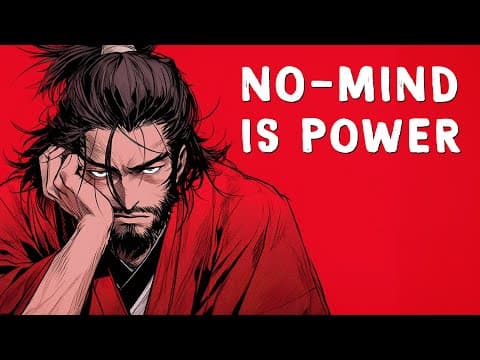
Here's something nobody wants to hear. Your environment isn't holding you back. Your belief that you need the right environment, that's what's holding you back. Miiamoto Mousashi figured this out 400 years ago. This man fought 61 duels, won every single one. And he didn't train in some elite dojo. He was a ronin, masterless, homeless, surviving in ... Read More
Key Insights
- Radical acceptance is the decision to stop mentally arguing with conditions that have already occurred. Traffic, interruptions, weather, and present circumstances cannot be reversed through complaint, so accepting them preserves energy for choosing an effective response.
- Internal complaints are an invisible energy tax because they repeatedly compare reality with preferred conditions. The argument can feel like useful processing, but it does not alter the situation and can leave a person exhausted before meaningful action begins.
- Acceptance is not the same as settling because clear recognition of present reality is the starting point for change. A useful mental shift is to replace “Why is this happening to me?” with “This is what is true. Now what?”
- Tool dependence is a form of fragility when performance collapses without specific headphones, equipment, applications, playlists, chairs, or routines. Helpful tools can improve conditions, but discipline becomes portable only when action remains possible after those supports disappear.
- Musashi’s duel with Sasaki Kojiro is presented as an example of adaptability defeating attachment. Kojiro depended on his renowned long blade, while Musashi arrived with a wooden oar and remained focused instead of becoming emotionally trapped by expectations about proper weapons.
- Deliberate practice under imperfect conditions is a way to test whether discipline depends on a preferred setup. The suggested exercise is to remove familiar tools once a week and work or train without them, not to pursue suffering, but to strengthen adaptability.
- Perception is broader than simply looking because useful information often appears outside the object demanding immediate attention. In a sword fight, fixation on the blade can hide shoulder movement, foot placement, and other signals that reveal what is about to happen.
- Phone-free observation can rebuild awareness that automatic scrolling has weakened. The suggested practice is to spend two minutes noticing people, dynamics, and the atmosphere when entering a subway, coffee shop, office, or other space before reaching for a screen.
Install to Summarize YouTube Videos and Get Transcripts
Explore YouTube Video Summarizer or Get YouTube Transcript Extractor
Questions & Answers
Q: How can I build mental toughness in a difficult environment?
Start by acknowledging the environment exactly as it is instead of spending energy wishing it were different. Identify the conditions you cannot immediately change, then ask what useful action remains available. Practice working without preferred tools, and observe your surroundings before reaching for your phone. These habits make focus and discipline less dependent on comfort, convenience, or ideal circumstances.
Q: What is radical acceptance in mental toughness?
Radical acceptance means recognizing current reality without continuing an internal argument about what should have happened. It does not mean approving of the situation, abandoning improvement, or admitting defeat. It means treating the present condition as the starting point for action. Once the complaint stops consuming attention, energy can be directed toward adaptation, decisions, and practical movement forward.
Q: Why do internal complaints reduce mental energy?
Internal complaints keep repeating a comparison between actual conditions and preferred conditions. The traffic, interruption, broken object, or unfair circumstance has already happened, so mentally disputing it cannot reverse the event. That repeated argument consumes attention and creates fatigue. Replacing it with a factual assessment and a next-step question preserves more energy for actions that can influence the outcome.
Q: How does dependence on tools weaken discipline?
Dependence develops when a person believes productive work or effective training is impossible without particular headphones, equipment, applications, playlists, furniture, or routines. The tools may help, but performance becomes fragile if their absence creates an excuse to stop. Discipline is more adaptable when a person can still begin, concentrate, and complete useful work with fewer resources or under worse conditions.
Q: How can I become less dependent on my ideal setup?
Once a week, intentionally remove some part of the setup you normally consider necessary. Work without the usual headphones, train without preferred gear, or complete a task in conditions you would normally criticize. The purpose is not suffering for its own sake. It is to gather evidence that you can still act, adapt, and maintain effort without permission from your environment.
Q: What does Musashi’s wooden oar story teach about adaptability?
The account contrasts Sasaki Kojiro’s attachment to his long blade with Musashi’s willingness to fight using a wooden oar carved during the boat journey. Kojiro became angry about the apparent disrespect and departure from expected conditions, while Musashi remained calm and adaptable. The lesson presented is that the mind using a tool matters more than attachment to a specific tool.
Q: How can I improve awareness without giving up my phone?
Practice delaying phone use for two minutes whenever you enter a new environment, such as a subway, coffee shop, or office. During that interval, notice who is present, how people are interacting, and what the atmosphere feels like. The goal is not to reject the phone. It is to restore the ability to choose when to use it instead of reaching automatically.
Q: What is the difference between perception and sight?
Sight can become narrow fixation on the most obvious object, while perception includes the wider pattern surrounding it. The sword-fighting example shows that staring at a blade can hide a shoulder drop or foot shift that signals an attack. In ordinary life, broader perception helps a person notice tension, emotional signals, conversational meaning, and opportunities that surface-level attention may miss.
Summary & Key Takeaways
-
Mental toughness begins with radical acceptance. Complaining internally about traffic, interruptions, unfairness, or difficult circumstances consumes energy without changing what has already happened. Acceptance is not surrender. It creates a clear starting point by replacing the unproductive question, “Why is this happening?” with the practical question, “This is true. Now what?”
-
Dependence on preferred equipment, routines, applications, or environments creates fragility. Musashi’s instruction against having a favorite weapon illustrates the danger of attaching performance to one tool. Practicing without familiar gear once a week can reveal hidden dependencies and prove that useful action remains possible when normal conditions disappear or become inconvenient.
-
Broad perception requires attention to the entire environment instead of fixation on the most obvious object or distraction. Automatic phone use can replace presence with digital noise, causing people to miss social tension, emotional signals, and opportunities. Spending two phone-free minutes observing each new space helps retrain awareness and tolerance for discomfort.
Read in Other Languages (beta)
Share This Summary 📚
Summarize YouTube Videos and Get Video Transcripts with 1-Click
Try YouTube Summary with ChatGPT & Claude or YouTube Transcript Generator
Explore More Summaries from Statue of Wisdom 📚
Summarize YouTube Videos and Get Video Transcripts with 1-Click
Try YouTube Summary with ChatGPT & Claude or YouTube Transcript Generator