How to Focus on Command Using the Mushin System
TL;DR
Focus becomes easier when a task has a concrete outcome, a dedicated workspace, minimal distractions, and a physical outlet for restless energy. Before working, define who the result affects, enter a space reserved for deep work, remove the phone and unnecessary productivity tools, and use brief movement to prepare your body and mind.
Transcript
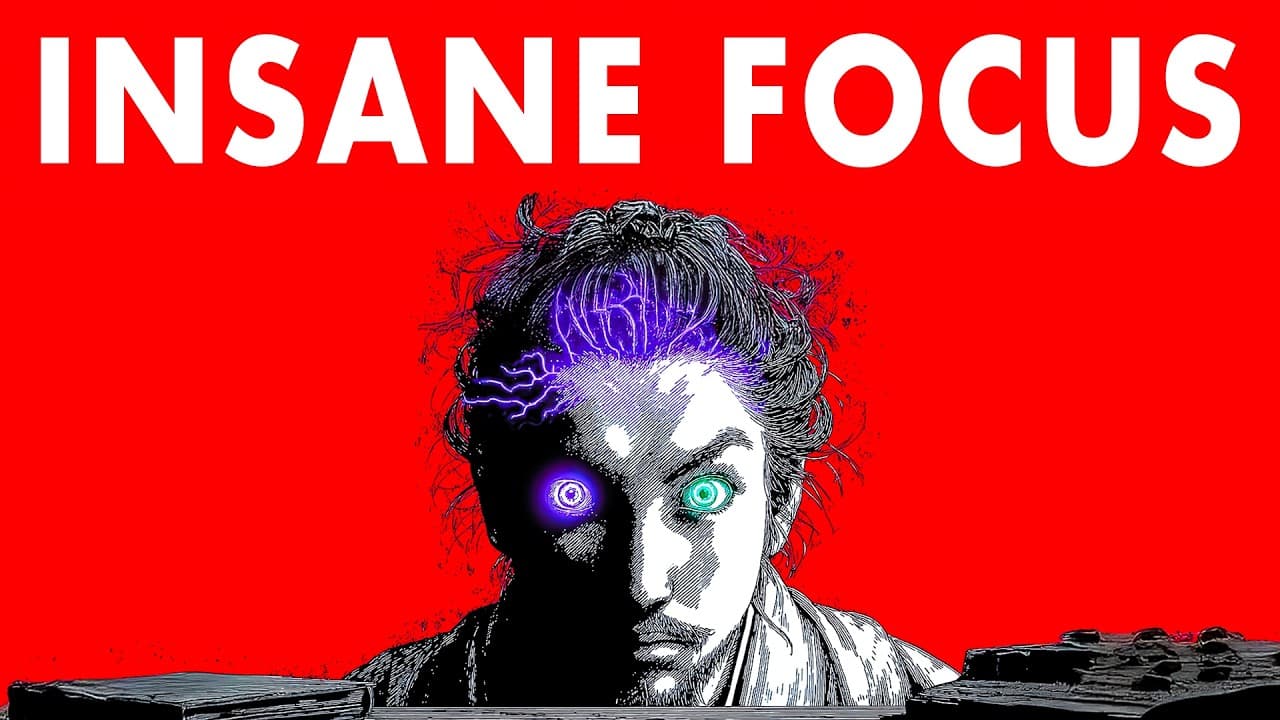
There is a way to focus on command and the Japanese have been doing it for centuries. It's called Mushenriu, the school of no mind. Zen monks used it to meditate for days. Samurai used it to never miss in combat. It's the art of acting without thinking. And once you understand its five laws, you will never struggle with concentration again, not bec... Read More
Key Insights
- Focus is presented as a direction problem when work lacks a concrete outcome. A task becomes easier to engage with when the worker can identify what victory looks like, which decision the result will influence, and who will experience its effects.
- A meaningful target connects effort to an immediate and tangible impact. Gohan becomes engaged after calculating that an effective report could save his team 10 hours each week, or 500 hours per year, instead of merely treating the report as an unexplained deadline.
- A contaminated space creates a contaminated mind because repeated activities condition expectations. When one desk is associated with gaming, eating, entertainment, stress, and work, the mind receives conflicting cues and struggles to identify which mental mode should become active.
- A sacred workspace is a location reserved exclusively for deep work. Gohan uses his dining table only for focused work and later spends one morning hour in a closed conference room, with his phone outside, to establish clearer boundaries against interruptions.
- Focus is revealed through removal rather than accumulation. Multiple productivity applications, timers, calendars, and tracking systems can create extra decisions and management work, allowing the appearance of productivity to replace the actual completion of meaningful tasks.
- Digital distractions are reduced most effectively through physical separation. The suggested one-week experiment removes nonessential applications, disables every notification except calls, and places the phone in another room during work instead of leaving it nearby on silent.
- One visible task reduces mental competition by limiting what demands attention at a given moment. The proposed simple setup consists of basic notes or one notebook, one task in view, and a physically removed phone rather than a complicated collection of productivity systems.
- Physical movement is presented as preparation for concentrated work. Gohan uses 20 push-ups before a project and walks around the building before important calls, treating movement as a way to release restless energy so mental effort can flow more clearly.
Install to Summarize YouTube Videos and Get Transcripts
Explore YouTube Video Summarizer or Get YouTube Transcript Extractor
Questions & Answers
Q: How can I focus on command using the Mushin system?
Start by defining a concrete outcome, the person affected, and the decision or change your work should produce. Then work in a location reserved only for deep work, remove your phone and unnecessary applications, and keep one task visible. If your body feels restless after prolonged sitting, use brief movement such as push-ups or a walk before returning to concentrated work.
Q: Why can I focus on games but not on important work?
Games provide a clear definition of victory through visible goals such as reaching a level, beating a boss, or completing an objective. Work often arrives as a vague instruction with no stated purpose, impact, or audience. The transcript argues that concentration improves when you create an equally clear target by identifying what the work changes, which decision it supports, and who benefits from it.
Q: How do I turn a vague assignment into a meaningful target?
Ask what specific decision the assignment will influence, who will read or use it, and what will change because of the result. If no one supplies a useful answer, create a concrete reason grounded in the task's impact. Gohan reframes a quarterly report around saving his team 10 hours per week, giving his mind a measurable result instead of an unexplained Friday deadline.
Q: What is a sacred workspace for deep focus?
A sacred workspace is one location used only for deep work, without phones, snacks, entertainment, or quick message checks. Repeating a single activity there teaches the mind what to expect upon entering or sitting down. Gohan applies this idea first at his dining table and then in a forgotten conference room, where he works for one hour every morning behind a closed door.
Q: Why does working in the same place as gaming hurt focus?
The transcript says the brain maps locations to activities. If a desk repeatedly hosts gaming, eating, streaming, stressful conversations, and work, the location signals many possible behaviors instead of one clear mode. This confusion encourages urges to check email, watch something, or seek stimulation. Reserving a separate place for focused work creates a more consistent mental cue and reduces that conflict.
Q: Do productivity apps improve concentration?
Productivity applications can become another source of complexity when managing them consumes time that should go toward the work itself. Gohan uses seven applications and spends 30 minutes each morning updating tasks, synchronizing calendars, and checking statistics. The suggested alternative is intentionally simple: basic notes or one notebook, one visible task, disabled notifications, and a phone placed physically out of reach.
Q: How should I remove digital distractions while working?
For one week, delete everything except essential applications, turn off every notification except calls, and place the phone in another room whenever you work. The transcript emphasizes physical removal rather than silent mode because distance adds friction to retrieving the device. It also warns that the initial anxiety, emptiness, and craving for stimulation are expected reactions that can diminish as mental space returns.
Q: Why can physical movement improve mental focus?
The fourth law presents restlessness as unused physical energy rather than automatic proof of poor concentration. Long periods of sitting can leave the body agitated while the mind feels foggy or unproductive. Brief movement becomes part of work preparation: Gohan performs 20 push-ups before projects and walks around the building before important calls, giving physical energy an outlet before requiring sustained mental effort.
Summary & Key Takeaways
-
The first law treats poor concentration as a direction problem. The mind engages more deeply when work leads to a concrete result involving real people. Before beginning, replace a vague instruction such as finishing a presentation with a precise target describing the decision, impact, and people the completed work should influence.
-
The second and third laws focus on environmental conditioning and subtraction. A space used for gaming, eating, entertainment, conflict, and work sends mixed signals. Reserving one location for deep work creates a consistent cue, while removing phones, notifications, extra applications, and competing tasks reduces friction, decisions, and opportunities for avoidance.
-
The fourth law connects concentration with physical energy. Restlessness after prolonged sitting may signal a need for movement rather than an inability to focus. Short activities such as push-ups or walking can become part of mental preparation, helping the body release unused energy before demanding sustained attention from the mind.
Read in Other Languages (beta)
Share This Summary 📚
Summarize YouTube Videos and Get Video Transcripts with 1-Click
Try YouTube Summary with ChatGPT & Claude or YouTube Transcript Generator
Explore More Summaries from Statue of Wisdom 📚



Summarize YouTube Videos and Get Video Transcripts with 1-Click
Try YouTube Summary with ChatGPT & Claude or YouTube Transcript Generator