How Did Abercrombie Revive Its Retail Business?
TL;DR
Abercrombie revived its business by replacing logo-heavy teen clothing with comfortable, sophisticated essentials for millennials, embracing inclusive sizing and influencer marketing, and improving stores, inventory, sourcing, and supply-chain operations. Under CEO Fran Horowitz, these changes helped annual sales grow 16% in 2023 despite a shrinking US apparel market, while producing the company’s highest profits in more than a decade.
Transcript
Shares of Abercrombie and Fitch have been a huge winner this year. More than doubling. The chart is amazing, up more than 20%. Abercrombie may end up just being the standout of all the retailers. Shares of Abercrombie and Fitch are up more than 500% over the last year, even beating out tech stars like NVIDIA and Meta. The company's annual sales hav... Read More
Key Insights
- Great retailing begins with products that customers genuinely want. CEO Fran Horowitz applied her merchandising background to assortment planning, merchandise mix, supply-chain decisions, and customer psychology, making product relevance the foundation of Abercrombie’s turnaround rather than relying primarily on financial restructuring or advertising.
- Abercrombie’s new target customer is the millennial shopper seeking clothing that is fashionable, comfortable, and not excessively stylish or logo-heavy. Market research led the company to replace narrow selections of branded shirts and jeans with sophisticated essentials, athletic apparel, dresses, matching sets, and products featuring restrained embellishments.
- Abercrombie’s former exclusivity became a serious liability as the market moved toward inclusion. Former CEO Mike Jeffries had promoted the brand for thin, young, preppy, good-looking customers, but resurfaced comments about excluding others created a major backlash and damaged the company’s relevance and reputation.
- Inclusive sizing became a visible part of Abercrombie’s rebrand. In 2021, the company introduced its Curve Love fit and offered extended sizes, helping broaden its customer base and demonstrate that the retailer was moving beyond the narrow body image associated with its earlier identity.
- Influencer marketing works for Abercrombie because customers trust peers and friends more than corporate messages. The company developed a creator network combining organic advocacy and paid partnerships, using authentic user-generated content to demonstrate products, represent different customers, and communicate the rebrand through social platforms including TikTok.
- Operational discipline supported Abercrombie’s customer-facing transformation. Management closed unprofitable locations, exited many international markets, examined headcount, changed inventory ordering and sourcing, revamped the supply chain, and reduced reliance on promotions, contributing to the company’s highest profits in more than a decade.
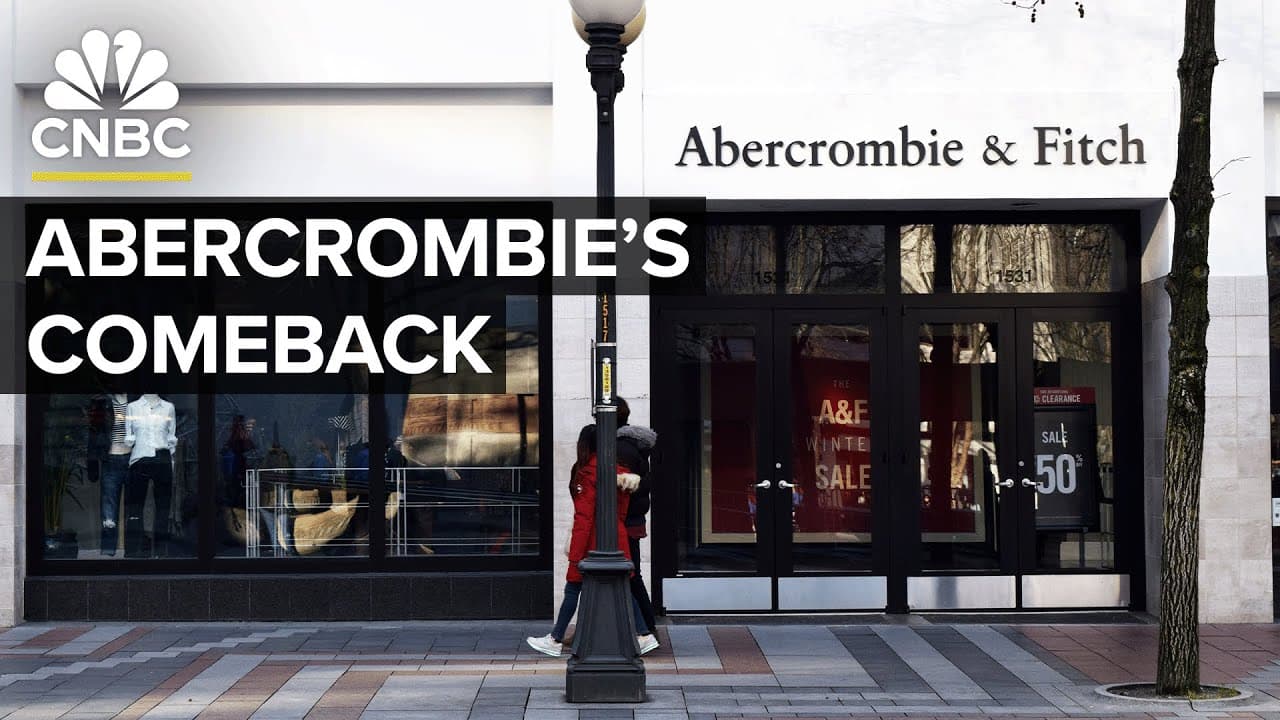
- Smaller and redesigned stores have improved Abercrombie’s physical retail productivity. Since 2010, the company has closed more than 700 locations, while newer stores use brighter interiors, natural wood fixtures, and cleaner layouts. Its footprint was about 10% smaller than in 2019, but productivity per square foot rose 18%.
- Future growth depends on sustaining customer relevance while improving Hollister and expanding internationally. Hollister represents about half of overall sales, and localized teams in London and Shanghai are adapting assortments and promotions, while analysts expect growth rates to moderate from the unusually strong performance delivered during 2023.
Install to Summarize YouTube Videos and Get Transcripts
Explore YouTube Video Summarizer or Get YouTube Transcript Extractor
Questions & Answers
Q: How did Abercrombie turn around its retail business?
Abercrombie combined a complete merchandise overhaul with a more inclusive brand identity and substantial operational changes. It researched customers, replaced logo-heavy teen clothing with sophisticated essentials for millennials, expanded categories and sizes, and promoted the new identity through TikTok creators. Management also closed unprofitable stores, improved inventory and sourcing, revamped the supply chain, and stopped depending on promotions to generate sales.
Q: Why was product strategy central to Abercrombie’s comeback?
Product strategy mattered because Abercrombie’s old assortment was narrow and no longer reflected what customers wanted to wear. CEO Fran Horowitz, whose career focused on merchandising, used market research to rebuild the selection around fashionable but comfortable essentials. The company reduced prominent branding, added subtle details, and expanded into athletic apparel, dresses, and matching sets, giving shoppers more relevant reasons to buy.
Q: How did CEO Fran Horowitz change Abercrombie?
Fran Horowitz approached the turnaround as a merchant who understood assortment planning, merchandise mix, supply chains, and customer psychology. After becoming CEO in 2017, she made extensive market research a priority and reshaped the company around its new customer. She also addressed unprofitable stores, international exposure, headcount, inventory ordering, sourcing, promotions, and store design, aligning the entire operation with the revised product strategy.
Q: How did Abercrombie become a more inclusive brand?
Abercrombie moved away from the exclusionary image created under former CEO Mike Jeffries, when marketing focused on thin, young, preppy, and conventionally attractive customers. In 2021, the company introduced its Curve Love fit and extended sizing. It also worked with a broad network of creators whose content allowed more shoppers to see themselves represented in the brand’s clothing and messaging.
Q: Why did influencer marketing help Abercrombie’s rebrand?
Influencer marketing helped because peer recommendations carried more credibility with customers than traditional messages from a company. Abercrombie adopted TikTok early and built a creator network that included both organic advocates and paid partnerships. Their user-generated content showed real people wearing products such as Curve Love jeans, communicated the company’s changes authentically, and helped the rebrand reach a wider audience through relatable social content.
Q: How did Abercrombie improve its stores and operations?
Abercrombie closed more than 700 locations after 2010, including unprofitable stores tied to the declining mall model, and later began opening smaller locations with brighter interiors, natural wood fixtures, and cleaner layouts. Management also exited many international markets, reviewed headcount, improved inventory ordering and sourcing, revamped the supply chain, and reduced promotional dependence. These changes increased productivity per square foot by 18% compared with 2019.
Q: What financial results showed Abercrombie’s turnaround was working?
Abercrombie’s annual sales grew nearly 30% from 2017, and the company produced its highest profits in more than a decade. In 2023, annual sales rose 16% even though the US apparel market contracted by 4%. On May 29, 2024, the company reported its highest first quarter ever, and its shares closed 24% higher that day.
Q: What risks could slow Abercrombie’s future growth?
Growth could slow because Abercrombie benefited from the quiet luxury trend in 2023, while maximalist styles were returning. Hollister, which accounts for about half of total sales, still required additional work. The company also remained below the sales and profit peaks of its earlier heyday. Its response includes localized teams in London and Shanghai that adapt assortments and promotions for their markets.
Summary & Key Takeaways
-
CEO Fran Horowitz began Abercrombie’s turnaround by researching current shoppers and rebuilding the merchandise assortment. The company replaced heavily branded shirts, hoodies, and jeans with sophisticated essentials aimed at millennials, then expanded into athletic apparel, dresses, and matching sets. The revised products emphasized comfort, fashion, subtle details, and broader customer appeal.
-
Abercrombie moved away from the exclusionary image associated with former CEO Mike Jeffries. It introduced Curve Love fits and extended sizes, adopted TikTok early, and worked with influencers and affiliates. Authentic user-generated content helped customers see themselves represented while communicating that the company’s products and identity had materially changed.
-
Operational changes reinforced the product and marketing transformation. Abercrombie closed unprofitable stores, exited many international markets, reviewed headcount, improved inventory ordering and sourcing, revamped its supply chain, and reduced dependence on promotions. It later began opening smaller, brighter stores while pursuing localized growth through teams in London and Shanghai.
Read in Other Languages (beta)
Share This Summary 📚
Summarize YouTube Videos and Get Video Transcripts with 1-Click
Try YouTube Summary with ChatGPT & Claude or YouTube Transcript Generator
Explore More Summaries from CNBC 📚






Summarize YouTube Videos and Get Video Transcripts with 1-Click
Try YouTube Summary with ChatGPT & Claude or YouTube Transcript Generator