How Could Apple Vision Pro Reshape Daily Life?
TL;DR
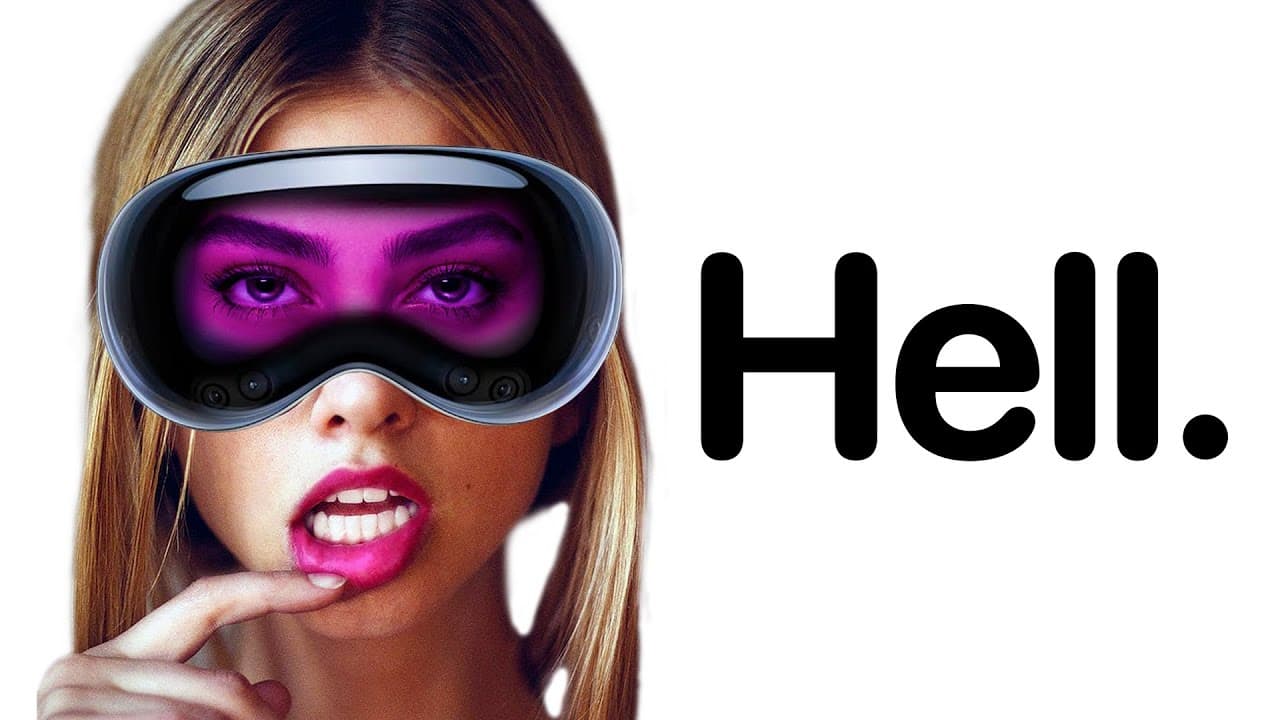
Apple Vision Pro could make digital content a persistent part of everyday perception by combining virtual reality, augmented reality, and the physical world. Its potential comes from immersive hardware, natural controls, and integration with Apple services, but the analysis warns that these strengths could deepen distraction, encourage escape from difficult living conditions, and give Apple greater influence over work, entertainment, and social life.
Transcript
Apple's new Vision Pro terrifies me on June 5th 2023 Apple released their brand new game-changing product The Vision Pro and the hype was Unreal in just the build up to the new product announcement Apple stock was bubbling up rising in anticipation for its release because Apple's Leadership in key investors knew that by invading the... Read More
Key Insights
- Apple Vision Pro combines virtual reality, augmented reality, and physical surroundings in a headset priced at $3,500. The product was introduced on June 5, 2023, and was widely compared with major earlier Apple launches, although the analysis portrays it as an early-generation device.
- The central business question is what problem Vision Pro actually solves. The analysis argues that mainstream virtual reality is not necessarily a consumer problem, then proposes that immersive digital experiences instead address people's desire for greater adventure, connection, freedom, pleasure, and escape from difficult circumstances.
- Immersive technology can reduce awareness of an unpleasant physical environment by replacing it with digital places, people, memories, games, and entertainment. The analysis warns that this capacity could turn virtual reality into an emotional refuge rather than a tool for improving the conditions causing dissatisfaction.
- Apple's existing devices have already made digital engagement a large part of daily life. The transcript cites a 2022 calculation that the average American spent six hours each day on a phone and another four hours on a computer, connecting that behavior to distraction and shortened attention.
- Vision Pro could make digital access more continuous because users would not need to pick up a phone or laptop. Photos, contacts, work documents, notes, videos, presentations, and music could appear within the user's visual environment, blending Apple's services with ordinary perception and activity.
- Apple entered mixed reality partly because competing companies were already developing virtual reality products. Facebook was rumored as early as 2013 to be focusing on the field, while Oculus, Microsoft, and HTC had created headsets, giving Apple a strategic reason to avoid falling behind.
- Vision Pro development required solving substantial hardware and usability problems. Apple needed a compact and lightweight design with powerful processors, high-resolution displays, advanced sensors, efficient batteries, and intuitive interaction because earlier headsets such as the first Oculus Rift were portrayed as heavy, uncomfortable, and visibly artificial.
- Apple's ecosystem integration is a major part of the headset's potential influence. The product aims to connect familiar services with the user's field of view, enabling activities such as revisiting stored memories, accessing files, communicating, and working without relying on a conventional computer screen.
Install to Summarize YouTube Videos and Get Transcripts
Explore YouTube Video Summarizer or Get YouTube Transcript Extractor
Questions & Answers
Q: What problem is Apple Vision Pro intended to solve?
The analysis argues that Vision Pro does more than address the limited popularity of virtual reality. Its deeper appeal is the ability to give users experiences, social contact, entertainment, adventure, and a sense of freedom that may be missing from ordinary life. By replacing or enhancing difficult surroundings with immersive content, it can provide an escape from loneliness, financial pressure, repetitive routines, and dissatisfaction.
Q: How could Apple Vision Pro change everyday life?
Vision Pro could move digital activity from handheld screens into a person's continuous field of view. Users could access photos, contacts, documents, notes, videos, presentations, music, entertainment, and social experiences while remaining aware of their surroundings. The analysis suggests that this blending of physical and digital environments could reshape how people work, communicate, revisit memories, and spend their free time.
Q: Why does the analysis consider Vision Pro potentially harmful?
The concern is that a highly immersive and convenient digital environment could intensify patterns of distraction and technological dependence already associated with phones and computers. Instead of addressing loneliness, economic pressure, poor surroundings, or a lack of community directly, users might retreat into entertainment and simulated experiences. The analysis also worries about Apple gaining greater influence over users' attention, work, culture, and social lives.
Q: Why did Apple develop a mixed reality headset?
Apple saw augmented and virtual reality as a major new market while phones and laptops could eventually reach limits in their growth potential. Competitors including Facebook, Oculus, Microsoft, and HTC were already pursuing virtual reality, creating pressure for Apple to participate. The analysis says Apple wanted to remain at the forefront of technological change and avoid allowing another company to dominate the emerging industry.
Q: When did Apple begin developing Vision Pro?
The transcript states that Apple worked on Vision Pro hardware and software since at least 2016, and possibly since 2015, within a division called the Technology Development Group. Engineers and designers reportedly spent years refining comfort, usability, and immersion. The long development period reflected the difficulty of making a headset feel natural while combining powerful processing, detailed displays, sensors, cameras, and battery systems.
Q: What technical challenges did Apple face with Vision Pro?
Apple needed to make the headset compact, lightweight, comfortable, powerful, and visually convincing. The design required high-resolution displays, advanced sensors, efficient batteries, capable processors, and a natural interface for moving between digital and physical environments. It also had to operate smoothly with Apple's existing devices and services, since ecosystem integration was presented as essential to making the headset useful in everyday life.
Q: How does Vision Pro integrate with Apple's ecosystem?
Vision Pro is designed to bring material already associated with Apple services into the user's visual environment. The transcript mentions photos, iCloud content, contacts, work documents, notes, videos, presentations, and music. This integration could let users revisit recorded memories as immersive experiences and perform work from different locations without depending on a traditional computer display, keyboard-centered setup, or handheld phone screen.
Q: Will the $3,500 price prevent Vision Pro from becoming mainstream?
The analysis acknowledges that $3,500 is more than many people earn in a month and therefore creates an immediate barrier for average consumers. However, it argues that the initial price does not eliminate the product's long-term significance. Apple's stated direction, competitive pressure, ecosystem integration, and years of development are presented as reasons the technology could eventually become as ordinary as MacBooks are portrayed today.
Summary & Key Takeaways
-
Apple introduced Vision Pro on June 5, 2023, presenting a headset that combines virtual reality, augmented reality, and physical surroundings. The analysis acknowledges its advanced displays, sensors, cameras, lidar scanning, and interface, while questioning whether making virtual reality mainstream addresses a genuine public need or primarily creates a new technology market.
-
The central argument is that immersive technology can offer an appealing escape from loneliness, financial pressure, repetitive work, limited freedom, and unsatisfying surroundings. By placing entertainment, social interaction, memories, documents, and other digital content directly within a user's field of view, Vision Pro could make digital engagement more continuous than phones or computers.
-
Apple pursued mixed reality because phones and laptops could eventually reach limits in their market potential, while virtual reality represented a new industry. Development reportedly began by at least 2016, possibly 2015, and required Apple to address weight, comfort, processing, displays, sensors, batteries, intuitive interaction, and integration with its existing ecosystem.
Read in Other Languages (beta)
Share This Summary 📚
Summarize YouTube Videos and Get Video Transcripts with 1-Click
Try YouTube Summary with ChatGPT & Claude or YouTube Transcript Generator
Explore More Summaries from Moon 📚





Summarize YouTube Videos and Get Video Transcripts with 1-Click
Try YouTube Summary with ChatGPT & Claude or YouTube Transcript Generator