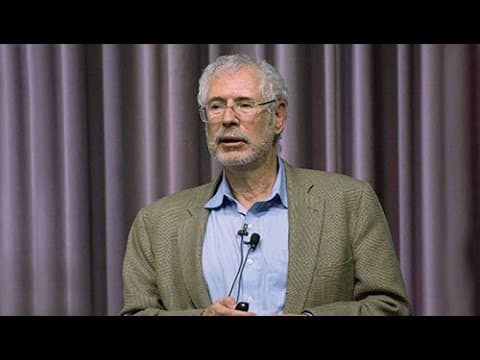
William Hsu: Moving from Hubris to Confidence [Entire Talk]

TL;DR
Lasting entrepreneurial confidence comes from repeated attempts, hard work, self-awareness, and a genuine passion for the problem being solved. William Hsu’s early startup experience shows that raising money and articulating a vision are not the same as knowing how to build a product, manage a team, understand governance, or create a durable company.
Transcript
Thank you. Thank you all. I can't believe people actually came, and is actually listening to me. It wasn't really that long ago, at least in my head. Actually mathematically it's almost 20 years since I was in this particular class. But actually that doesn't exist anymore. Taking this class and taking classes from Professor Kosnik, so Stanford has ... Read More
Key Insights
- Entrepreneurial passion is a durable source of motivation because it predates revenue, valuation, growth rates, and other financial measures. Hsu recalls caring about computer speed, downloaded programs, and experimentation before he understood business terminology, and urges founders not to lose that original enthusiasm.
- Exceptional startup outcomes are statistical outliers, not reasonable expectations for every capable entrepreneur. Hsu contrasts his repeated attempts with founders who achieved enormous success through an early company, then argues that people who are not rare outliers can still pursue ambitious goals through persistence and hard work.
- Starting a company is different from knowing how to build one. Hsu could raise capital and describe a persuasive future, yet he barely understood product design, team management, or effective spending, showing that fundraising ability can conceal major gaps in operating competence.
- Founder-market passion matters because an attractive investment opportunity may not sustain long-term commitment. Hsu chose commercial construction services partly because he believed venture capitalists would fund the opportunity, but he later identified his lack of genuine interest in that industry as one of his largest career mistakes.
- Market conditions can disguise weak leadership and limited experience. During the 1998 internet boom, Hsu gained traction and raised substantial funding despite describing himself as unprepared, because many participants were navigating an unfamiliar environment and investors relied partly on recognizable founder patterns.
- Equity ownership does not guarantee control of a venture-backed company. Hsu owned a significant majority of BuildPoint’s common stock but was still removed by its board, revealing his earlier failure to understand share classes, percentage ownership, board powers, and fiduciary responsibilities.
- Leadership responsibility extends beyond a founder’s pride or personal disappointment. After being dismissed, Hsu briefly considered taking engineering colleagues with him, but recognized that BuildPoint’s 250 employees had families, financial obligations, and livelihoods that made such retaliation irresponsible.
- Confidence grows through honest self-assessment and repeated effort rather than assumptions of exceptional talent. Hsu openly concludes that he is neither a black swan nor a unicorn, but describes persistence, studying, hard work, and trying again as practical ways to pursue unusually ambitious outcomes.
Install to Summarize YouTube Videos and Get Transcripts
Explore YouTube Video Summarizer or Get YouTube Transcript Extractor
Questions & Answers
Q: How can entrepreneurs turn hubris into confidence?
Entrepreneurs can replace hubris with confidence by acknowledging what they do not know, learning from repeated attempts, and separating persuasive storytelling from operational competence. Hsu’s experience showed that raising about $50 million did not mean he understood product development, team management, capital allocation, or governance. Confidence becomes more grounded when ambition is paired with hard work, study, persistence, and honest self-assessment.
Q: Why is building a company different from starting one?
Starting a company can require an opportunity, a founding team, a compelling presentation, and access to investors. Building one requires sustained competence in product design, hiring, management, spending, governance, and responsibility toward employees. Hsu started BuildPoint and attracted substantial funding, but later admitted that he barely knew how to design a product, manage a team, or use the money effectively.
Q: Why should founders choose a problem they genuinely care about?
Founders should care about the problem because commercial attractiveness alone may not provide the commitment needed to build a company. Hsu created a marketplace for commercial construction services because he saw an opportunity that venture capitalists might support, not because he loved the industry. He later described that choice as one of his biggest career mistakes and urged entrepreneurs to retain their original passion.
Q: Can a startup founder be fired from their own company?
A founder can be removed by the company’s board even when the founder holds a significant portion of the common stock. Hsu learned this when BuildPoint’s board asked him to leave and sought a more experienced executive. He had not understood the practical differences among shares, percentage ownership, common and preferred stock, board authority, and the board’s fiduciary duties.
Q: How did the dot-com boom affect William Hsu’s first startup?
The 1998 dot-com environment made it easier for Hsu to start an internet company, attract venture capital, and gain traction despite his limited operating experience. His investment-banking background helped him create a polished presentation, while his Stanford engineering degree fit patterns investors recognized. Within about two years, BuildPoint raised approximately $50 million, although Hsu was unsure how to deploy it effectively.
Q: What did William Hsu learn after being removed from BuildPoint?
Hsu learned that leadership includes responsibility for employees and requires more than ownership, intelligence, or confidence. His initial impulse was to persuade engineering colleagues to leave and recreate the business elsewhere. He abandoned that idea after considering the 250 employees who had families and financial obligations, then spent roughly the next year and a half traveling, reflecting, and pursuing self-discovery.
Q: Do entrepreneurs need to be rare outliers to pursue ambitious goals?
Entrepreneurs do not need to assume they are rare outliers before attempting difficult work. Hsu distinguishes himself from founders whose first or second startups became extraordinary successes, then focuses on traits available to him: persistence, hard work, study, and repeated attempts. His argument is that enormous outcomes are statistically uncommon, but ambitious effort remains worthwhile even when success is not guaranteed.
Q: What role does personal passion play in entrepreneurship?
Personal passion helps preserve the curiosity that existed before financial incentives became central. Hsu remembers building computers, downloading programs, and caring about performance before he knew terms such as EBITDA or growth rate. He argues that entrepreneurs pursuing large businesses should not lose the part of themselves that enjoys experimenting, creating, and engaging deeply with technology or the problem they chose.
Summary
This video is a talk by William Hsu, the co-founder of MuckerLab, about his own personal journey in entrepreneurship and the changing landscape of the startup ecosystem. He shares insights and advice about building a career in entrepreneurship and the opportunities available today.
Questions & Answers
Q: Can you explain what the MuckerLab accelerator program entails?
The MuckerLab program is a 6 to 12 month program where entrepreneurs work out of the office and receive guidance and support from William Hsu and his partners. The program helps companies build their product, test different go-to-market strategies, and achieve product-market fit. They also assist companies in fundraising with venture capitalists.
Q: What sectors does MuckerLab focus on and why?
MuckerLab focuses on sectors where William Hsu and his partners have personal experience and can add value. This includes e-commerce, marketplaces, SaaS, security, and content and media in Los Angeles. They believe in working on something they are passionate about and where they can have a positive impact.
Q: How did William Hsu navigate working at a large company like AT&T Interactive?
William Hsu emphasizes the importance of selling and recruiting at a large company. Building allies and understanding people's motivations are key to getting things done. By gaining support and helping others achieve their goals, he was able to navigate and drive innovation within AT&T.
Q: Why did MuckerLab join the TechStars network and how does it differ from other TechStars programs?
MuckerLab joined the TechStars network to gain a playbook and guidance on running a successful accelerator program. They wanted to jumpstart their program in Los Angeles, where the startup ecosystem is not as robust. They differentiate themselves by being more focused on the outcome and tailoring their program to the specific needs of the companies in their portfolio.
Q: Can you explain the concept of unit economics and its importance?
Unit economics refers to the financial efficiency of a business model. It involves understanding the unique economics of how a company goes to market and whether it can be profitable on a per acquisition basis. William Hsu emphasizes the importance of understanding unit economics as a key aspect of building a successful business.
Q: How did William Hsu rebound after being fired from his own company?
After being fired from his own company, William Hsu took the opportunity for self-discovery, traveling the world and spending time alone. He realized the importance of learning from his mistakes and sought to acquire new skills and experiences. He attended business school and took an entry-level job at eBay to learn from experienced professionals. He emphasizes the importance of accumulating experiences and iterations in building a successful career.
Q: How has the startup ecosystem changed since William Hsu graduated from Stanford?
The startup ecosystem has undergone significant changes since William Hsu graduated from Stanford. The cost of starting a business has dramatically decreased, making it more accessible to entrepreneurs. There is now a strong network of mentors and angel investors, as well as seed funds focused on early-stage companies. These changes have democratized and normalized entrepreneurship, making it a viable career path.
Q: How does William Hsu view entrepreneurship as a career path?
William Hsu believes that entrepreneurship has become a viable career path, thanks to the democratization of the startup ecosystem. While he acknowledges that not everyone will build billion-dollar companies, he encourages individuals to pursue their passions and make a difference in their niche. He emphasizes the importance of taking multiple at-bats and leveraging the resources and community available.
Q: How did William Hsu navigate the challenges of being a young entrepreneur in the dot-com era?
As a young entrepreneur in the dot-com era, William Hsu learned the importance of understanding unit economics and aligning the different components of a business. He faced challenges when the market crashed in 2001 and his company was fired by the board. He realized the importance of taking responsibility and considering the well-being of his employees. He advises entrepreneurs to have a long view, build confidence but also be humble, and surround themselves with smart individuals who can help navigate challenges.
Q: How did William Hsu transition from being a CEO of his own company to an entry-level job at eBay?
After being fired from his own company, William Hsu recognized his lack of knowledge and experience in building a successful internet company. He decided to start over and took an entry-level job at eBay to learn from experienced professionals and gain a better understanding of how to build a scalable internet business. He emphasizes the importance of continuous learning and accumulating skills and experiences.
Takeaways
The startup ecosystem has changed significantly over the years, making entrepreneurship a viable career path. The cost of starting a business has decreased, access to capital has increased, and there is a strong network of mentors and angel investors. Unit economics is crucial in building a successful business, and entrepreneurs should strive to understand the unique economics of their market and strive for profitability. Building a successful career in entrepreneurship requires a long-term view, confidence balanced with humility, and the ability to surround oneself with smart individuals who can provide guidance and support. It is also important to accumulate skills and experiences through multiple iterations and take advantage of the resources and community available.
Summary & Key Takeaways
-
William Hsu traces his path from a technology-obsessed childhood in Taiwan, Guam, and California to Stanford and the dot-com boom. He emphasizes that his original fascination centered on computers and programming, before financial measures entered his thinking, and argues that founders should preserve that personal passion while pursuing commercial success.
-
Soon after graduating, Hsu left investment banking to co-found BuildPoint, a marketplace for commercial construction services. His polished presentations, Stanford engineering background, and compelling vision helped the company raise about $50 million, but he lacked experience in product design, team management, capital allocation, and the industry he had chosen.
-
After the technology market reversed, BuildPoint’s board removed Hsu as chief executive. The experience exposed his limited understanding of ownership, preferred shares, board authority, and fiduciary duties. He rejected an impulsive plan to leave with the engineering team, recognized his responsibility toward 250 employees, and began an extended period of self-discovery.
Read in Other Languages (beta)
Share This Summary 📚
Summarize YouTube Videos and Get Video Transcripts with 1-Click
Try YouTube Summary with ChatGPT & Claude or YouTube Transcript Generator
Explore More Summaries from Stanford eCorner 📚
![Olivia Fox Cabane: Life Hacks for Breakthrough Thinking [Entire Talk] thumbnail](/_next/image?url=https%3A%2F%2Fi.ytimg.com%2Fvi%2FX9nUBOyBu8o%2Fhqdefault.jpg&w=750&q=75)
![Michael Moritz: Follow Your Instincts and Find Your Path [Entire Talk] thumbnail](/_next/image?url=https%3A%2F%2Fi.ytimg.com%2Fvi%2FEftnd2EHC2g%2Fhqdefault.jpg&w=750&q=75)
![Ed Catmull: Creativity, Inc. [Entire Talk] thumbnail](/_next/image?url=https%3A%2F%2Fi.ytimg.com%2Fvi%2Fffixfwt654I%2Fhqdefault.jpg&w=750&q=75)


Summarize YouTube Videos and Get Video Transcripts with 1-Click
Try YouTube Summary with ChatGPT & Claude or YouTube Transcript Generator