How Longer Lives Create Overlooked Markets
TL;DR
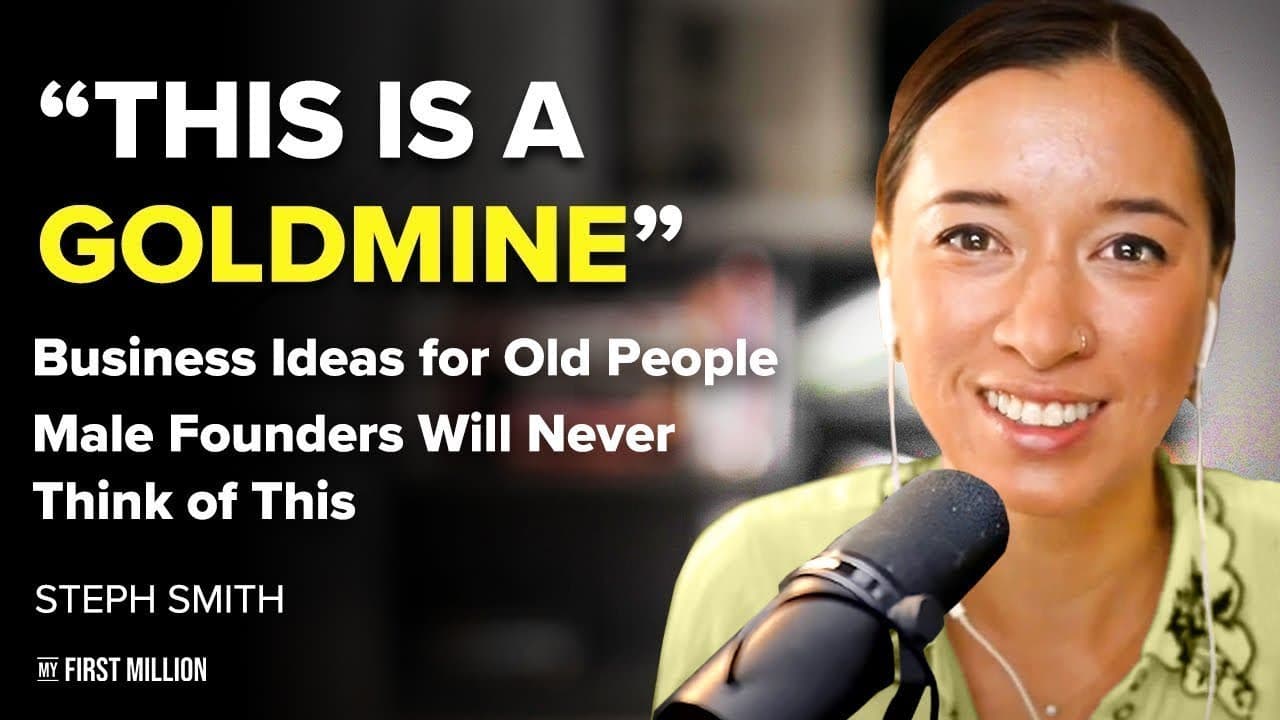
Longer lifespans are creating overlooked business opportunities in menopause care, assisted living, nursing, health measurement, and age-related services. The central challenge is that retirement systems, healthcare budgets, housing, and personal financial plans were not designed for people who may live decades beyond the traditional retirement age.
Transcript
all right we're live with Steph Smith Steph Smith this is your eighth time on the podcast is that right I know it's wild yes you sent me a document in advance and it had a bunch of stuff but there was one topic that caught my eye it's called the silver tsunami which basically just means that we are living way longer than expected if it's cool with ... Read More
Key Insights
- Longer lifespans are creating a large older population whose needs affect pensions, healthcare, nursing homes, housing, and family support. The discussion calls this demographic shift the silver tsunami and argues that entrepreneurs have not fully recognized its economic consequences.
- Average lifespan has increased by roughly two to three years per decade over the last several decades, according to the figures discussed. This continuing change challenges the belief that human longevity has already reached a stable plateau.
- Survival to later adulthood is highly probable for Japanese girls represented by 2020 data. The stated chances are 99.6% of reaching age 20, 99% of reaching 40, and 96% of reaching 60, fundamentally changing how people can plan their lives.
- Retirement planning becomes more demanding when life extends well beyond age 75. Retiring at 65 may require funding ten years under one assumption, but living to 95 creates a thirty-year retirement that existing savings habits and institutions may not adequately support.
- Kidney dialysis illustrates the financial consequences of age-related healthcare demand. The discussion states that Medicare spends more than $50 billion annually on dialysis and related treatments, while dialysis accounts for 8% of the US budget and costs roughly three times NASA.
- Diseases of despair are presented as a major reason US longevity falls behind comparable G7 nations. These causes include alcoholism and drugs, and the discussion claims that removing them makes American longevity comparable with that of similar countries.
- Menopause is an overlooked health market affecting billions of women worldwide. Around 6,000 women in the United States reach menopause each day, creating a steady population seeking help with hot flashes and the broader group of 34 symptoms mentioned in the discussion.
- Entrepreneurial blind spots arise because fewer entrepreneurs are women and fewer people start companies after age 50. As a result, founders may neither experience nor closely understand major age-related transitions, even when those transitions create large and recurring customer populations.
Install to Summarize YouTube Videos and Get Transcripts
Explore YouTube Video Summarizer or Get YouTube Transcript Extractor
Questions & Answers
Q: What is the silver tsunami and why does it matter?
The silver tsunami is the growing cohort of older people created by substantially longer lifespans. It matters because pensions, retirement savings, healthcare, nursing homes, assisted living, housing, and family support systems must serve people for longer periods. The discussion argues that these systems were not designed around decades of life after the traditional retirement age.
Q: How has the most common age of death changed?
The discussion cites UK figures showing a dramatic shift in mortality. In 1965, the most common age of death was the first year of life, while today it is age 87. This comparison captures how reduced early death and longer adult survival have transformed the age distribution of death and expanded the population reaching advanced ages.
Q: How does longevity change retirement planning?
Longer life increases both the amount of money required for retirement and the uncertainty surrounding financial plans. A person retiring at 65 and expecting to die at 75 might prepare for ten years, but living to 95 requires funding thirty years. Savings, investment growth, housing, and employment decisions therefore depend heavily on realistic longevity assumptions.
Q: Why is menopause care an overlooked business opportunity?
Menopause care serves a large, continuously replenished market because around 6,000 US women reach menopause every day. The transition may produce hot flashes and a broader set of 34 symptoms mentioned in the discussion. Because fewer founders are women or over age 50, entrepreneurs may overlook problems experienced by billions of women worldwide.
Q: What health effects are associated with menopause?
Menopause occurs when the ovaries stop working and hormone production changes, producing what the discussion describes as an accelerated aging period. Before age 55, cardiovascular illness is more likely to cause mortality in men, but that pattern reverses after 55 around the menopause stage. Women may also experience hot flashes and numerous other symptoms.
Q: Why are entrepreneurs missing opportunities in the longevity economy?
The discussion identifies an experience gap among founders. There are fewer female entrepreneurs and fewer entrepreneurs starting companies after age 50, so many founders have not personally encountered menopause, assisted living, or other later-life needs. Older people experiencing these problems may also be less likely to start companies designed specifically to solve them.
Q: How does longer life affect healthcare spending?
Longer life allows more people to reach ages when expensive chronic health needs can emerge, increasing pressure on public budgets. Kidney dialysis is the discussion's main example: Medicare reportedly spends more than $50 billion annually on dialysis and related treatments, and dialysis is described as consuming 8% of the US budget, roughly three times NASA spending.
Q: What business categories could benefit from longer lifespans?
The opportunities identified include menopause services, nursing homes, assisted living, nursing, health measurement and tracking, continuous glucose monitoring communities, posture solutions for nerd neck, and niche paddle sports leagues. The common thread is serving needs that become more visible as people live longer, manage health more actively, and require suitable care, activities, and infrastructure.
Summary & Key Takeaways
-
Life expectancy has risen substantially across generations, creating what the discussion calls the silver tsunami. In the UK, the most common age of death shifted from the first year of life in 1965 to age 87 today. Longer lives affect pensions, healthcare, nursing homes, housing, and the younger people supporting older populations.
-
Longer life changes personal financial planning because retirement may last far longer than expected. Someone retiring at 65 and living to 75 needs resources for about ten years, while living to 85 or 95 requires funding twenty or thirty years. Existing economic and real estate systems are not structured around that possibility.
-
The longevity economy contains overlooked markets because many affected customers are older and fewer entrepreneurs start companies after age 50. Menopause care illustrates the opportunity: 6,000 US women reach menopause daily and may encounter numerous symptoms. Related opportunities include assisted living, nursing, health measurement, continuous glucose monitoring, posture solutions, and specialized sports leagues.
Read in Other Languages (beta)
Share This Summary 📚
Summarize YouTube Videos and Get Video Transcripts with 1-Click
Try YouTube Summary with ChatGPT & Claude or YouTube Transcript Generator
Explore More Summaries from My First Million 📚





Summarize YouTube Videos and Get Video Transcripts with 1-Click
Try YouTube Summary with ChatGPT & Claude or YouTube Transcript Generator