Photovoltaics Give Credibility To A Solar Revolution - Bismarck Brief
TL;DR
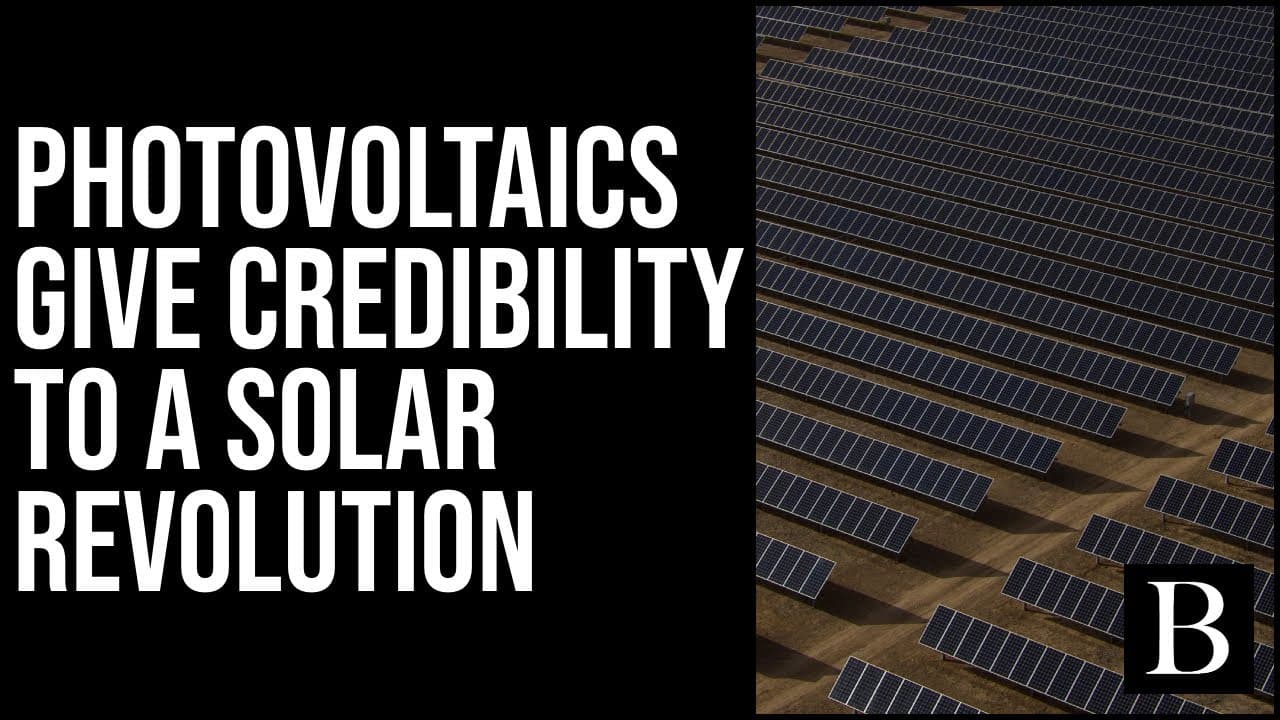
Photovoltaics give credibility to a solar revolution because falling costs and manufacturing improvements drove solar from a curiosity into 3.3% of global electricity consumption by 2020. PV represented 95% of the solar energy market, while China controlled 79% of cell production in 2019. This expansion could reshape energy trade, state revenues, industrial policy, and geopolitics. Read on to see why solar differs strategically from oil and natural gas.
Transcript
photovoltaics give credibility to a solar Revolution Bismarck brief the 26th of January 2022 better and cheaper solar panels have led to Rapid adoption of solar power if progress continues solar will not just address environmentalist goals but also upset Global energy geopolitics the total amount of solar energy that reaches the Earth's surface eac... Read More
Key Insights
- ✊ Solar power's rapid growth and decreasing costs make it a significant contender in the global energy market, disrupting traditional energy sources.
- 🌐 China's domination of the photovoltaic industry gives it an advantage in the solar revolution, potentially reshaping global energy geopolitics.
- 🎁 Solar energy presents both challenges and opportunities for countries worldwide, requiring advancements in storage technology and grid integration.
- ✊ The environmental benefits of solar power are accompanied by concerns about the reliance on China for the manufacturing of photovoltaics and the carbon footprint of the industry.
- 🥹 The transition to solar energy holds implications beyond environmental goals, impacting the tax power of states and the balance of energy that underwrites international institutions.
- 🍉 Developing countries with excellent solar conditions have the potential to benefit from solar energy, but challenges remain in terms of infrastructure and energy storage.
- 🫷 Western institutions' push for a renewable energy transition contrasts with China's simultaneous pursuit of solar and nuclear energy, highlighting different approaches to energy abundance.
- ✊ The success of solar power in China challenges the traditional model of global coordination to reduce carbon emissions and emphasizes the importance of localized energy markets.
Install to Summarize YouTube Videos and Get Transcripts
Explore YouTube Video Summarizer or Get YouTube Transcript Extractor
Questions & Answers
Q: Why do photovoltaics give credibility to a solar revolution?
Better and cheaper photovoltaic panels drove rapid adoption by converting absorbed light directly into electricity. From 2000 to 2020, solar's contribution to global electricity consumption grew 788-fold to 0.8 petawatt hours, or 3.3% of consumption.
Q: How did solar power costs change between 2009 and 2020?
The price of solar power fell from $359 per megawatt hour in 2009 to $37 per megawatt hour in 2020. Over the same broader period of growth, solar industry revenue reached $170 billion in 2020.
Q: What are photovoltaics, and how do solar panels generate electricity?
Photovoltaic systems combine multiple photovoltaic cells into a photovoltaic module, commonly called a solar panel. In materials such as silicon, absorbed light is converted directly into electricity through the photovoltaic effect.
Q: How important are photovoltaics to the solar energy market?
Photovoltaics made up 95% of the solar energy market described in the Bismarck Brief. Improvements in their efficiency and manufacturing drove solar power's expansion into a notable energy source.
Q: Why is China positioned to benefit from further progress in solar technology?
China dominated photovoltaic manufacturing, controlling 79% of cell production in 2019. This leadership positions China to gain advantages as photovoltaic technology and solar adoption continue to progress.
Q: How could a solar revolution change global energy geopolitics?
A transition from fossil fuels to alternatives such as renewables, nuclear power, or fusion could change states' tax power and alter the energy balance underpinning international institutions. Solar may also reduce the immediate geopolitical leverage associated with fuel exports because restricting photovoltaic supplies would not cause immediate blackouts or electricity-price spikes.
Q: How does solar power differ strategically from oil and natural gas?
Oil is easy to ship globally, while natural gas is usually delivered through pipelines and therefore has a more regionalizing effect. Unlike those fuels, solar panels are installed productive capacity, so disrupting their supply chain does not immediately stop electricity generation.
Q: How can photovoltaic exporters use industrial policy to shape competition?
Photovoltaic exporters such as Germany or China can pursue industrial policies designed to expand their manufacturing sectors at rivals' expense. Vendors can also flood the market to crush competition and keep the benefits of concentrated production within their own industrial base.
Summary & Key Takeaways
-
Solar power has experienced rapid growth since 2000, with solar industry revenues reaching $170 billion in 2020. The price of solar power has dropped dramatically, making it a notable source of energy.
-
Photovoltaics (PV) have been the driving force behind solar power, with improvements in efficiency and manufacturing leading to the widespread adoption of solar panels.
-
China is the dominant player in the photovoltaic industry, controlling a significant percentage of cell production. Its advancements in solar technology give it an advantage in the global energy market.
Read in Other Languages (beta)
Share This Summary 📚
Summarize YouTube Videos and Get Video Transcripts with 1-Click
Try YouTube Summary with ChatGPT & Claude or YouTube Transcript Generator
Explore More Summaries from Samo Burja 📚






Summarize YouTube Videos and Get Video Transcripts with 1-Click
Try YouTube Summary with ChatGPT & Claude or YouTube Transcript Generator