How Can Societies Last? Jim Rutt Show: Societal Decline Pt. I
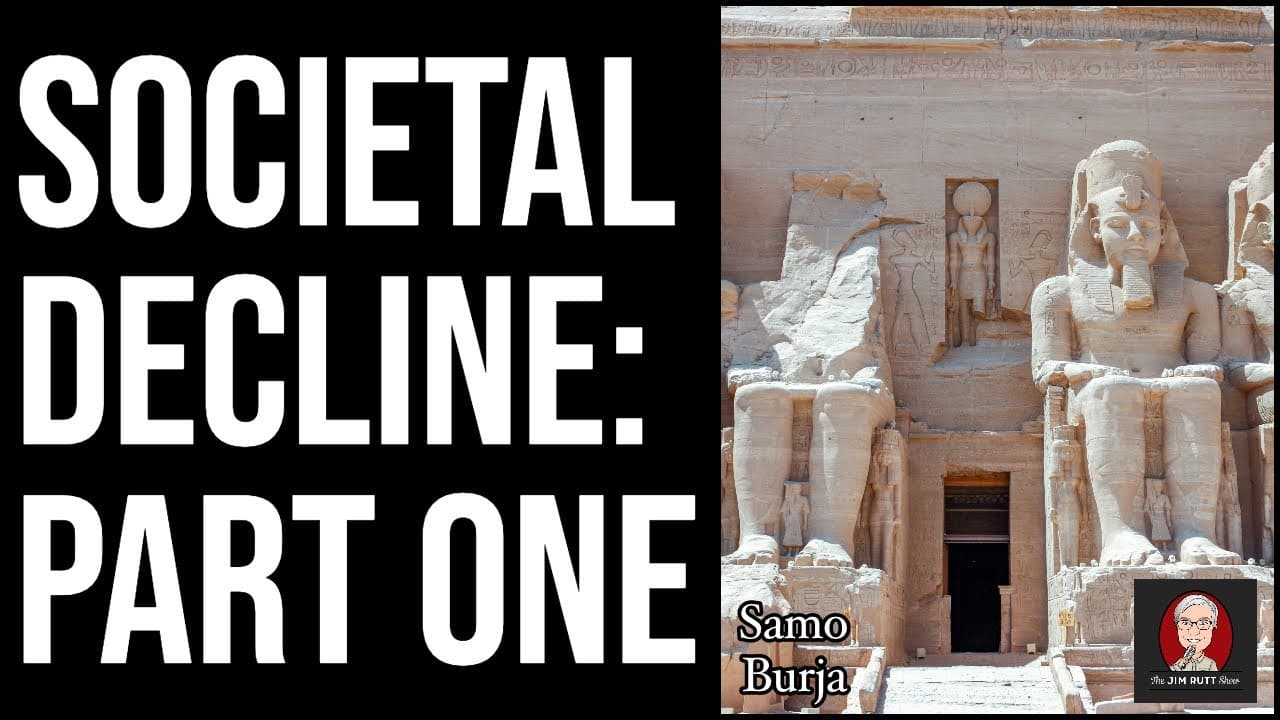
TL;DR
Societies can last longer by preserving knowledge, maintaining high-integrity historical records, and sustaining the institutions that support intellectual progress. Civilizational failure can cause severe losses: only 6 percent of known ancient Greek authors have surviving books, while Roman concrete disappeared after the Western Empire fell and was not redeveloped until the 19th century. Read on to understand how historical selection bias and political change deepen that decline.
Transcript
check it out so we're going to figure out something about how societies can last for a long time how did you get interested in this to me the most interesting part of this question was trying to figure out the nature of say scientific progress or any kind of intellectual progress where i feel like the history books often present this as a history o... Read More
Key Insights
- 🌍 The nature of scientific and intellectual progress is often oversimplified, neglecting the contributions and achievements of earlier civilizations like the Ancient Greeks and the Abbasid Caliphate.
- 🏛️ Civilizations are integral to the preservation and transmission of knowledge, and the failure of a civilization can result in significant attrition of knowledge and cultural artifacts.
- 🧱 Concrete, an essential material, was invented by the Romans but was lost after the fall of the Western Roman Empire and not rediscovered until centuries later.
- 📚 History books are subject to selection bias, and flattery and political motives have influenced the preservation and dissemination of historical works throughout different periods of history.
- 🌐 History and theories of history are important in shaping our understanding of the past and future, and different perspectives can encourage or discourage long-term thinking.
- 🔬 Scientific progress and innovation are dependent on social technologies and institutions that facilitate coordination and exchange of knowledge.
- 🌐 Social technologies, such as politeness and bureaucracy, play a crucial role in society and can be recombined and evolved over time.
- 🤝 Lowering social coordination costs is essential for the integration and adoption of new technologies in society, requiring collaboration and adaptation in social niches.
Install to Summarize YouTube Videos and Get Transcripts
Explore YouTube Video Summarizer or Get YouTube Transcript Extractor
Questions & Answers
Q: How can societies last for a long time?
The discussion connects societal longevity to preserving knowledge, maintaining reliable historical records, and supporting scientific and intellectual progress through durable institutions. When a civilization fails, much of the knowledge embodied within it can disappear.
Q: Does scientific and intellectual progress always move forward?
No. History books often portray progress as a one-way ratchet beginning with the 17th-century scientific revolution, but this leaves out earlier achievements and later losses. The ancient Greeks and the Abbasid Caliphate are cited as important parts of the omitted story.
Q: How much ancient Greek knowledge was lost?
Of the ancient Greek authors known by name or reference, 94 percent have no surviving books associated with them. The speaker compares this with retaining only 6 percent of the works cited by a 21st-century book.
Q: What happened to Roman concrete after the Western Roman Empire fell?
Concrete was invented by the Romans but was lost after the Western Empire fell. It was not redeveloped until the 19th century, and the discussion argues that building technology may not have recovered to the Roman level of around 470 A.D. until then.
Q: Why might simpler works survive periods of intellectual decline?
Simpler works are more likely to remain understood and copied in a simplified intellectual environment. The transcript notes that sometimes only the introductory chapters of scientific, technological, or historical works survive.
Q: Why are historical accounts affected by selection bias?
Every historical account selects from an immense amount of material, so some form of selection bias is unavoidable. Sources may also disappear because they lose social or political relevance, become inconvenient, or are no longer copied.
Q: How can political power shape which histories survive?
A work flattering one Roman emperor could be neglected, lost, or destroyed when another emperor took power. The transition from paganism to Christianity and differing Protestant and Catholic accounts of the Reformation also illustrate how prevailing political or religious perspectives affect preservation.
Q: Which civilizations produced high-quality historical records?
The discussion says high-quality historical recording emerged only a few times. It specifically identifies the classical Greeks and classical Chinese civilization, while noting that Chinese historians faced a severe problem of imperial censorship.
Summary & Key Takeaways
-
The integration of technology into society is a two-way process, with technology shaping social dynamics and societies influencing the development and adoption of technology.
-
The success of technological innovations often depends on their ability to align with and be absorbed by existing social structures and practices.
-
Institutions play a crucial role in facilitating the integration of technology into society, providing the necessary framework for innovation, coordination, and societal growth.
Read in Other Languages (beta)
Share This Summary 📚
Summarize YouTube Videos and Get Video Transcripts with 1-Click
Try YouTube Summary with ChatGPT & Claude or YouTube Transcript Generator
Explore More Summaries from Samo Burja 📚






Summarize YouTube Videos and Get Video Transcripts with 1-Click
Try YouTube Summary with ChatGPT & Claude or YouTube Transcript Generator