How to Price AI Automation Projects by Value
TL;DR
Price an AI automation between your delivery-cost floor and the client's measurable-value ceiling, using discovery questions to establish scope, urgency, and expected business impact. Avoid hourly billing after gaining initial proof, separate maintenance from new functionality, document results after deployment, and use milestone payments so you do not carry much more than 30 days of unpaid work.
Transcript
All right. So, I've sold over 100 AI automation systems and I've priced a ton of those wrong. I've undercharged, I've underscoped, and I've just thrown out random numbers that were kind of a guess and I couldn't explain when someone actually asked me like, "Hey, where'd you get that number from?" So, in this video, I'm going to talk about everythin... Read More
Key Insights
- Value-based pricing is anchored to the client's measurable business benefit rather than the hours required to build an automation. The provider's cost establishes the minimum acceptable amount, the client's value establishes the maximum, and the final negotiated price can fall anywhere between those boundaries.
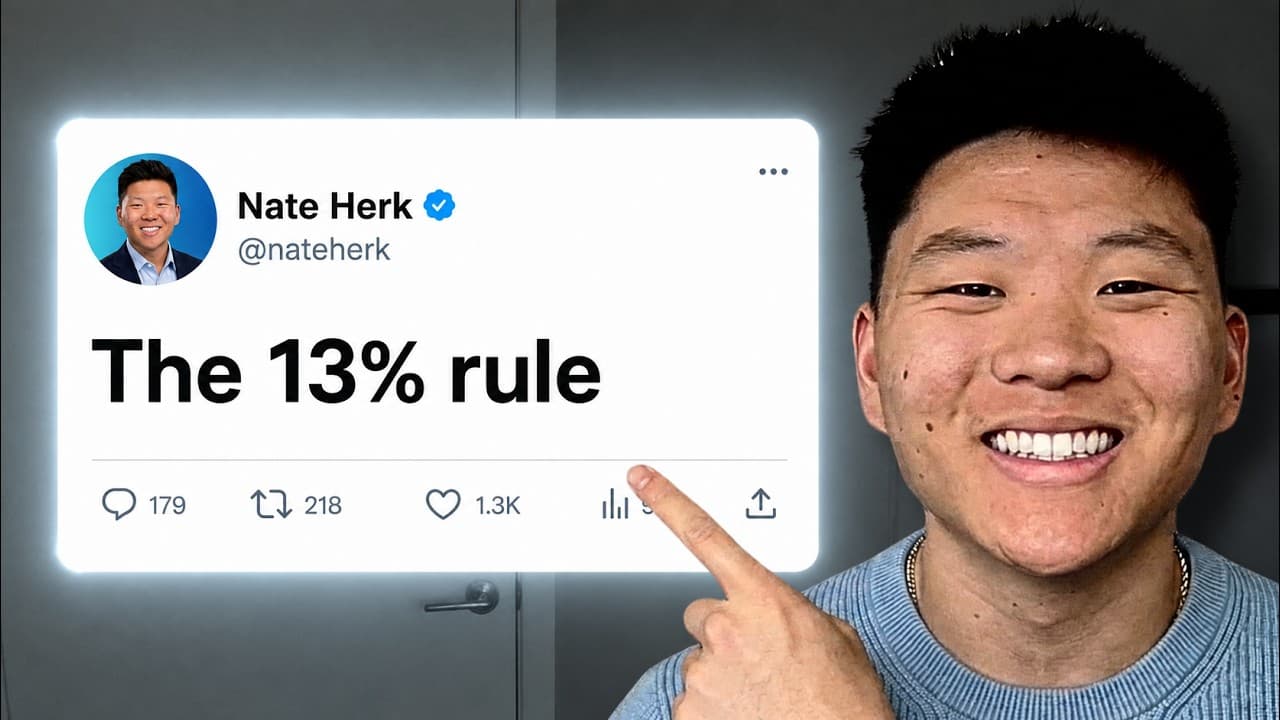
- The appointment-setting example had a $41,600 annualized labor cost because employees handled 20 leads per week, spent roughly one hour on each lead, and cost the business about $40 per hour. The automation build was sold for $5,500, approximately 13% of that annual figure.
- A compelling automation investment should ideally show the client a potential 10 times annual return. The example's direct labor savings represented roughly 7.5 times the initial investment, while additional projected value could come from processing more leads as the streamlined operation grew, although that growth was not guaranteed.
- Maintenance is a commitment to preserve the functionality defined in the agreed scope. A $400 monthly plan covered breakages, API changes, new model releases, and unusual edge cases requiring adjustments, but it did not include new features or additional functionality, which required a separate commercial conversation.
- Post-deployment measurement is necessary for proving an automation's actual value. Providers should record baseline measures such as weekly lead volume and speed to lead, then revisit the results after one, two, and three months so improvements are visible to the client and useful in later sales conversations.
- Hourly billing rewards slower delivery because a three-day implementation produces three times the revenue of an equivalent one-day implementation at the same rate. As developers become faster through experience or better tools, hourly pricing reduces their income even though their capability and delivery efficiency have improved.
- Hourly pricing can be appropriate for the first two or three projects when a provider lacks proof and past results. A rate around $100 per hour was suggested as an easier initial request, but the recommendation was to stop billing hourly after establishing credible evidence of delivered value.
- Discovery is designed to uncover both the system's scope and its economic value. The provider should listen, repeat, and probe, explore the best-case business outcome, and ask why this solution, why it is needed now, and why this provider is being considered before proposing a defensible price.
Install to Summarize YouTube Videos and Get Transcripts
Explore YouTube Video Summarizer or Get YouTube Transcript Extractor
Questions & Answers
Q: How should an AI automation project be priced?
An AI automation should be priced between two boundaries. The provider's delivery cost is the floor, meaning the project should be declined below that amount. The value created for the client is the ceiling, meaning the solution is not worth more than that business benefit. Discovery establishes both scope and value, allowing the parties to negotiate a defensible price between those figures.
Q: How was the appointment-setting automation valued?
The business processed about 20 leads each week, with each lead requiring roughly one hour of employee time. At an all-in labor cost of $40 per hour, the process cost approximately $800 weekly and $41,600 annualized. The automation build was priced at $5,500, around 13% of the annual figure, giving the client about 7.5 times the initial investment in projected annual value.
Q: Why can hourly billing be harmful for AI agencies?
Hourly billing creates an incentive problem because it pays more for slower delivery. If one developer completes a feature in one day while another needs three days at the same $150 hourly rate, the slower work produces three times as much revenue. Improved skill and faster tools therefore reduce billable hours, causing greater efficiency to lower the provider's income instead of rewarding expertise.
Q: When should a new AI automation provider bill hourly?
Hourly billing can be a reasonable option for a provider's first two or three projects, particularly when there is little proof, no substantial track record, and few prior outcomes to reference. It is an easier request for a business owner and provides a safer starting point. A possible introductory rate is about $100 per hour, followed by value-based pricing once credible proof exists.
Q: What does an AI automation maintenance retainer cover?
A maintenance retainer covers the work required to keep an automation performing the functionality defined in its agreed scope. In the example, the $400 monthly plan addressed failures, API changes, new model releases, and unusual edge cases that required adjustments. It did not cover new features or added functionality, which were treated as separate work requiring another discussion and price.
Q: How should an agency prove an automation's value after launch?
The agency should document the client's baseline before implementation, including measures such as the 20 weekly leads and the existing speed to lead. It should then review performance after one month, two months, and three months to show whether the measures are moving in the desired direction. Surfacing those results helps the client recognize the impact and supports future sales conversations.
Q: What questions should be asked during AI project discovery?
Discovery should begin by asking the client to describe the process, previous attempts, successful elements, and recurring obstacles. The provider should listen, repeat, probe, and take detailed notes before asking what the best-case business outcome looks like after implementation. The conversation should then examine three areas: why this solution, why it is needed now, and why the client is considering this provider.
Q: Why must an AI provider distinguish maintenance from new features?
Maintenance and feature development create different obligations. Maintenance guarantees that the existing scoped system continues to work when something breaks, an API changes, a new model appears, or an edge case requires adjustment. Adding new functionality expands the original scope and must be discussed separately. Keeping that boundary clear prevents a fixed monthly plan, such as $400, from becoming unprofitable ongoing development.
Summary & Key Takeaways
-
A real appointment-setting automation replaced work associated with 20 weekly leads, each requiring roughly one employee hour at an all-in cost of $40. That produced an annualized labor figure of $41,600. The system was priced at $5,500, or about 13% of that amount, plus a $400 monthly maintenance plan.
-
Value-based pricing distinguishes three numbers: the provider's cost is the floor, the client's value is the ceiling, and the negotiated price sits between them. Discovery must uncover both implementation scope and business value by examining the current process, previous attempts, desired outcome, urgency, and the reasons the client selected the provider.
-
Hourly billing can penalize expertise because faster delivery produces fewer billable hours, while slower work generates more revenue. Early providers may use hourly billing for their first two or three projects, possibly around $100 per hour. After building proof, they should price outcomes, collect payments through milestones, and document post-launch results.
Read in Other Languages (beta)
Share This Summary 📚
Summarize YouTube Videos and Get Video Transcripts with 1-Click
Try YouTube Summary with ChatGPT & Claude or YouTube Transcript Generator
Explore More Summaries from Nate Herk | AI Automation 📚



Summarize YouTube Videos and Get Video Transcripts with 1-Click
Try YouTube Summary with ChatGPT & Claude or YouTube Transcript Generator