Reapplying to Medicine (UK) - A comprehensive guide
TL;DR
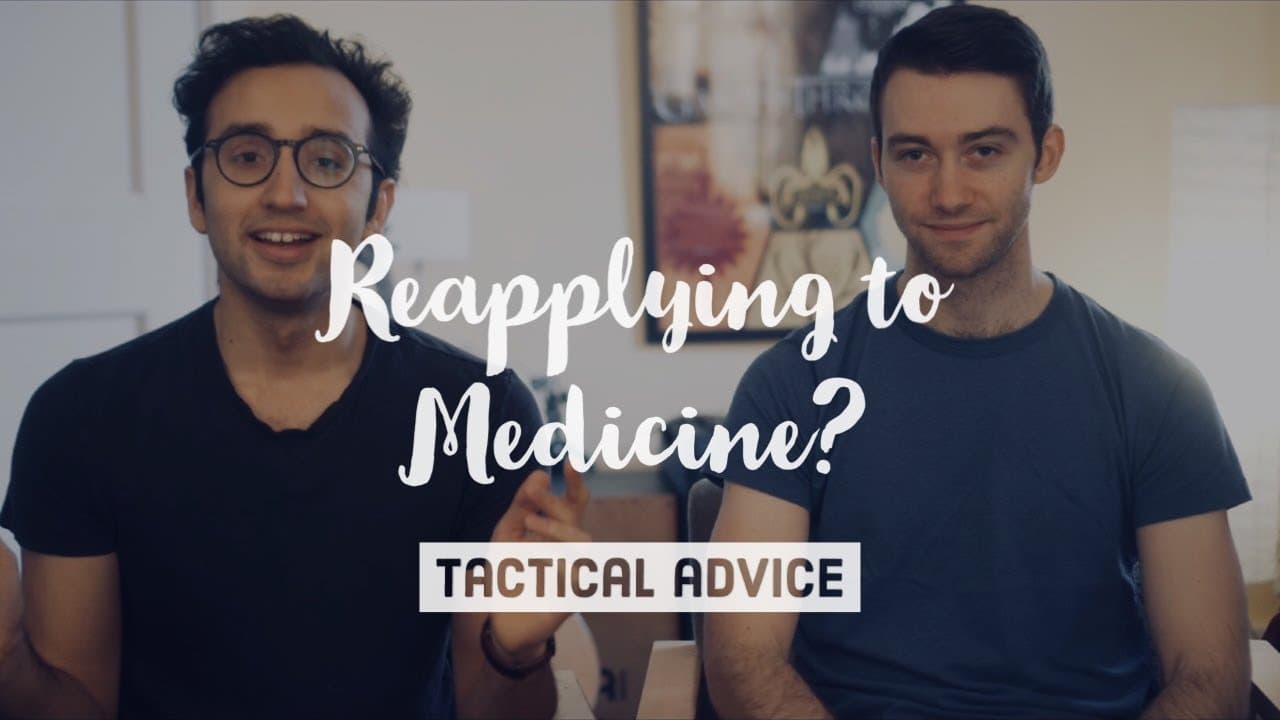
To reapply successfully to medicine in the UK, first confirm that medicine is still what you want, request feedback, identify weaknesses, and make a practical improvement plan. Antoine received four rejections in his first application cycle but gained admission to Cambridge on his second attempt; feedback from Leeds showed that his personal statement was his main weakness. Read on for his specific advice on handling rejection, using feedback, taking a gap year, and preparing for interviews.
Transcript
hey guys welcome back to the channel if you new here my name is Ellie and I'm a junior doctor working in Cambridge and this is the very first video in a new series called medical Monday's so basically when I started this channel initially I thought the audience would be almost exclusively medicine applicants and medical students but now thanks to l... Read More
Key Insights
- 😷 Reapplying to medical schools requires strategic planning, seeking feedback, and enhancing personal statements.
- 🤳 Overcoming initial rejection involves self-reflection, support from others, and channeling disappointment into a constructive plan.
- 💦 Utilizing a gap year to gain varied experiences, work, and volunteer can significantly enhance an application.
Install to Summarize YouTube Videos and Get Transcripts
Explore YouTube Video Summarizer or Get YouTube Transcript Extractor
Questions & Answers
Q: How should you approach reapplying to medicine in the UK after receiving no offers?
First, decide whether you genuinely still want to study medicine, because the following year will require substantial effort. Then make a practical plan, ask universities and your school for feedback, identify weaknesses such as the personal statement, and use the gap year to gain varied work and volunteering experience and prepare for interviews.
Q: How did Antoine handle the disappointment of receiving four medical-school rejections?
He described the experience as devastating and initially questioned whether he was good enough for medicine. Support from friends and family helped him recover, and he recommends allowing yourself about a week to feel disappointed before beginning a practical plan.
Q: Why should rejected applicants reconsider whether medicine is right for them?
Antoine says this is the first question to ask because reapplying involves a tough year with a lot of work. Some of his friends received four rejections and then decided medicine was not for them, which he regarded as a valid choice.
Q: How can applicants get useful feedback on a rejected medicine application?
Antoine approached his school and senior tutor, who advised contacting the universities to which he had applied. Only one university replied, but the detailed response from Leeds proved invaluable because it showed how his application had been scored.
Q: What did Antoine learn from the feedback provided by Leeds?
Leeds scored his application out of 40 points, with 35 required for an interview, and Antoine had received 34. The breakdown showed that he was close to the threshold and that his main weakness was his personal statement, giving him a specific area to improve.
Q: How much time may an applicant have before submitting a medicine reapplication?
Antoine estimated that an unsuccessful applicant may have roughly six months before the next application process. He noted that applicants might learn the outcome by April, while personal statements would come around the following September, leaving several months to make improvements.
Q: How can a gap year strengthen a medical-school reapplication?
Antoine recommends using the gap year actively by working, volunteering, gaining varied experiences, and improving the personal statement. These experiences can strengthen the application and provide more material for interview answers.
Q: How did Antoine prepare more effectively for interviews during his second application?
His range of gap-year experiences helped him feel ready to answer many different interview questions. He focused on keeping his answers relevant and could also add some humor where appropriate.
Summary & Key Takeaways
-
Ellie introduces a new series called Medical Monday's tailored to medical students and applicants, featuring an interview with Antoine, who successfully reapplied to Cambridge.
-
Antoine shares his initial disappointment of not receiving offers, the self-doubt, and the process of accepting and bouncing back from rejection.
-
Practical advice includes seeking feedback, enhancing personal statements, gaining diverse experiences, taking a gap year for self-improvement, and preparing for interviews effectively.
Read in Other Languages (beta)
Share This Summary 📚
Summarize YouTube Videos and Get Video Transcripts with 1-Click
Try YouTube Summary with ChatGPT & Claude or YouTube Transcript Generator
Explore More Summaries from Ali Abdaal 📚
Summarize YouTube Videos and Get Video Transcripts with 1-Click
Try YouTube Summary with ChatGPT & Claude or YouTube Transcript Generator