How to make a million with boring businesses
TL;DR
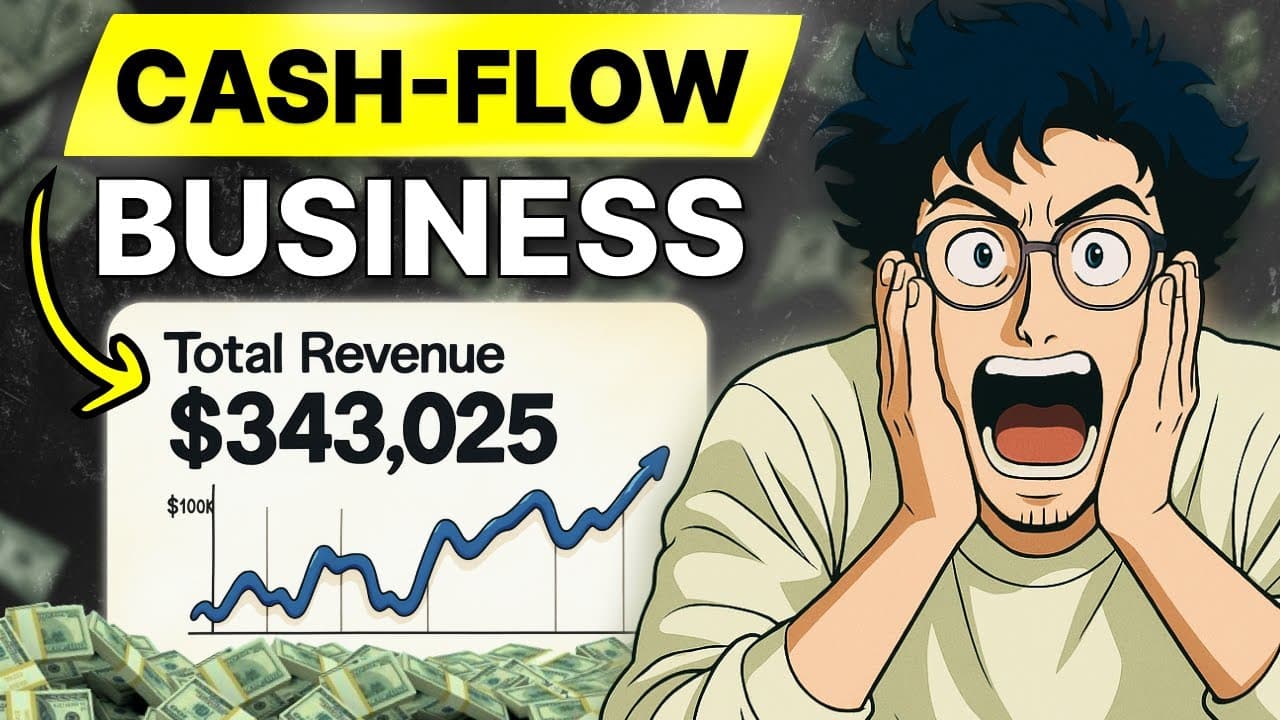
Boring, service-based ventures can generate multimillion-dollar outcomes without tech startups. Start small with a profitable idea, learn by doing, and scale through owning assets like storage facilities. The path emphasizes practical skills, minimal competition, and steady cash flow over hype and quick exits.
Transcript
Are people making millions of dollars with boring, sweaty businesses? They are. I brought on Nick Huber, Mr. Sweaty Startup himself, to share what he thinks are some of the most interesting opportunities to build boring businesses. The wealthy people that I know, the wealthy people in my town, um the ones with giant beach houses in the Outer Banks ... Read More
Key Insights
- The wealthy in small towns often grew wealthy through boring businesses such as underground utilities, surveying, HVAC, and real estate development, not through flashy startups
- Sweaty startups are service-based local businesses that can have less competition and higher success rates than tech ventures when executed well
- Low-cost, high-intensity marketing methods like sidewalk chalk and bandit signs can effectively reach the local customer base and drive initial growth
- Owning and upgrading physical assets like self-storage facilities can turn a modest purchase into a multi-million dollar asset over time
- Profits can be achieved from day one by launching simple, bootstrapped businesses with tight unit economics and cash-flow discipline
- Domain names and digital real estate are valuable for credibility and growth, acting as strategic assets in modern businesses
- New ideas can come from observing everyday opportunities, such as local advertising screens that generate significant recurring revenue for bar owners and advertisers
- There is an opportunity at the intersection of AI and sweaty startups where automation and efficiency can enhance service-based businesses without abandoning hands-on execution
- More videos from this channel:
- More from this channel: Greg Isenberg
Install to Summarize YouTube Videos and Get Transcripts
Explore YouTube Video Summarizer or Get YouTube Transcript Extractor
Questions & Answers
Q: What is a simple way to start a profitable business without coding or fundraising
A simple way to start is to identify a local, recurring need that can be served with a small setup and low overhead. The speaker describes starting Storage Squad by storing student belongings during summer breaks and delivering them back, which generated immediate cash flow and eventually led to a profitable exit. The key elements are bootstrapping, practical execution, and leveraging existing spaces like warehouses or vans. By focusing on a repeatable service with clear pricing, you can test demand quickly, scale through word of mouth, and reinvest profits into growing a physical asset like a self-storage facility.
Q: Why do the speakers advocate for boring businesses over flashy tech startups
The argument centers on risk, competition, and capital requirements. Boring businesses typically have clearer unit economics, steady demand, and lower capital needs than software or hardware ventures that rely on user growth, retention, and fundraising. The narrative uses real-world examples such as utilities, surveying, HVAC, and real estate development to illustrate how predictable cash flow and asset ownership can compound into substantial wealth. The emphasis is on discipline, patience, and owning tangible assets.
Q: What role does marketing play in sweaty startups according to the talk
Marketing is presented as a cost-efficient, high-impact discipline that can be done with minimal spend. Tactics include sidewalk chalk advertising on campuses and in neighborhoods, bandit signs to locate service-area customers, and leveraging local networking to build referals. The speaker emphasizes knowing where customers live and walk, enabling precise outreach. This approach demonstrates that strong local marketing can outperform expensive digital campaigns for service-based businesses.
Q: How did Storage Squad contribute to the founder’s wealth
Storage Squad started as a bootstrap operation that stored college students’ belongings during summer and delivered them back when needed. It grew to approximately 2.2 million dollars in annual revenue at peak, with profits around 400 to 500 thousand dollars a year. By growing the service business and then purchasing a self-storage facility, the founders converted operating success into asset ownership, eventually selling the venture for 1.75 million dollars, with no debt and a clean split between partners.
Q: What is the value of owning self-storage facilities according to the video
Owning self-storage facilities provides both steady cash flow and potential appreciation. The speakers describe purchasing a facility for 625K that had been neglected, unlocking value by cleaning and reactivating the asset. Later, another facility was bought for 1.5 million and grew from approximately 16 thousand dollars per month in revenue to around 40 thousand dollars per month, significantly increasing equity. The core idea is asset-driven wealth rather than speculative growth.
Q: What opportunities exist in the AI + sweaty startups space
The AI plus sweaty startups opportunity centers on using automation to enhance service-based businesses without needing to reinvent the wheel. AI can streamline operations, marketing, scheduling, and customer service, enabling a small team to serve more customers and improve margins. The talk suggests that combining practical, boring operations with modern AI tools can unlock efficiency gains while maintaining the hands-on, local approach that characterizes sweaty startups.
Q: How can a new entrepreneur identify a profitable boring business idea
Start by observing everyday local needs that require regular service, such as storage, lawn care, or delivery of goods. Validate demand with low-friction tests like small pilots, cheap marketing, and careful pricing. Focus on asset ownership and scalable unit economics, such as a single warehouse or a fleet of service vehicles. By documenting costs, margins, and growth potential, you can decide whether to expand to additional locations or acquire related facilities, building toward a durable, cash-generating business.
Q: What lesson does the speaker share about personal background and entrepreneurship
The speaker notes that he did not come from an entrepreneurial family or formal business training. He started small, learned by doing, and built profitable operations through practical action rather than theoretical studies. This underscores the idea that entrepreneurship can be accessible through bootstrapped ventures that meet real needs, leverage existing spaces and equipment, and grow through disciplined reinvestment and asset acquisition.
Summary & Key Takeaways
-
The speaker highlights that wealth often comes from ordinary operations such as utilities, surveying, HVAC, and real estate development, not flashy tech. Building conventional businesses can lead to large gains if you execute well and scale gradually with assets. The emphasis is on practicality over ostentation, with a focus on repeatable profitability.
-
Storage-based ventures provide tangible returns, with growth driven by acquiring and upgrading facilities rather than reinventing markets. Early successes can seed larger opportunities like self-storage facilities, which compound value and cash flow over time. The strategy favors patience, leverage, and asset ownership.
-
Marketing for sweaty startups can be inexpensive yet effective, using sidewalk chalk, bandit signs, and local networking to reach customers. Domain names are framed as valuable digital real estate for credibility and growth. The overall message is to pursue boring, real-world opportunities with disciplined execution.
Read in Other Languages (beta)
Share This Summary 📚
Summarize YouTube Videos and Get Video Transcripts with 1-Click
Try YouTube Summary with ChatGPT & Claude or YouTube Transcript Generator
Explore More Summaries from Greg Isenberg 📚



Summarize YouTube Videos and Get Video Transcripts with 1-Click
Try YouTube Summary with ChatGPT & Claude or YouTube Transcript Generator