Why Is Giza’s 2nd Pyramid Called the Mountain of the West? | UnchartedX Podcast with Snake Bros and Cfapps
TL;DR
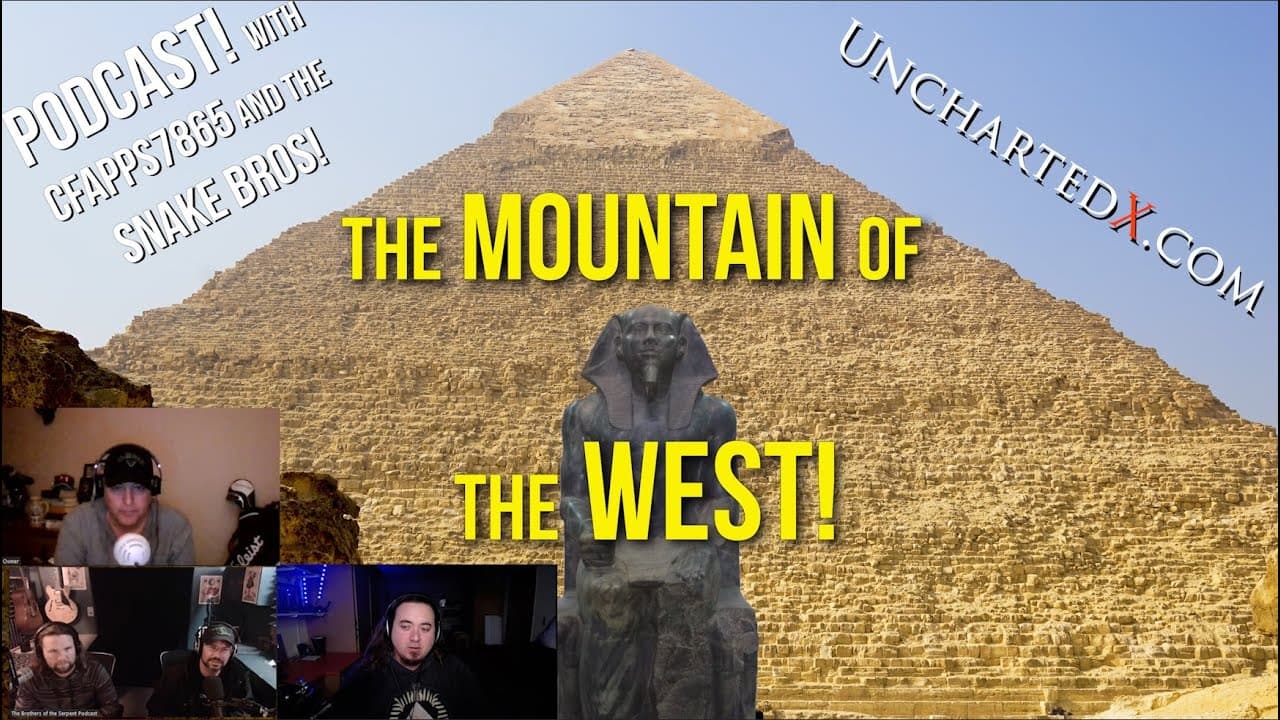
Giza’s second pyramid is called the Mountain of the West because ancient texts connect that name with a sacred mountain guarded by Anubis. Attributed to Fourth Dynasty pharaoh Khafre, the pyramid is about three meters shorter than the Great Pyramid but has a steeper angle. The UnchartedX Podcast with Snake Bros and Cfapps examines its exterior, interior, bedrock setting, and possible links to older structures. Read on for the specific features they discuss.
Transcript
hello everyone welcome back to the uncharted x podcast this is ben and today we've got another swap cast with the snake brothers and we also have chuck from the cfaps7865 channel joining us in this episode we're taking a look at the second pyramid giza this is generally attributed to hafra or kafra or kefran if you like it greek who was a pharaoh o... Read More
Key Insights
- ❓ The second pyramid of Giza is a remarkable architectural structure that showcases the engineering skills of the ancient Egyptians.
- 🤨 The presence of megalithic blocks and the connection to older structures raise questions about its construction timeline.
- 🧍 The erosion and weathering on the pyramid's limestone blocks indicate a long-standing exposure to natural elements.
Install to Summarize YouTube Videos and Get Transcripts
Explore YouTube Video Summarizer or Get YouTube Transcript Extractor
Questions & Answers
Q: Why is Giza’s second pyramid called the Mountain of the West?
Chuck says ancient texts use the name “Mountain of the West” and describe Anubis as guarding the sacred mountain. He also points to a similarly named mountain at Abydos and draws parallels between its underground shaft and granite box and Giza’s Osiris Shaft.
Q: Who is the second pyramid of Giza attributed to?
The pyramid is generally attributed to Khafre, whose name is also rendered as Kafra or Kefran. He was a pharaoh of Egypt’s Fourth Dynasty during the Old Kingdom.
Q: How does the second pyramid compare with the Great Pyramid?
It is the second-largest pyramid at Giza and the second-largest Egyptian pyramid known to the speakers. It is roughly three meters shorter than the Great Pyramid and has a steeper angle, although its overall mass is considerably smaller.
Q: What parts of the second pyramid does the UnchartedX Podcast examine?
Ben, the Snake Brothers, and Chuck examine the pyramid both inside and outside. They also discuss surrounding structures, its historical position, and the bedrock engineering involved in its location.
Q: What structures surround the second pyramid of Giza?
The existing page summary identifies a pyramid temple and a causeway as parts of the surrounding complex. The podcast also places the pyramid in relation to the Great Pyramid, the third major Giza pyramid, the valley temple, and the Sphinx.
Q: What is known about the second pyramid’s internal structure?
Its interior includes upper and lower entrances, passageways, and chambers. The page’s existing Q&A describes this internal arrangement as less complex than that of the Great Pyramid.
Q: How were the pyramid’s casing stones held in place?
The existing explanation says the casing stones were wedged into the underlying structure for a secure fit. It states that no mortar held them together and that their weight and pressure helped keep them in place.
Q: What features lead the speakers to question the second pyramid’s construction timeline?
The discussion highlights megalithic blocks, including blocks described as larger than those in the Great Pyramid, along with possible connections to older structures such as the Sphinx. Its comparatively simple internal structure and the erosion visible on limestone blocks are also presented as reasons to question whether the pyramid may be older than conventionally attributed.
Summary & Key Takeaways
-
The second pyramid of Giza, also known as the Mountain of the West or Kefran, is the second largest Egyptian pyramid and is attributed to Pharaoh Khafre of the Fourth Dynasty. It is slightly shorter than the Great Pyramid but has a steeper angle and is composed of megalithic stones.
-
The pyramid is surrounded by structures such as the pyramid temple and causeway, which indicate the complex engineering involved in its construction.
-
The limestone blocks of the pyramid show signs of erosion and weathering, suggesting a long history of exposure to the elements.
-
The internal structure of the pyramid includes an upper and lower entrance, passageways, and chambers, providing a glimpse into the architectural prowess of the ancient Egyptians.
Read in Other Languages (beta)
Share This Summary 📚
Summarize YouTube Videos and Get Video Transcripts with 1-Click
Try YouTube Summary with ChatGPT & Claude or YouTube Transcript Generator
Explore More Summaries from UnchartedX Podcasts and LiveStreams 📚



Summarize YouTube Videos and Get Video Transcripts with 1-Click
Try YouTube Summary with ChatGPT & Claude or YouTube Transcript Generator