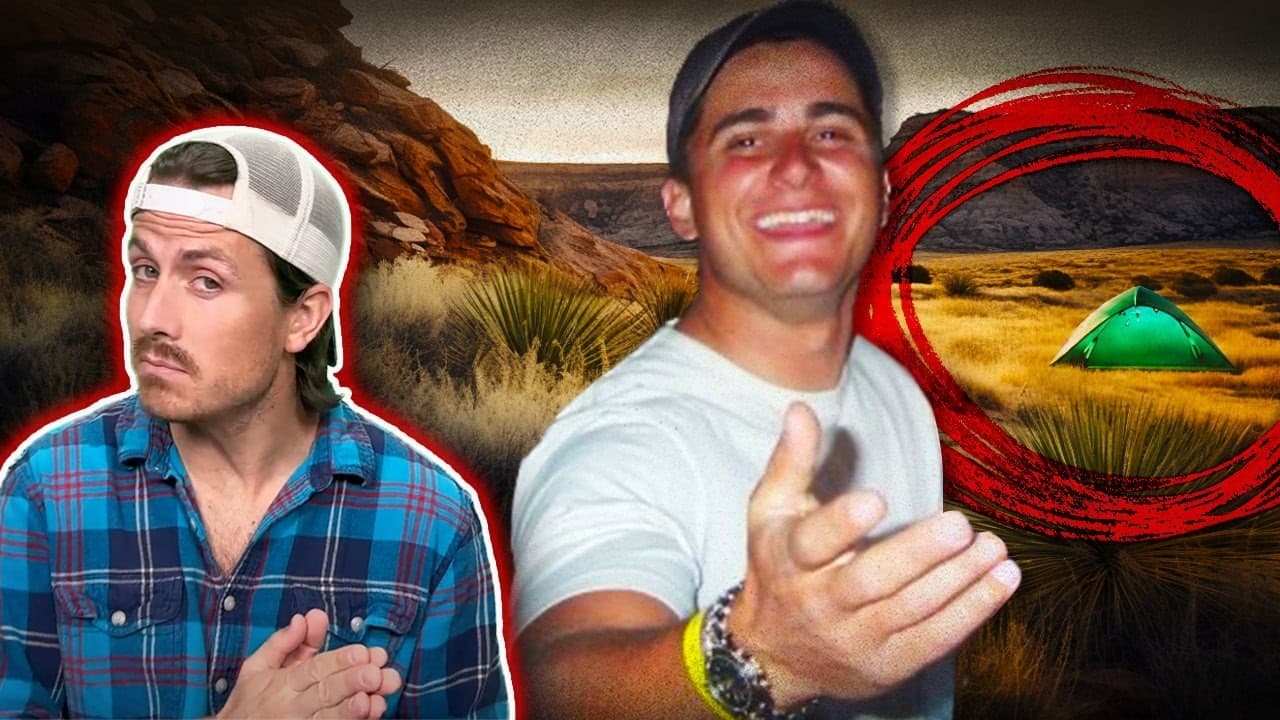
How Two Campers Became Lost in Rattlesnake Canyon
TL;DR
Carry the full amount of water recommended by park rangers, and know how to read your navigation tools before entering an isolated desert. Dave Coughlin and Rafi Kodokan brought roughly six times less water than advised, lost the marked trail, and could not interpret their topographical map, leaving them stranded in extreme heat while hoping rescuers would notice their expired permit.
Transcript
sometimes everyday people are forced to make truly Unthinkable decisions take for example somebody who goes to work like normal and then a fire breaks out in their office they can't get rescued and suddenly this person is deciding whether they want to burn to death or jump out the window to their death now when we hear about these totally tragic st... Read More
Key Insights
- Rattlesnake Canyon is one of the most isolated areas described within Carlsbad Caverns National Park, consisting of a long desert trail bordered by high canyon walls. Visitors must complete permit paperwork so park rangers know they are present and can check when they fail to return.
- The ranger's water recommendation was at least one gallon per person for each day in the canyon. Rafi considered that amount excessive, so the two men carried only three 16-ounce bottles between them, approximately six times less than the recommended supply for their planned overnight stay.
- The campers reduced their drinking supply before becoming lost by using one 16-ounce bottle to boil hot dogs. By the following morning, the bottle Dave drank from was already half empty, leaving the pair with very little water as desert temperatures continued to rise.
- The men's confidence depended on the belief that their tent was close to the parking lot. They expected a short return hike, so walking for an hour without seeing their vehicle did not initially alarm them, even though their assumptions about distance and direction were proving unreliable.
- The disappearance of white rock trail markers signaled that Dave and Rafi were no longer following the recognized route. After another two or three hours of walking through unfamiliar terrain, they had no recognizable landmarks and finally accepted that they were completely lost.
- A topographical map provides little practical protection when its users cannot interpret it. Dave and Rafi carried such a map, but its contour markings made no sense to either man, preventing them from using it to identify their position or choose a dependable route.
- A short rainstorm temporarily improved the men's condition by allowing them to catch drops in their mouths and drink from rocks and leaves. The water was limited, but the hydration and emotional boost encouraged them to resume searching for the parking lot.
- The overdue permit eventually prompted ranger Lance Matson to investigate after the men's Mazda remained in the parking lot for three additional nights. Less than a mile along the trail, he found their closed tent amid burned trash and a chemical burning smell, with something silently moving inside.
Install to Summarize YouTube Videos and Get Transcripts
Explore YouTube Video Summarizer or Get YouTube Transcript Extractor
Questions & Answers
Q: How did the two campers become lost in Rattlesnake Canyon?
Dave Coughlin and Rafi Kodokan began hiking toward their car at about 8:30 in the morning, believing their campsite was close to the parking lot. They initially followed stacks of white rocks marking the trail, but continued walking after those markers disappeared. Several hours later, nothing looked familiar, and they could not use their topographical map because neither man understood its contour markings.
Q: How much water did the campers bring into Rattlesnake Canyon?
The campers brought three 16-ounce bottles of water for both men during their planned one-night stay. The ranger had recommended at least one gallon per person for every day in the canyon, but Rafi believed that amount was excessive. Their supply was approximately six times smaller than the recommendation, and they used one bottle to boil hot dogs before beginning their return hike.
Q: Why was the topographical map unable to help the lost campers?
The map could not help because neither Dave nor Rafi knew how to read it. Its lines and swirls represented the contours of geographical features, but those symbols did not make sense to them. Although they had carried a navigation resource into the canyon, they lacked the knowledge required to determine their location or identify a reliable direction back to the parking lot.
Q: What warning signs showed that the campers had left the trail?
The clearest warning was the disappearance of the stacked white rocks that marked the recognized trail. The men also stopped seeing familiar terrain, despite walking for hours in what they believed was the correct direction. When the expected parking lot did not appear after an hour and remained absent two or three hours later, their assumptions about their route were clearly failing.
Q: How did the rainstorm affect Dave and Rafi's survival attempt?
The brief downpour gave Dave and Rafi a small amount of urgently needed water. They caught raindrops in their mouths and drank moisture from rocks and leaves. Although the storm did not provide a large or lasting supply, it improved their hydration enough to raise their spirits and motivate them to continue walking in search of the parking lot.
Q: Why did Dave and Rafi expect park rangers to search for them?
The men had obtained a permit allowing them to remain in Rattlesnake Canyon for one night. After failing to return on time, they reasoned that park rangers would notice the expired permit and begin searching. However, while camped in a washed-out gully, both privately worried because they did not know how quickly an overdue visitor would trigger a response.
Q: What did Ranger Lance Matson discover while searching for the campers?
After noticing that the men's dusty red Mazda remained in an otherwise empty parking lot for three extra nights, Lance Matson and a park volunteer followed the trail. Less than a mile away, they found a green and maroon tent. Nearby were burned pieces of trash and a chemical burning smell, while something moved silently behind the tent's closed flap.
Q: What wilderness preparation lessons follow from the campers' mistakes?
The events show that travelers should follow a ranger's water recommendation, understand their maps before departure, and respond promptly when trail markers vanish. Dave and Rafi carried far less water than advised because they expected an easy return hike. Once lost, their unreadable map, shrinking water supply, rising heat, and continued walking left them without a dependable route or adequate provisions.
Summary & Key Takeaways
-
In August 1999, Dave Coughlin and Rafi Kodokan visited Carlsbad Caverns National Park while traveling from Boston to Santa Barbara. They obtained a one-night permit for isolated Rattlesnake Canyon, but rejected a ranger's recommendation that each person carry at least one gallon of water for every day in the desert.
-
The campers packed only three 16-ounce bottles between them, using one bottle to boil hot dogs. While hiking toward their car the following morning, they passed white rock trail markers but eventually entered unfamiliar terrain. After several hours, the parking lot remained missing, the markers disappeared, and both men realized they were lost.
-
Neither camper could interpret the topographical map they carried, and worsening heat left them exhausted. A brief rainstorm provided limited water and renewed motivation, but hours of walking still failed to locate the parking lot. They camped overnight in a washed-out gully, hoping park rangers would investigate their overdue permit and find them.
Read in Other Languages (beta)
Share This Summary 📚
Summarize YouTube Videos and Get Video Transcripts with 1-Click
Try YouTube Summary with ChatGPT & Claude or YouTube Transcript Generator
Explore More Summaries from MrBallen 📚


Summarize YouTube Videos and Get Video Transcripts with 1-Click
Try YouTube Summary with ChatGPT & Claude or YouTube Transcript Generator